

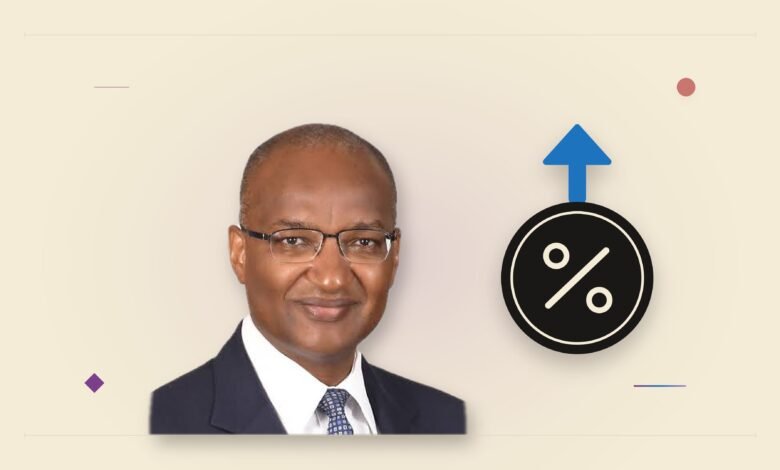
Dr Patrick Njoroge, who led the Central Bank of Kenya (CBK) from June 2015 to June 2023, wants Kenya’s law to make M-Pesa and Airtel Money pay users a share of the interest their wallet balances earn. Today, the 2014 rules direct that interest to charity. Many Kenyans aren’t even aware that their money in mobile wallets actually earns interest.
On 28th September 2026 the former Central Bank Governor posted 11 comments on X on the draft National Payment System Policy. Anyone can comment: the Treasury and CBK published the Policy and the draft Bill on 21st September and invited the public to respond.
He opens with “the paradox of Kenya’s success, where dominant first movers exploit persistent network effects”. A network effect means a service grows more useful as more people join. M-Pesa currently enjoys 88.8% of mobile money subscriptions as of June 2026.
Why there is a new Bill
Kenya’s payments law is the 2011 National Payment System Act. The draft Policy says the Act and the 2014 rules aren’t fully aligned with instant payments, digital currencies and cross-border payments, and that consumer protection has gaps. The Policy is the government’s plan. The Bill is the law that would replace the Act and carry it out. If passed, it would:

- Raise the capital e-money issuers, the firms that create the money in mobile wallets, must hold from KES 20 million to KES 250 million.
- Make providers connect their systems to other providers and their agents, so a customer of one network can pay or cash out on another (interoperability).
- Let CBK order providers to share your data with other companies, with your consent.
During Patrick Njoroge’s tenure, CBK approved transfers between Safaricom, Airtel and Telkom wallets in April 2018 and launched the National Payments Strategy 2022 to 2025, which the Policy says it builds on.
Who gets the interest on your wallet
According to the law right now, mobile money providers must put the money you hold in your wallet into a trust fund, placed in banks or government securities that earn interest. They can’t mix it with their own money.
When Vodafone sold M-Pesa’s trust operator in September 2023, M-Pesa customers were owed about €1.16 billion, or KES 171 billion, the last figure in Vodafone’s filings. At rates from 3.53% (average savings) to 8.78% (Treasury bills), that would earn roughly KES 6 billion to KES 15 billion a year. That’s our estimate; we found no published figure for what the trusts earn.
The rule goes back to M-Pesa’s 2007 launch, when CBK let Safaricom run it outside banking law on condition that the interest couldn’t go to Safaricom or its customers. In 2014, new regulations made it law: trust income is to be donated to a public charity. For M-Pesa that is the M-Pesa Foundation, which received KES 8.5 billion from the trust operator in the year to March 2018.
Regulators usually treat paying interest as banking, which needs a licence. However, sharing the trust’s earnings can be legally different, and by 2021 payouts hadn’t drained bank deposits anywhere.
What he wants, and what it would change
Njoroge calls the charity rule “a holdover from the industry’s nascent phase”. Balances were expected to stay small and fears of competing with banks “have dissipated”, he says, and wallets are the customer’s “legal financial property”. He wants regular payouts of what the trust earns beyond its costs, as he notes Tanzania, Uganda and Ghana already pay.
The sums per person would be small. Ghana’s customers get around 4% a year, so KES 1,000 kept for a year would earn roughly KES 40. It would arrive on the wallet itself, not in a separate fund like Ziidi. The M-Pesa Foundation could lose some funding.
The 2014 rules say trust income “shall” go to charity. The 2026 National Payment System Bill’s clause 40 says it “may”, with CBK approval, go to charity “or such other purpose as may be prescribed”, meaning set later. That leaves room for payouts without requiring them.
What else he proposes
- Agent sharing
- He wants: agent sharing named as a goal, so any customer could use any agent and agents could run one combined float.
- Today: agents, the shops where people deposit and withdraw cash, need a separate contract, device and float (the e-money balance they serve customers with) for each provider. CBK said in April 2022 that agents would follow, but by October 2024 interoperability still relied on costly one-to-one deals, like Airtel Money’s one-way deal with KCB agents.
- The drafts: the Policy is silent on it. The draft Bill’s clause 28 would let CBK order deals with providers “and their agents”, but doesn’t mention shared float.
- Fraud
- He wants: principles on preventing fraud, who carries the loss, and how victims get money back.
- Today: bank fraud losses rose almost fourfold, from KES 412.5 million in 2023 to KES 1.59 billion in 2024. Since 2014 a provider is liable for payments made without the customer’s knowledge, unless it shows the customer was at fault or the instruction looked genuine, so disputes reach court.
- The drafts: the Policy promises “liability and fraud prevention frameworks”. The Bill has no matching rule.
- Offline payments
- He wants: ways to pay when a network is down, which he calls “a major vulnerability”.
- The drafts: the Policy never mentions them.
- The government’s role
- He wants: principles for any direct state role, “as a market participant, as distinct from its roles as policymaker and regulator”, since CBK oversees both public and private systems. A platform replacing eCitizen, the government payments portal, may be appropriate. Competing with private firms would be “problematic”. He says the national instant payment switch, moving money between banks and wallets in seconds, will probably be the first test.
- Today: the Treasury sets policy and CBK regulates. The Treasury holds 19.76% of KCB and a stake in Safaricom.
- The drafts: the Policy commits the Government to develop the switch and doesn’t say who would own it. The Bill would let CBK “establish, own or operate” payment clearing and settlement systems within its mandate, and exempt some state enterprises from licensing, though not from CBK authorisation.
- The other side: Safaricom and the Kenya Bankers Association argued in 2025 that a state-led switch could cost at least KES 25.9 billion and take up to four years, and proposed upgrading the bank-owned Pesalink instead.
- Groups that own a payment service
- He wants: them stopped from charging outside rivals more than their own companies, with outsiders served on “fair, reasonable, and non-discriminatory terms”.
- Consent
- He wants: data shared only with “explicit, informed, and revocable consent”, meaning you can withdraw it.
- The drafts: the Policy never uses the word. The Bill requires consent before CBK can order data sharing.
- Barriers to financial inclusion
- He wants: the Policy to name rural connectivity, social norms affecting women, missing ID among young people and phone costs. It doesn’t.
- How the Policy fits
- He wants: it to say whether it replaces the 2022 to 2025 strategy and how it fits other plans, warning of “chasing multiple rabbits”. It says it builds on the strategy but not whether it replaces it.
How to comment
Email paymentslawreview@centralbank.go.ke by Friday 9th October 2026 using CBK’s template for the Policy.



Join the discussion