

Huawei and Qualcomm announced a multi-year patent deal on Monday 5th October 2026. By the next day, the story going round was that Qualcomm, the American company behind Snapdragon phone chips, would now be paying Huawei for its technology. Qualcomm then added a statement to the bottom of its own announcement saying that isn’t what the deal does.
“The terms are confidential, but reports characterizing Qualcomm as a net payor on the license agreement are incorrect,” reads the statement, dated 6th October. It also says claims that the deal is related to LogicFolding, the chip design inside Huawei’s newest phones, “are not accurate”.
What the deal is
A patent licence is permission to use inventions someone else owns, usually for a fee. Phone makers need a lot of them, because the 4G and 5G standards that let a phone talk to a mast are built on patented work by companies like Qualcomm, Huawei, Nokia and Ericsson.
This deal is a cross licence, which means each company lets the other use its patents. That doesn’t make it free. The two sides weigh up whose patents are worth more, and whoever comes out behind pays the difference. That company is the net payer, and that’s the label Qualcomm is rejecting.

The licence covers patents in 5G, computing, AI and networking. On top of it, Qualcomm is buying some of Huawei’s US patents in computing, AI, networking and other areas. Neither company gave a price, how long the deal runs or which patents are involved, and the deal only closes once regulators approve it. Qualcomm’s statement adds one detail the joint announcement didn’t have: the patents it is buying are “non-cellular”, so they aren’t about mobile networks.
Why “Qualcomm pays Huawei” spread so fast
For most of the past 25 years, the money went the other way. Huawei says it made its first licence payment to Qualcomm in 2001, and only started earning licence income of its own in 2011, from Motorola. Qualcomm’s annual report for its 2025 financial year shows that their last arrangement had run out: from early 2025, its licensing revenue no longer included royalties from Huawei, “whose license agreement has expired”.
Huawei says this is its first deal with Qualcomm to cover 5G, and that it pushes the total value of Huawei’s patent licensing agreements past USD 6.9 billion, or about KES 894 billion at KES 129.56 to the dollar on 7th October 2026. In China, coverage carrying those Huawei figures also called it the first agreement with Qualcomm in which Huawei comes out ahead on income.
Huawei presented LogicFolding in May as a way to make chips faster without relying on ever-smaller transistors. A chip’s circuits are normally laid out flat. LogicFolding stacks them in layers, so signals travel shorter distances and the chip gets faster. That matters to Huawei because US trade restrictions in place since 2019 limit the advanced chips it can buy, so it has to get more out of its own. The Kirin 9050 Pro is the first chip built this way, and as we noted when the Mate XT 2 launched last month, Huawei’s tri-fold got it first. Reports on Monday said Qualcomm would license the patents behind it and pay Huawei for the first time.
That story travelled because it had the American chip giant paying for technology Huawei built while cut off from American chips. Neither company’s announcement mentioned LogicFolding, though, and Qualcomm now says the deal has nothing to do with it.
What Qualcomm’s denial settles, and what it doesn’t
Qualcomm’s statement is narrower than the headlines it answers. It says Qualcomm isn’t the net payer “on the license agreement”. It says nothing about who pays in the patent purchase, a separate transaction where Qualcomm is the buyer and Huawei the seller.
So both versions could be true. Our reading is that Huawei may pay Qualcomm, or come out even, on the licence, while being paid for the US patents it sells. Whether Huawei ends up ahead once both are added together is what the confidential terms would show, and neither company has published them. Huawei’s own announcement page carries no reply to Qualcomm’s statement.
What it means for phones
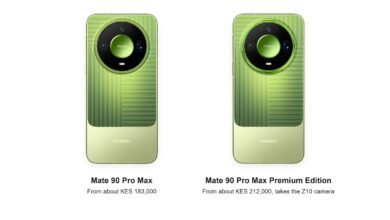
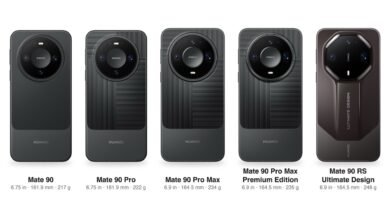
For anyone buying a phone, nothing changes, because the deal covers patents only. Qualcomm still can’t sell Huawei Snapdragon chips, since the US Commerce Department revoked the export licence it used to supply Huawei in May 2024, which Qualcomm notes in the same annual report. Huawei’s phones, including the Mate 90 series, keep running Huawei’s own Kirin chips.
What the deal does, once regulators sign off, is end a gap of well over a year in which Huawei, one of China’s largest phone makers, had no licence agreement with Qualcomm. As for who gets paid more, unless one of them publishes the terms, the best outside view will come from Qualcomm’s filings, which named Huawei the last time its royalties changed.




Join the discussion