

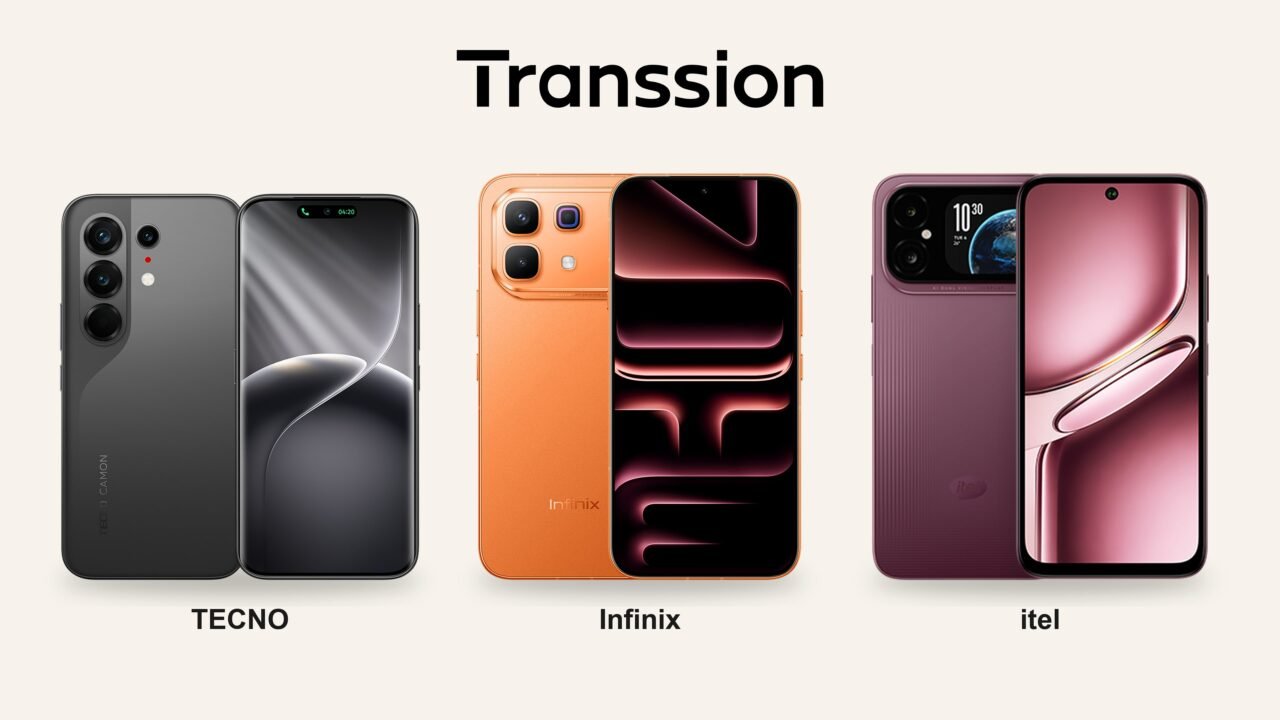
A share in Transsion, the Chinese company behind TECNO, Infinix and itel phones, will cost HK$35.30 in Hong Kong, or about KES 580. Transsion set that price on Tuesday 13th October 2026. It’s the lowest price in the range it offered investors, HK$35.30 to HK$38.80. The shares start trading on the Hong Kong Stock Exchange at 9:00 a.m. Hong Kong time on Thursday 15th October.
Transsion is selling 86,648,300 new shares, so at that price it raises about HK$3.06 billion, or about KES 50.6 billion, before costs. After fees, its prospectus puts the money it keeps at about HK$2.97 billion, or about KES 49 billion. Had the price landed at the top of the range, it would have kept about HK$300 million more, roughly KES 5 billion.
If you own a TECNO, Infinix or itel phone, the prospectus has two things that matter to you:
- where the money goes, and
- Transsion’s own numbers on how much more its phones now cost.
What Transsion is selling
Transsion has been listed in Shanghai since September 2019. Those shares are called A shares and trade in Chinese yuan. The new ones are H shares, the name for shares in a mainland Chinese company that trade in Hong Kong dollars in Hong Kong. Both are ordinary shares in the same company, but they can’t be swapped for each other, and different people can buy each. Mainland investors trade the A shares, while overseas investors need a special licence or a link between the two exchanges called Stock Connect, which has limits. Mainland investors, in turn, generally can’t buy H shares, apart from some licensed funds and, once the H shares qualify, through the same link. So the two markets set their own prices for the same company.

At current exchange rates, HK$35.30 is about 30.17 yuan. The A shares closed at 48.94 yuan, about KES 950, in Shanghai on Tuesday. So a buyer in Hong Kong is paying about 38% less than a buyer in Shanghai for the same slice of Transsion. On Thursday 8th October, Shanghai’s first trading day after a week-long holiday and after the price range came out, the A shares fell 14.3%, from 53.80 yuan to 46.10 yuan, or from about KES 1,000 to KES 890.
These are new shares, so the money goes to Transsion itself. That’s different from the Quickmart sale on the Nairobi Securities Exchange earlier this month, where the shares came from the owner and the money went to it. Transsion’s Hong Kong shares trade in lots of 100, so the smallest buy at HK$35.30 is HK$3,530, about KES 58,000, before the 1% brokerage fee and small levies. The public part of the offer closed on Monday, and Transsion says it will publish how many people applied, and who gets what, on Wednesday 14th October.
Before the public got a look, 11 large investors had already agreed to buy HK$1.25 billion of shares, about KES 20.6 billion, at whatever the final price turned out to be. These are called cornerstone investors, and they can’t sell for six months after listing. At HK$35.30, they take about 41% of the shares on offer. Almost a third of that money, HK$383 million or about KES 6.3 billion, comes from four chip and component companies.
- MediaTek, which makes the chips in phones such as the TECNO Camon series and already owns 6.22% of Transsion, is one.
- Longsys, a Chinese maker of memory and storage products, writes the biggest single cheque, US$30 million or about KES 3.9 billion.
- HOSIN, which trades memory chips, and
- Keysida, an electronic components distributor, are the others.
- BYD, the electric car and electronics maker, and
- Singapore’s state investor GIC are also on the list.
New shareholders also miss the dividends Transsion has already paid this year. It paid its existing owners about 1.96 billion yuan, about KES 37.9 billion, in May and August, and the prospectus says buyers of the new shares aren’t entitled to them. By our arithmetic that’s about three quarters of what the Hong Kong sale brings in.
Where the money goes
The prospectus splits the money four ways, and the amounts adjust in proportion now that the price is at the bottom of the range.
- 40% goes to research on AI, about HK$1.19 billion or KES 19.6 billion. That includes small AI models of about three billion parameters, built to run on the phone itself using the cheaper chips in mid-range and budget phones, models that handle local languages and people who mix languages in one sentence, and an AI assistant that keeps working when the internet connection is patchy.
- 30% goes to marketing and building the brands, about HK$890 million or KES 14.7 billion. A third of that, 10% of everything raised, is for adverts on short-video apps.
- Another 20% goes to Transsion’s app and advertising business and to gadgets like earbuds, watches and smart glasses.
- The last 10% is everyday running money.
The spending is spread over five years, from 2026 to 2030. None of it is for cheaper phones, and none is for new factories, in Kenya or anywhere else. Transsion’s six factories are in Chongqing, Shenzhen, Nanchang and Wuxi in China, plus Bangladesh and Ethiopia.
What the numbers say about phone prices
In 2025 Transsion’s revenue fell 4.5% to 65.6 billion yuan, about KES 1.27 trillion, and its profit fell 53.5% to 2.6 billion yuan, about KES 50.5 billion. The first reason Transsion gives is a smaller gross profit, the money left from sales after paying for the products. That shrank because it sold fewer phones, and because memory chips, the RAM and storage in every phone, cost more. Chipmakers have moved factory capacity to memory for AI, so there’s less for phones and the price has climbed. Transsion’s prices didn’t keep up in the second half of 2025, so it shipped fewer phones instead of selling them at thinner margins, and waited for the whole industry to raise prices.
That happened in 2026, when Transsion says it and other major phone makers raised their prices. In the first four months of the year, memory chips made up 48.4% of the cost of everything Transsion sold. A year earlier, it was 24.5%. So memory alone now costs Transsion almost as much as everything else in those products put together.
For the six months to June 2026, Transsion sold 39.5 million smartphones, down from 44.5 million a year earlier. Revenue still rose 21.9% to 35.4 billion yuan, about KES 687 billion. That’s because the average smartphone sold for 713.4 yuan, about KES 13,800, up from 547.5 yuan, about KES 10,600, which is 30% more per phone. Transsion says it launched fewer entry-level TECNO and Infinix phones and put more into mid-range and higher ones, and names the TECNO Camon Slim and the Infinix Hot 70 among the new phones it launched. In August we explained how Transsion’s profit forecast showed this happening. The prospectus now has the reviewed numbers.
The Infinix Note 60 Pro with 8GB of RAM and 256GB of storage launched in Kenya at KES 41,999 in March. On Infinix’s own Kenyan store today, the same phone is KES 45,999.
Africa was Transsion’s largest region in 2025. It brought in 24.8 billion yuan that year, about KES 480 billion and 37.7% of revenue, and the prospectus names Kenya among its main African markets. Frost & Sullivan, the research firm Transsion commissioned for the prospectus, says Transsion sold 53.1% of all phones bought in Africa in 2025. By money spent on phones, though, it had 19.2% and came second, so it sold more than half the phones but took less than a fifth of the money. Across all its markets, Transsion’s stated plan is to earn more of its revenue from smartphones priced at US$150 or more, about KES 19,500, because competition among entry-level phones is getting tougher.
Wednesday’s results will show how much demand there was for the shares, and Thursday morning what investors will pay for them. For anyone buying a TECNO, Infinix or itel phone in Kenya, the prospectus confirms what our August piece found: Transsion is launching fewer entry-level TECNO and Infinix phones on purpose, and the memory costs behind this year’s price rises haven’t gone away.





Join the discussion