

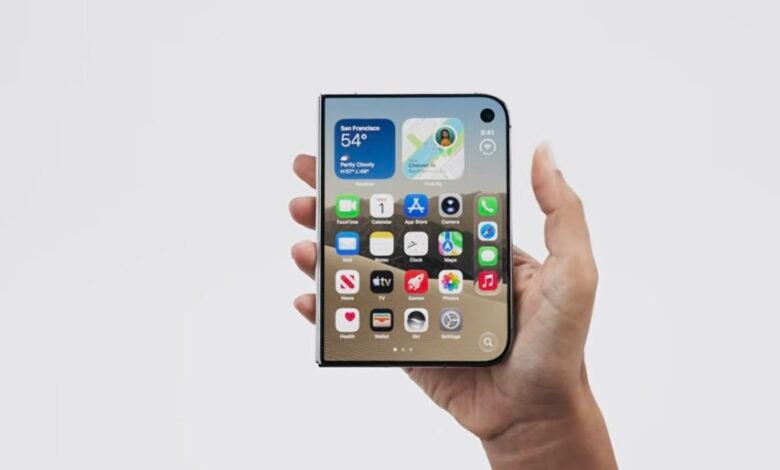
The first reviews of the iPhone Duo, Apple’s first foldable phone, went live today, two days before the first pre-orders reach buyers on 23rd October 2026. The Duo folds like a book: closed, you get a 5.4-inch screen on the outside, and opened, a 7.6-inch screen that Apple says is 50 percent larger than the iPhone 18 Pro Max’s. The verdict across the reviews is broadly the same. It is the best-built foldable most of these reviewers have used, and Apple still has work to do on apps, multitasking and the cameras.
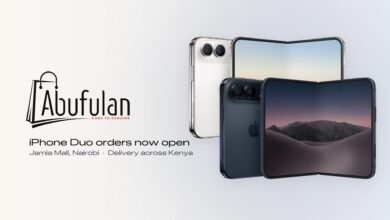
For anyone in Kenya, the bigger question is when they can get one and at what price. Apple doesn’t sell iPhones directly here, Kenya isn’t among the 18 countries Apple named for the first wave, and Apple hasn’t said which 28 countries get the Duo on 30th October. When the Duo went on pre-order last Friday, we found one Nairobi shop taking orders without publishing a price. Today, Avechi lists the 512GB model at KES 449,999, marked out of stock. That is about KES 165,000 more than the US price of USD 2,199 converts to, and well above the KES 314,000 to 334,000 we expected for the cheaper 256GB model when we worked out local pricing last week.
That gap is likely to grow before it shrinks. In the US, every model on Apple’s online store showed a delivery date of 25th January within half an hour of pre-orders opening, and early orders are already listed on eBay for well above retail. Kenyan importers are buying from the same thin supply, then adding shipping, taxes and their own margin on top. So if you want a Duo in Kenya this year, expect to wait months and to pay well above the converted US price.
| Storage | US price | About |
|---|---|---|
| 256GB | USD 1,999 | KES 259,000 |
| 512GB | USD 2,199 | KES 285,000 |
| 1TB | USD 2,599 | KES 337,000 |
| 2TB | USD 3,199 | KES 415,000 |
Build, weight and battery
The hardware is where the reviews agree most. The frame is grade 5 titanium, the hinge has more than 100 parts and holds the screen at any angle, and the matte nano-texture coating on the inner display hides the crease well enough that one reviewer said it basically disappears when you look at it head on. Unfolded, the Duo is 5.2 mm thick.

All of that adds up to 254 grams. That is 53 grams more than Samsung’s Galaxy Z Fold 8 and a little more than the iPhone 18 Pro Max, and more than one reviewer noticed it pulling down a trouser pocket.
Battery life holds up. Apple claims up to 24 hours of mixed use, and in daily use reviewers ended their days with 20 to 40 percent left. In lab tests the Duo landed roughly level with the Fold 8, ahead of it in one test and slightly behind it in another, but well short of the iPhone 18 Pro Max, which lasted 17 hours 31 minutes against the Duo’s 13 hours 20 minutes in the same test. It charges to 50 percent in about 20 minutes with a 60W adapter, which you buy separately.
IP68 puts the Duo ahead of most foldables. Apple rates the Duo for up to 6 metres of water for 30 minutes, while the Fold 8 is IP48, which means far weaker protection against dust. One review unit slid down a flight of wet steps and came away with minor scuffs on the frame and no damage to either screen.
Apple’s apps are ready, most others aren’t
Apple’s own apps use the big screen properly. Messages, Mail, Notes and Calendar get iPad-style sidebars and two-column layouts, and Safari shows multiple tabs. Many third-party apps don’t. Telegram, Gmail and LinkedIn show phone layouts that don’t fill the screen, and unoptimised games fill only about three quarters of the inner screen. Netflix, Instagram, Slack, Spotify and TikTok have already been updated. Reviewers expect the rest to follow, but nobody can say when.
Split View, which lets you run two apps side by side on an iPhone for the first time, is where Apple held back. You get two apps in a fixed half-and-half split, with no resizing and no third app. The Fold 8 runs three. You can save pairs of apps and reopen them together, which one reviewer found intuitive, but anyone hoping for an iPad mini in their pocket will find the multitasking limited.
The cameras
At the back are a 48MP main camera and a 48MP ultra-wide. There is no separate telephoto lens; the 2x zoom is cropped from the main sensor, and detail falls off at 8x and 10x. Reviewers rated the photos close to the Fold 8 and behind the iPhone 18 Pro, especially in low light, and the Duo drops ProRAW and shutter speed control. The 12MP Center Stage camera above the cover screen takes good selfies, and you can also take selfies with the rear cameras while the cover screen shows the preview.
The camera under the inner screen is the weak one. Apple calls it an under-display FaceTime camera and doesn’t give its resolution. Reviewers measured about 4MP and found photos soft and washed out, but it is fine for FaceTime and video calls, and it fades into the screen when you aren’t using it, so there’s no punch-hole in the middle of a film.
Touch ID instead of Face ID
The Duo unlocks with Touch ID in the side button, with no Face ID at all, so every unlock and every Apple Pay payment goes through your fingerprint. The button sits on the right-hand edge, where a right thumb lands naturally and a left hand has to reach with a middle finger. One reviewer found Touch ID slow and clumsy and unlocked with an Apple Watch instead, which is faster if you already own one.
Apple Pencil support is a week away
Apple said in September that the Duo would get Apple Pencil support later this year. The iOS 27.2 release candidate, the near-final test build, already has it, and the public release is expected around 26th October. Only the Apple Pencil with USB-C works, at USD 79 or about KES 10,300. It works on both screens, pairs and charges through a cable rather than snapping on magnetically, and has no pressure sensitivity. The Apple Pencil Pro and second-generation Pencil don’t work.
The Duo is also eSIM only, with no SIM tray, so your line has to be converted first. Safaricom does it in its shops for KES 150 on prepaid lines.
Who should wait
The reviews describe a finished piece of hardware running software that isn’t finished yet. Apple will fix the app gap with time, and the iOS 27.2 update shows it is still adding features weeks after launch. In Kenya, though, you’d be paying close to KES 450,000 for the 512GB model to use apps that show black bars, a camera that trails the iPhone 18 Pro and a phone heavier than its main rival. For most buyers here, waiting until local stock settles and the big apps are updated is the better deal, and by then you’ll know what Kenyan shops are actually charging.




Join the discussion