

How we scored them
Speed counts for 20% of the score. We used Geekbench 6, a test that times how fast a phone’s processor gets through everyday jobs, and took the median score from owners’ phones on its public results database.
Memory and storage count for another 20%. RAM is where your open apps sit, so faster RAM means apps switch and reopen quicker. LPDDR5X is a newer, faster generation of phone RAM than LPDDR4X. Storage works the same way: UFS 4.0 and 4.1 storage is much quicker than UFS 2.2, so apps open and install faster. We ignored “virtual RAM”, which is just storage pretending to be memory. Where a maker doesn’t say which type it uses, we scored the slower one, so a maker that keeps quiet doesn’t get the benefit of the doubt. Earlier this month we found the vivo V80 using older LPDDR4X RAM and UFS 3.1 storage even though it costs more than the phone it replaced.
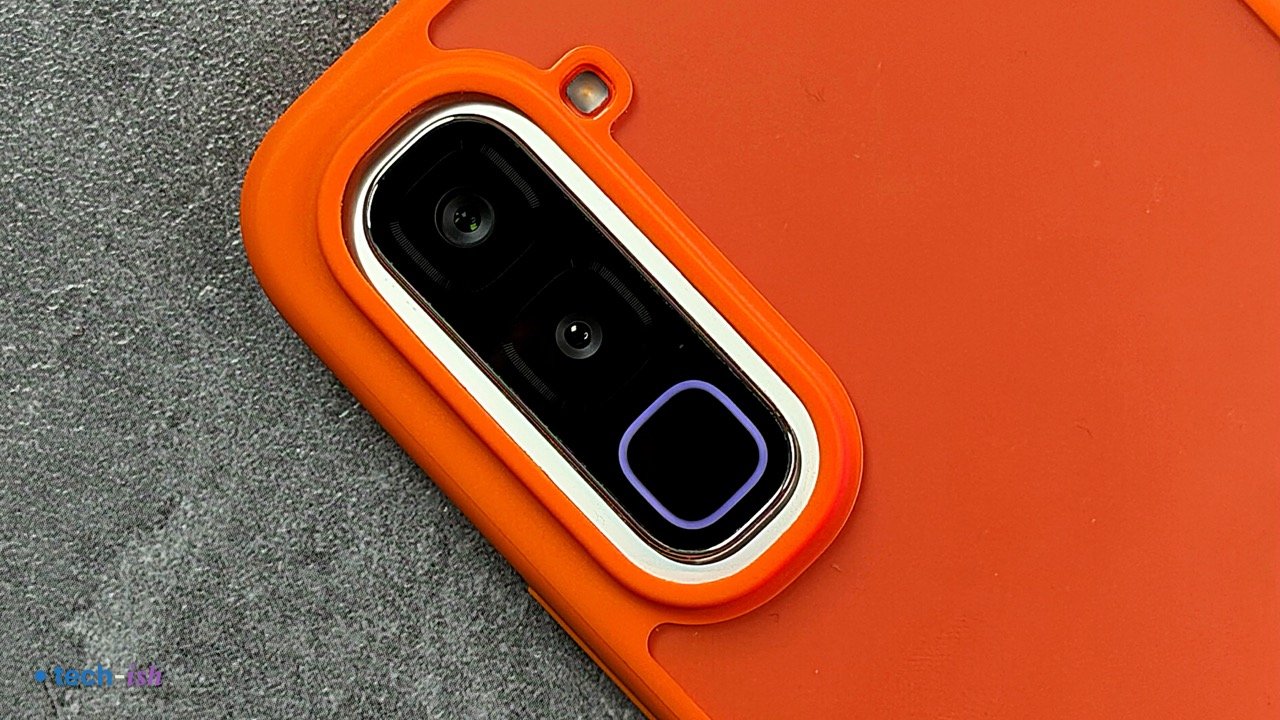
The camera counts for 15%, and we scored the sensor, not the megapixels. Megapixels tell you how many dots make up a photo. Sensor size tells you how much light the camera catches, so a bigger sensor gives you cleaner photos at night and indoors. Sizes are written as a fraction of an inch, and the smaller the number under the line, the bigger the sensor. A 1/1.56-inch sensor has about three times the area of a 1/2.76-inch one. Optical image stabilisation (OIS), a small motor that moves the lens to cancel hand shake, earned extra points, and so did a real ultrawide or zoom camera. The 2MP “macro” and “depth” cameras earned nothing.
The battery counts for 15%, scored in watt-hours (Wh) rather than milliamp-hours (mAh). Wh is the capacity multiplied by the battery’s voltage, so it’s the real measure of how much energy the phone carries. The Nord 6 shows why that matters. Its India version has a 9,000mAh battery rated at 33.48Wh, while the global version has 7,500mAh in two cells, rated at 29.4Wh. That’s 20% more mAh but only about 14% more energy. Where a maker publishes no Wh figure, we assumed 3.87 volts, a common rating for phone batteries. Each phone is ranked on its biggest battery in any market, the same rule we used when we ranked the biggest phone batteries of 2026 in August, and we note where your version may be smaller.

The screen counts for 15%. Points go to 1080p or sharper resolution, a 120Hz or faster refresh rate (how many times a second the picture updates, which makes scrolling smoother) and an OLED panel. We didn’t drop 720p phones, but they score low here.
Updates make up the last 15%, and only written promises count: how many Android upgrades the phone will get and how many years of security patches. Most China-only phones have no written promise, so they score close to zero on this.
None of the China-only phones ship with Google Play. Honor’s own support page shows how to switch on Google Play services on its MagicOS 10 phones, and OnePlus’s China software has a similar Google services switch in its settings. realme’s China software is built on the same base as OnePlus’s, but we couldn’t confirm the switch on it. realme also moved its China after-sales service to OPPO on 1st April 2026. So if you want Google apps working the moment you switch the phone on, pick from the Samsung, Motorola, Tecno, realme Narzo, Infinix and OnePlus Nord phones above.




Join the discussion