

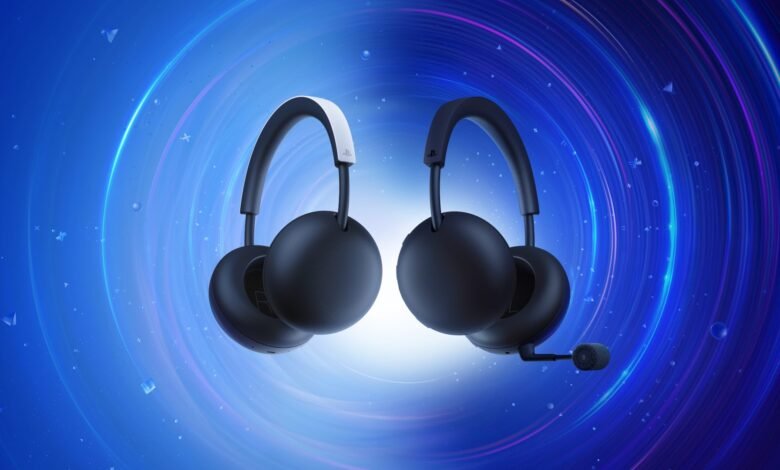
Sony’s new PlayStation Pulse wireless headset goes on sale today, 19th November 2026, the same day GTA VI arrives on the PS5. It costs USD 99.99, or about KES 13,000, and comes in white and Midnight Black. Sony announced it in September alongside a pricier sibling, the Pulse Edge, which won’t be out until early 2027. So anyone buying a headset for the game this week has a choice to make: take the Pulse now, or wait a few months for the Edge.
For most PS5 players, we think the answer is to buy the Pulse. Sony has made the choice easier than usual by publishing a side-by-side table of what each headset has, and the two are built around the same kind of driver and connect the same way. The Edge adds things you’d notice in particular situations: a noisy room, long evenings in voice chat, a device without PlayStation Link, or a taste for more bass.
What both headsets share
Both use planar magnetic drivers. Most headphones make sound with a small cone pushed back and forth by a coil, the way a regular speaker does. A planar driver uses a thin, flat sheet with wiring printed on it, held between magnets. When current flows, the whole sheet moves at once instead of being pushed from the middle, so it reproduces detail more accurately. That’s why you usually find planar drivers in studio and audiophile headphones. The catch is that they need strong magnets to move enough air for bass, and magnets add weight and cost. Sony’s first wireless headset with planar drivers was the Pulse Elite in 2024, and Sony says both new headsets get larger ones for fuller bass.
Both also connect through PlayStation Link, Sony’s own wireless connection. It works with the PS5, the PlayStation Portal, PCs and Macs, and a small USB-C adapter for it comes in the box. It carries lossless audio with very little delay, which matters in shooters where you’re listening for footsteps. Each headset can stay connected to your phone over Bluetooth at the same time, so you can take a call or play music while the game audio keeps coming through PlayStation Link.

Sony rates both at up to 30 hours on a charge, tested on pre-production units over PlayStation Link. Both have microphones that use AI to filter out background noise, earcups that rotate to lie flat, and support for Tempest 3D AudioTech, the PS5’s surround sound for supported games.
So if all you want is a wireless headset that sounds good on a PS5 and works with your phone, the Pulse already does that.
What the Pulse Edge adds
This is Sony’s comparison table, with the price and dates added.
| Feature | PlayStation Pulse | Pulse Edge |
|---|---|---|
| Magnets per planar driver | 4 | 8 |
| PlayStation Link adapter (USB-C) | Included | Included |
| Microphone | Built-in, AI noise rejection | Detachable boom mic, plus a hidden mic when detached, AI noise rejection |
| Volume control on the headset | Yes | Yes |
| Game and chat balance control on the headset | No | Yes |
| Active noise cancellation | No | Yes |
| Carrying case | No | Yes |
| Audio and microphone jack | No | Yes |
| Price | USD 99.99 (about KES 13,000) | Not announced |
| Release | 19th November 2026 | Early 2027 |
Double the magnets is the sound upgrade. Stronger magnets push that flat sheet harder, and Sony says it gives the Edge deeper bass while keeping the detail. Active noise cancellation is the other big one. Microphones on the headset listen to the sound around you and the headset plays the opposite wave to cancel it out, so a fan, a generator or a loud sitting room fades into the background.
The boom mic sits closer to your mouth than a mic built into the earcup, which is why teammates usually hear you more clearly on one. On the Edge you can take it off and fall back on a hidden mic. The audio jack means you can plug the Edge in with a cable, which opens it up to devices that have neither PlayStation Link nor Bluetooth audio, such as an Xbox controller. The Pulse has no audio jack. Sony also mentions fast charging and a dedicated mute button on the Edge’s product page. The Pulse’s page mentions neither.
The chat balance row is less clear-cut than it looks. The table gives the Pulse no game and chat balance control, though the Pulse’s own product page talks about adjusting “volume, chat balance and more” through built-in controls and the PS5’s menus. Either way, the PS5 already handles this. A slider on the voice chat card in the console’s Control Center sets the balance between voice chat and other audio. What the Edge adds is a control on the headset itself, so you don’t have to press the PS button mid-game.
What Sony hasn’t said
Sony hasn’t given the Pulse Edge a price or a date beyond early 2027, and says it will share more when it launches. It hasn’t published a weight for either headset, and the Pulse’s page says nothing about fast charging. So anyone waiting for the Edge is waiting without knowing what it costs.
Sony does say where the Edge sits in its range. It pitches the headset at “players looking for a premium audio experience”, above the Pulse, and it still sells the Pulse Elite, which launched at USD 149.99 (about KES 19,500) with a retractable boom mic, quick charging and a mute button, but no noise cancelling.
Buy now or wait?
We’d still buy the Pulse now. It has the same kind of driver as the Edge, the same lossless PlayStation Link connection, Bluetooth alongside it and the same rated battery life, and it’s available today.
Wait for the Edge if one of its extras solves a problem you have. If you play in a loud house, noise cancelling is the feature you’ll miss. If you spend most evenings in party chat, a boom mic is worth having. If you want the headset on an Xbox controller or anything else without PlayStation Link or Bluetooth audio, the cable gives you that. And if you want more bass from the same design, the extra magnets are the upgrade. We expect it to cost more than USD 99.99, given that Sony calls it the premium option, but until Sony names a price, you’d be waiting on a number you don’t know.
That waiting is longer in Kenya. The Pulse launches today in 24 countries, including the US, Canada, Japan, Australia, the UK and most of Western Europe, and none of them is in Africa. Sony says it will announce more countries later. For now, Kenyan shops sell Sony’s older headsets: Local retailers list the Pulse 3D at about KES 12,000 and the Pulse Elite at about KES 18,400. The Pulse’s US price of about KES 13,000 doesn’t include shipping or import duty, so an imported unit will cost more than that, and Sony hasn’t said whether either new headset will come here officially.





Join the discussion