

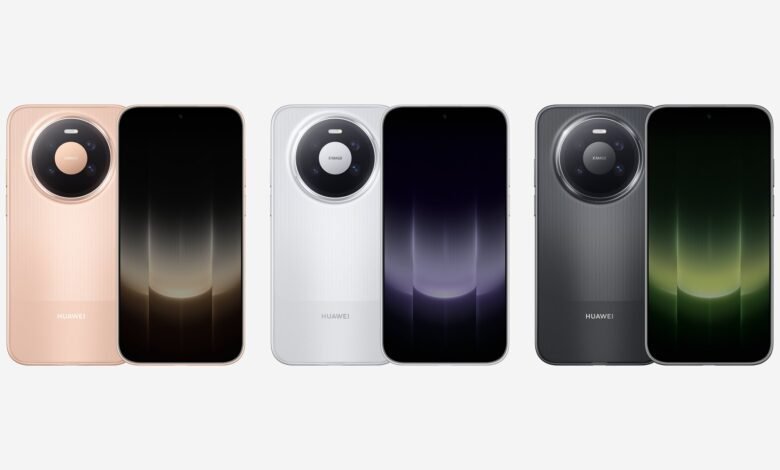
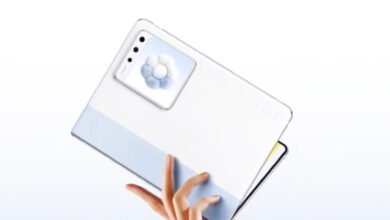
Huawei launches the Mate 90 Air on Monday, 24th November, at the same event as the Mate X8 foldable. It’s the thinnest Mate that doesn’t fold, going by Huawei. The Vmall listing is already up with rose gold, silver and black, and 12GB of memory with 256GB or 512GB of storage. There’s no price or spec sheet yet.
So what does a thinner Mate cost you? Huawei has done this before. The Mate 70 Air launched in November 2025 at 6.6mm thick. The Mate 80, the standard Mate that year, was 7.95mm. Their spec sheets show what came out.
Why a thin phone is hard to build
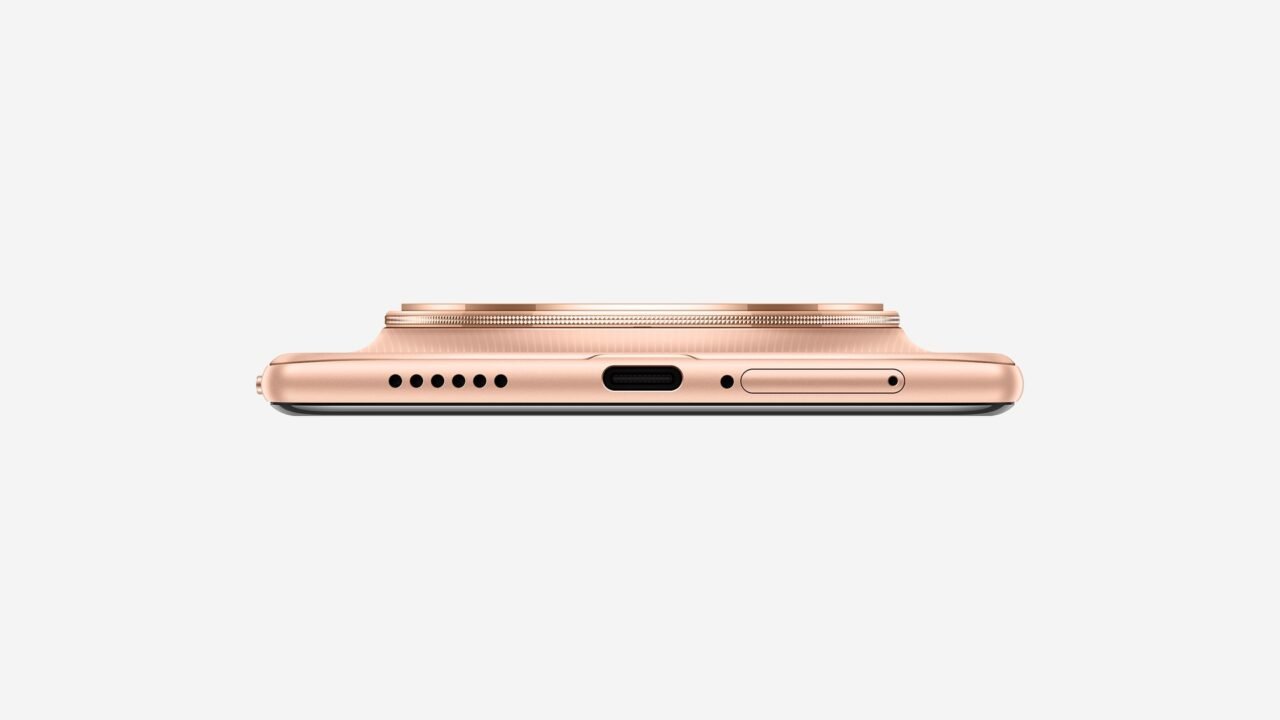
Most of a phone’s thickness is the screen, the battery and the cameras, stacked on top of each other. A battery holds more the bigger it is, so if you make it thinner, it has to get wider and longer to hold the same charge. A camera can’t spread out like that. Its lens has to sit a set distance in front of the sensor to focus, and a bigger sensor or a longer zoom needs more of that distance. That’s why phones have camera bumps. Wireless charging takes room too: a flat copper coil with a magnetic shield behind it, sitting between the battery and the back glass.
What the Mate 70 Air gave up
Huawei dealt with the battery by making the Air bigger instead. It has a 7-inch screen and is 81.5mm wide, against the Mate 80’s 6.75 inches and 76mm. That extra area fits a 6,500mAh battery, more than the Mate 80’s 5,750mAh, and the Air was still lighter, at 208g against 217g. So the thin phone got the bigger battery, and the cuts came elsewhere.

| Mate 70 Air | Mate 80 | |
|---|---|---|
| Thickness | 6.6mm | 7.95mm |
| Weight | 208g | 217g |
| Battery (typical) | 6,500mAh | 5,750mAh |
| Wireless charging | None | 50W |
| Main camera | 50MP, fixed f/1.8 | 50MP, variable f/1.4 to f/4.0 |
| Zoom camera | 12MP, 3x | 12MP periscope, 5.5x |
| Ultra-wide camera | 8MP | 40MP |
| 3D face recognition | No | Yes |
| Water resistance | IP68 to 2m | IP68 to 6m |
| Launch price (CNY) | 4,199 | 4,699 |
Wireless charging is the big one. The Air didn’t include it, while the Mate 80 charges wirelessly at up to 50W. The cameras shrank too. The zoom went from a 5.5x periscope, a lens laid sideways inside the phone so a longer zoom fits, to a 3x lens. The ultra-wide dropped from 40MP to 8MP, and the main camera lost its variable aperture, the opening that adjusts how much light gets in. There’s no 3D depth camera on the front for face unlock either, and the water rating is for 2m instead of 6m.
What you got back was a lower price. The Air started at about USD 630, which was USD 75 less than the Mate 80.
What we know about the Mate 90 Air
Beyond the colours, memory and “thinnest” claim, Huawei’s own photos show three lenses on the back. Everything else is unconfirmed. Digital Chat Station, a Chinese tipster, says it’s “6-something” millimetres thick, which could make it thinner than the Mate 70 Air, with a 7-inch curved screen, a fingerprint sensor on the side and a 66W charger. Hands-on posts from 20th November mention a battery above 6,000mAh, a Kirin 9-series chip, a physical SIM slot and Huawei’s Red Maple camera, a sensor that picks up extra colour information so colours come out right in tricky light. Other leaks put the battery at 6,500mAh or 6,800mAh, and the chip at Kirin 9020 or 9030.
The phone to measure it against is the Mate 90, which launched in October. It’s 7.95mm thick, with a 6,600mAh battery, 50W wireless charging, a 4x zoom camera and 3D face recognition, and it starts at about USD 900 or KES 117,000. After Monday’s launch, check the Air against that list, starting with wireless charging.
We think the Air will cost more than the Mate 70 Air did. When the Mate 90 replaced the Mate 80, every version went up in price, the cheapest by CNY 1,300, about USD 190.
Wireless charging is the line we’ll be watching. It’s the biggest thing the Mate 70 Air dropped, and every other Mate 90 has it. If the Mate 90 Air brings it back, a thinner Mate mostly costs you in the cameras. The event starts at 09:30 Nairobi time.




Join the discussion