
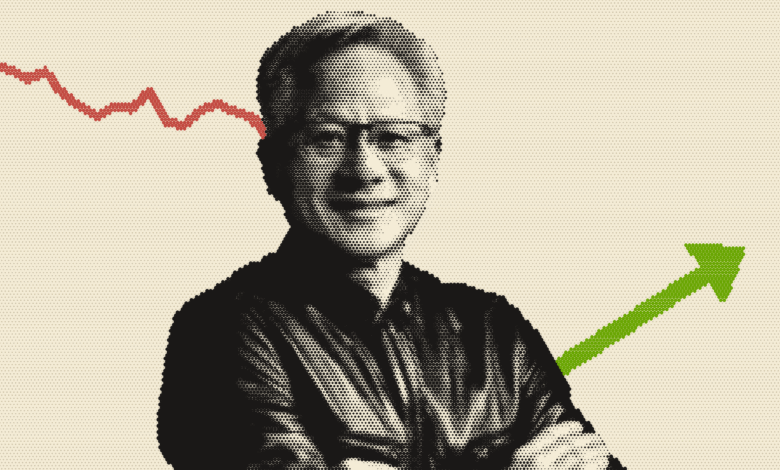
On the morning of 23rd November 2026 in New York, Nvidia’s market value rose by as much as USD 1.1 trillion, or about KES 143 trillion (using KES 129.92 per USD 1 that day). Most of that came after one announcement: Jensen Huang was back as CEO, 11 days after he resigned.
Nvidia makes the chips that train and run most large AI models. That morning it passed Microsoft and Alphabet, which owns Google, to become the second most valuable company in the world, behind Apple. At its highest, the rise was more than double the nearly USD 450 billion (about KES 58 trillion) Microsoft added on 30th July 2026, the full-day record going into that morning.
But the announcement was mainly about who runs Nvidia. It said nothing about new chips or sales. So where does a trillion dollars come from?
How market value works
A share is a small piece of a company, and Nvidia has about 24.1 billion of them. Multiply that by the price of one share and you get its market value. When trading ended on Friday 20th November, a share cost USD 125.53 (about KES 16,300). On Monday morning, the price reached USD 171.50 (about KES 22,300). That’s USD 45.97 (about KES 6,000) more per share, or about USD 1.1 trillion across all of them.

Nobody handed Nvidia that money. By 12:30pm in New York, buyers and sellers had traded about 530 million shares, equal to roughly 2% of the total. But the price they agree on is used to value every share, including the ones nobody sold. That’s why a company’s value can rise by a trillion dollars in a morning, and fall the same way.
Nvidia was recovering from a fall
Nvidia’s shares started falling in early October. Much of the drop came later, after claims about Alice Huang, a Chinese executive close to Jensen Huang. Some US officials suspect her of working for Beijing. She hasn’t been charged, and China calls the claims smears.
| Date (2026) | What happened | Day’s last price |
|---|---|---|
| 6th October | Highest before the fall | USD 239.24 (KES 31,100) |
| 29th October | First report on Alice Huang | USD 213.66 (KES 27,800) |
| 11th November | Day before the resignation news | USD 173.73 (KES 22,600) |
| 12th November | Resignation announced | USD 166.19 (KES 21,600) |
| 20th November | Last trading day before Huang’s return | USD 125.53 (KES 16,300) |
The shares fell only 4.3% on the day Nvidia announced Huang’s resignation. Then on 20th November they dropped 14%. They were already down more than 6% that day when unnamed people said the US markets regulator was examining Nvidia’s accounting. The regulator declined to comment, and such an investigation isn’t evidence of wrongdoing.
On 23rd November, the shares were up 9% before the announcement, after US President Donald Trump called for Huang’s return. So we think it’s a mistake to read USD 1.1 trillion as what Huang alone is worth. Part of it looks like investors undoing the 14% drop. Even second place wasn’t new: Nvidia was second on 6th November, and first a month earlier.
What the rise cost short sellers
Short sellers bet that a price will fall. They borrow shares, sell them and hope to buy them back cheaper, so when the price rises, buying back costs more. Data firm Ortex put their Nvidia loss that Monday at USD 12.2 billion (about KES 1.6 trillion), their biggest in a day since at least 2019.
That’s a paper loss, calculated at USD 168.50 (about KES 21,900) a share. Counting from 29th October, short sellers were still about USD 14 billion (about KES 1.8 trillion) ahead.
How the price compares with Nvidia’s profit
In the three months to 25th October, Nvidia made USD 115.8 billion in sales (about KES 15 trillion), up 103% from a year earlier. Its profit was USD 2.70 (about KES 350) a share. If every quarter were like that, Friday’s last price would be equal to about 12 years of profit, and Monday’s highest to about 16.
Those results were already out on Friday, so we think the difference is how much investors trusted the profits to keep coming. Nvidia’s February 2026 annual report lists losing key people as a risk, and says it’s “highly dependent on the services of our longstanding executive team”.
Whether that Monday’s price was right depends on Nvidia’s profits and on what the investigations find, including the board’s own into whether Jensen Huang was the target of a foreign intelligence effort.




Join the discussion