

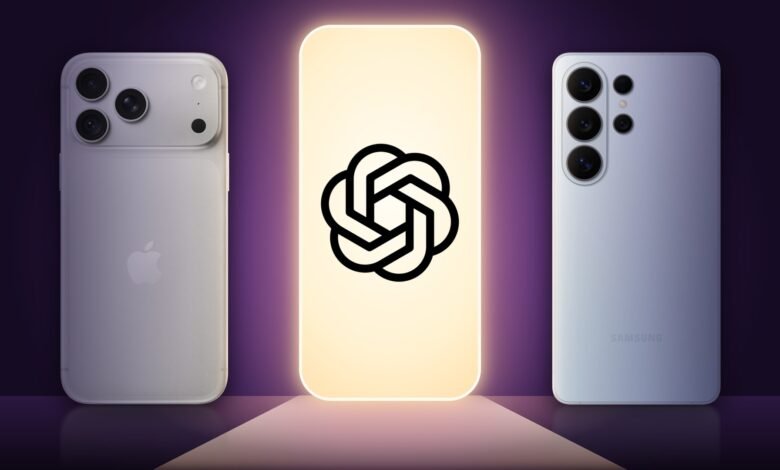
On 19th November, Chinese supply-chain reports said Foxconn’s FIH Mobile won an OpenAI phone order and will join final assembly. Another report put the phone on sale in late 2027 or 2028. OpenAI hasn’t announced a phone, and neither it nor Foxconn has confirmed the order.
Why take on Apple, Samsung and others in a business shrinking this year? We think it’s because over 1.2 billion weekly ChatGPT users are on devices OpenAI doesn’t control.
iPhone apps run in sandboxes, so one can’t reach another’s data unless Apple allows it. That protects privacy, but ChatGPT can’t check your bank balance, then tap through a taxi app.
That matters now that AI companies sell agents, which do tasks for you. OpenAI’s agents, dots, run in the cloud through accounts you connect, but can’t see your phone.

Analyst Ming-Chi Kuo, who first described the phone in April, argues a complete agent needs control of hardware and operating system. Only phones, he says, know where you are, who you’re talking to and what you’re doing now.
Apple’s agent
Siri AI uses actions developers give it. An Apple job listing last week, since removed, sought a lead for an agent that uses computers “the way a capable person does” to browse, work across apps, run commands and code. Apple has considered launching this early-stage agent as soon as late 2027.
In the macOS 27.3 beta, letting ChatGPT control other Mac apps takes 14 steps, up from four, with warnings to reconsider. Apple hasn’t blocked it, and existing permissions stay. Apple says security risks grow as agents become more capable, because full access exposes files, mail and messages. That’s fair, but some AI companies and users think Apple is slowing competitors. Apple hasn’t said if its agent will face those screens.
We think that’s the strongest argument for a phone: whatever Apple’s reasons, one update can make ChatGPT harder to set up, and OpenAI gets no say.
The phone
Reports give no price, design, name or operating system. FIH, Foxconn’s Hong Kong-listed phone arm, says it builds premium phones for an unnamed “major U.S.-based Internet customer”. We think that’s Google. Luxshare, once Kuo’s only named manufacturer, reportedly now supplies parts with Lingyi iTech and AAC Technologies.
In May, Kuo expected production as early as the first half of 2027, and a customised MediaTek Dimensity 9600 with two AI processors, so the phone could handle sight and speech together.
Obstacles
Android with Google’s apps means depending on Google. Without them, or on its own system, OpenAI’s phone would lack the Play Store, like Huawei’s new phones outside China since 2019.
Your bank’s app could say no. In September, nubia launched the NaviX Ultra in China with ByteDance’s Doubao assistant, which reads screens and operates apps. By 14th October, over 150 apps had refused it, including WeChat, Alipay, Meituan, Didi and several banks, though you can still use them yourself.
Apple sued OpenAI in July, accusing it of using stolen trade secrets to build hardware. OpenAI denies it, saying it’s developing “a new family of devices designed for the AI era”. A screenless speaker is expected first. On 14th October, after the judge said he was “highly likely” to grant an injunction, OpenAI made an enforceable agreement not to use the disputed information during the case.
Competition
Kuo estimates about 30 million phones across 2027-28, if all goes well. That’s about half Samsung’s third-quarter shipments, 57.8 million to Apple’s 56.5 million by Omdia’s count.
Samsung may not see a rival. On 31st October, OpenAI CEO Sam Altman told Samsung executives he wants a joint device, which neither company has announced. He called an AI companion less reliant on apps “the next version of the smartphone”.
The bigger threat is to how phones work: if agents handle food, rides and messages, you open apps less, so Apple and Google’s lucrative stores matter less. OpenAI would bet you’d pick a phone for its assistant.
OpenAI has the assistant, Apple has the phone, and neither is tipped to have both before late 2027. Google has Android, the Pixel and Gemini, which taps through apps Google picks to order food or rides in five countries. We think both must catch it.




Join the discussion