

Kenya Power wants one company to lend electricity tokens to prepaid customers whose units run out before they have cash to buy more. It put up an expression of interest, a first call for firms to show they qualify before a formal tender, on 24th November 2026. Applications close at 10am on 11th December 2026.
Most of Kenya Power’s over 10 million customers are on prepaid meters, which cut supply when the credit runs out. Kenya Power says that when it does, “households lose lighting, refrigeration and connectivity” and businesses lose trading hours, while the company loses the sale.
Kenyans have borrowed tokens before. In 2015, Safaricom and Kenya Power launched Okoa Stima, which advanced prepaid customers up to KES 1,000. Its terms set a 10% service charge and seven days to repay, and Safaricom’s FAQ explained that asking for KES 1,000 got you a KES 900 top-up. By that account, you owed KES 1,000 for KES 900 of units. If it was still unpaid 21 days after you borrowed, the terms shut you out of electricity on that account until you repaid.
What would be different this time
The new document doesn’t mention Okoa Stima, but we think Kenya Power’s proposed terms read like fixes to Okoa Stima’s.
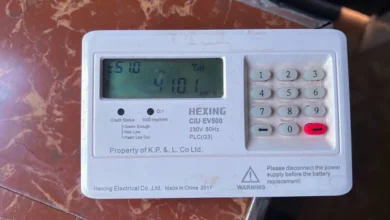
The advance would come as a token, the 20-digit number you type into your meter, carrying the full value you borrowed. You’d see every charge before accepting, in English and Kiswahili. So a KES 1,000 advance would put KES 1,000 worth of units on your meter, with the fee owed on top. Your next token purchase would go towards repaying it automatically, up to a cap Kenya Power and the lender agree.
The lender couldn’t use disconnection, tariff changes or meter blocking as “collection tools”. Penalty interest, compounding charges and rollover fees, charged for extending an unpaid loan, “will not be permitted”. All of this is still a proposal.
Kenya Power also says many of today’s options, such as mobile-money overdrafts and digital loans, charge a fixed fee on very short loans, which works out costly over a year, and that “some reduce the units the customer receives”. Bidders must state what a KES 1,000 advance costs if repaid on day 7 and on day 30, against at least three other options. That cost is worth 25 of the 100 marks. Today, Okoa Jahazi, Safaricom’s airtime advance, charges a 10% fee, and earlier this month we worked out that a KES 192 Fuliza overdraft costs about 12% over a week.
Who pays if you don’t
The winner would be lender of record, the firm that legally owns each loan, funding every advance and carrying every loss. Kenya Power “will be paid the full face value of every token issued, whether or not the advance is repaid.” That’s a full sale on a day the customer had no cash. Bidders can also offer Kenya Power a fee or revenue share, as long as they show how it changes what you pay.
Banks, digital lenders, mobile operators, fintechs and token vendors, among others, can apply, with the lending done by a Central Bank of Kenya licensed lender. Applicants need at least KES 1 billion available for the facility and a live link to a token-selling system. They also need a programme that has run for at least 12 months with at least 1,000,000 advances issued, and airtime advances or digital microloans from any country count if they run on the same lending system. Kenya Power plans to pick one provider, for a proposed three to five years.
Lenders can’t report unpaid amounts of KES 1,000 or less to credit bureaus, which lenders check before lending, and last year we looked at how often loans that small go unpaid. So we think the lender’s best hope of getting paid is your next token, since people on prepaid meters keep buying.
What you still don’t know
Kenya Power hasn’t set an advance limit, fee, repayment period, recovery cap or launch date. The cap matters most where meters already lose part of every purchase. A Last Mile connection loan, the KES 15,000 loan for connecting a home, takes 50% of every token until it’s repaid. Kenya Power wants an agreed order of deductions on such meters.
When binding prices come out, check what a KES 1,000 advance costs by day 7 against the KES 100 Okoa Stima charged on the same amount. Then check the cap, since it decides how much of your next token you keep.





Join the discussion