

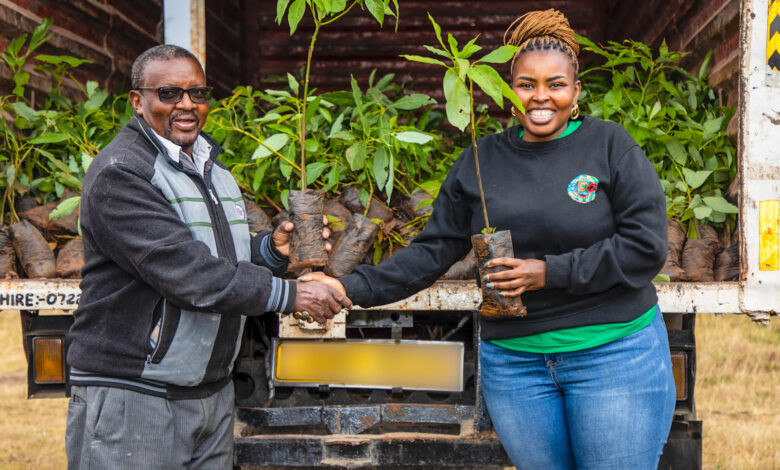
Safaricom has launched its Schools Regreening Programme, an initiative aimed at engaging learning institutions across Kenya in a large-scale tree-growing exercise to promote environmental conservation and food security. The programme, which is part of the company’s broader sustainability agenda, has already benefitted 40 schools in Nyandarua and Laikipia counties, with plans to reach a total of 128 schools in the region.
Impact of the Programme
During a week-long fruit tree growing exercise, each of the 40 participating schools received 50 fruit tree seedlings selected based on the local ecological conditions. The distributed seedlings include Hass avocados, apple mangoes, oranges, and loquats.
Safaricom’s Director of Sustainable Business and Social Impact, Karen Basiye, emphasized that the initiative aligns with the company’s broader goal of achieving net-zero emissions by 2050.
“Safaricom’s goal to achieve net-zero emissions by 2050 goes beyond carbon reduction to creating long-term benefits for future generations. Through the programme, we will create awareness on environmental stewardship among learners, giving them early exposure to knowledge and training to develop practical skills while also contributing to long-term sustainability,” said Basiye.
Beyond environmental conservation, the programme is designed to enhance nutrition within the schools while offering potential economic benefits through the sale of surplus fruit produce in the future.

Safaricom’s Role in the Initiative
Under the Schools Regreening Programme, Safaricom is taking charge of procurement and transportation of seedlings to participating schools. Once delivered, the responsibility for land preparation, fencing, watering, and nurturing the seedlings to maturity lies with the respective schools.
The initiative is part of Safaricom’s broader commitment to growing five million trees by 2030 as a means to offset 26% of its carbon emissions. By December 2024, the company had successfully planted over 2.3 million trees in degraded forest areas across the country.
Long-Term Vision
Safaricom’s sustainability strategy integrates environmental action with community engagement, ensuring that future generations are actively involved in conservation efforts. The Schools Regreening Programme not only helps combat deforestation and climate change but also introduces students to practical conservation skills, fostering a culture of environmental responsibility from an early age.
With plans to scale the initiative beyond Nyandarua and Laikipia counties, Safaricom’s approach to corporate environmental responsibility continues to evolve, demonstrating how businesses can make a tangible impact in tackling climate change.








Join the discussion