
Australia Invests KES 287 Million in Kenya’s Climate Adaptation and Land Restoration

A new KES 287 million (AUD 3.5 million) research initiative aimed at driving land restoration in Kenya has been launched. Funded by the Australian Government, the project seeks to boost regreening efforts and accelerate the restoration of degraded landscapes across the country.
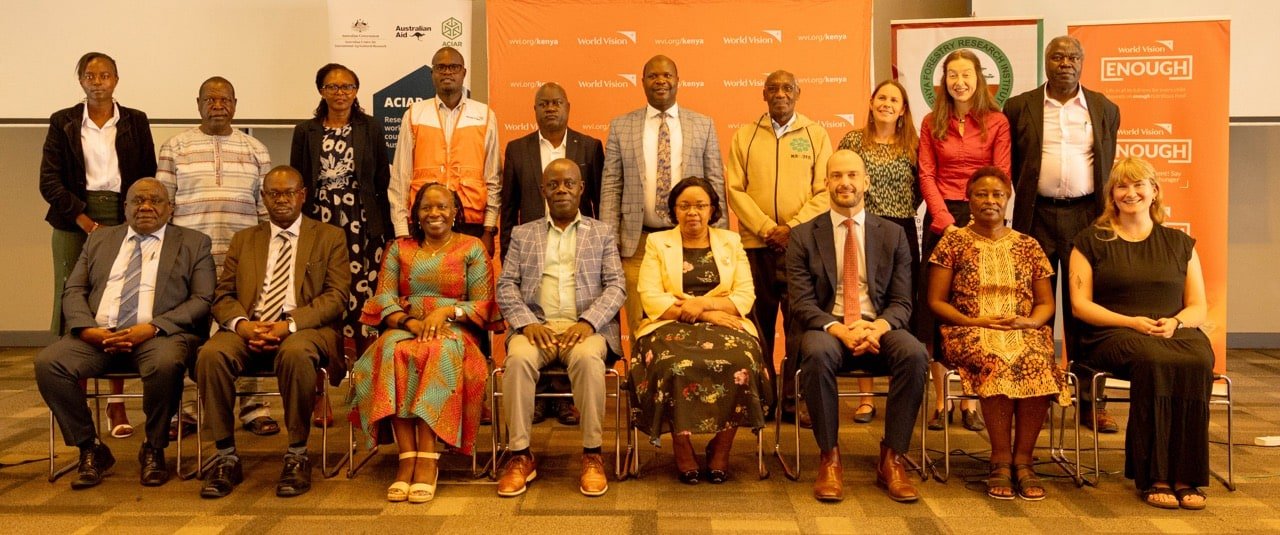
The initiative, unveiled by Dr. Jane Njuguna, Director of the Kenya Forestry Research Institute (KEFRI) in Nairobi, is part of a broader collaboration involving World Vision Australia, World Vision Kenya, KEFRI, the Center for International Forestry Research (CIFOR-ICRAF), the University of Nairobi, and the United Nations University. The project aims to explore effective climate adaptation strategies that empower communities in Kenya to lead regreening efforts.
Tackling Climate Change Through Community-Led Regreening
Dr. Njuguna highlighted the urgency of addressing climate change, stating:
“Climate change is having a global impact, and Kenya is no exception, with its effects being felt across all sectors of social and economic development. The ‘Regreening for the Future’ initiative builds on long-standing partnerships with institutions and researchers in both Australia and Eastern Africa. This project will empower farmers and researchers with the knowledge and tools necessary for developing sustainable regreening strategies that are adaptable to the evolving climate.”
The initiative also aligns with Kenya’s goal to restore 10.6 million hectares of degraded land and increase tree cover to 32% by 2032 under the African Forest Landscape Restoration Initiative (AFR 1000) and the Bonn Challenge. Similar regreening efforts are already being carried out in Kenya, including Safaricom’s Schools Regreening Programme, which aims to plant five million trees by 2030 to enhance environmental conservation in learning institutions.

Leveraging Agricultural Expertise From Australia and Africa
Professor Wendy Umberger, Chief Executive of the Australian Centre for International Agricultural Research (ACIAR), emphasized the shared agricultural challenges between Australia and Africa. She noted:
“Australia’s agricultural innovation system has valuable expertise that can benefit the African context, and we also recognize the immense knowledge that Africa offers in this space. As climate change intensifies land degradation, community-led regreening efforts must be climate-ready. The ‘Regreening for the Future’ project is a direct investment in the people—farmers, scientists, and policymakers—who are key to driving these changes.”
Across Kenya, agricultural technology is playing an increasingly important role in tackling climate change. Innovations in AgTech are helping farmers adopt more sustainable land-use practices, improve soil health, and mitigate the effects of extreme weather patterns. With a growing emphasis on climate-smart agriculture, this partnership is well-positioned to integrate cutting-edge research with practical solutions that ensure long-term land restoration.
Empowering Communities for a Greener Future
Gilbert Kamanga, National Director of World Vision Kenya, underscored the initiative’s role in fostering resilience, food security, and environmental restoration:
“At World Vision Kenya, we are committed to restoring landscapes and building resilient communities to ensure a sustainable future for children, families, and communities. This project will empower farmers and communities with the knowledge, tools, and policy support needed to restore degraded ecosystems and enhance food security. We are grateful for this partnership with the Australian Government, World Vision Australia, CIFOR-ICRAF, and KEFRI as we work towards a greener, more resilient future.”
Kenya has witnessed a surge in sustainability-driven projects, with banks and corporations joining the movement. NCBA, for example, has integrated tree planting into its environmental conservation initiatives, supporting land restoration efforts alongside financial inclusion programs. Meanwhile, startups like Amini are leveraging artificial intelligence and climate data to address Africa’s environmental challenges, providing insights that could be crucial in enhancing the effectiveness of regreening projects.
A Step Towards Long-Term Sustainability
The ‘Regreening for the Future’ initiative represents a strategic investment in Kenya’s environmental sustainability efforts. By combining research, policy development, and grassroots engagement, the project aims to create lasting solutions for land restoration while strengthening Kenya’s resilience against climate change.








Join the discussion