

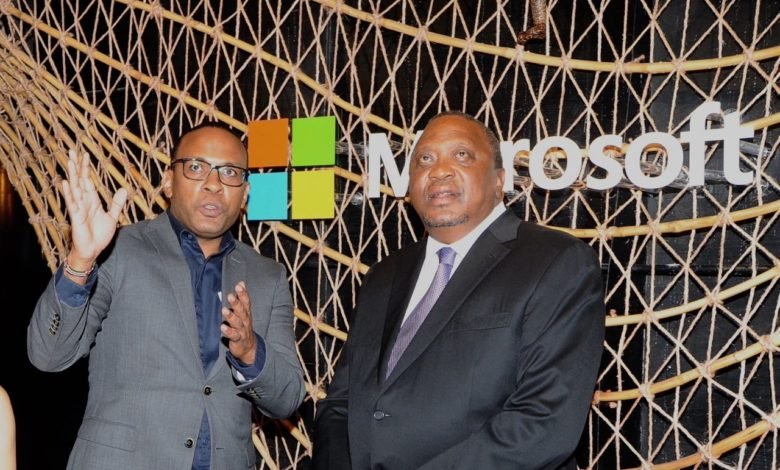
Microsoft has told everyone at its Africa Development Centre (ADC) in Nairobi that their jobs are going. ADC employees told tech-ish that all staff at the centre were informed on Monday 12th October 2026. Microsoft hasn’t said how many people that is, or when the jobs end.
The same day, a Microsoft spokesperson said “proposed changes” within the company “have impacted the engineering department in Kenya”, and that Microsoft “will continue operating in the country and will continue supporting its customers in the region”.
That engineering department is the ADC, which Microsoft opened in Nairobi and Lagos in May 2019. When it launched, we spoke to Phil Spencer, the Microsoft executive who sponsored it. The ADC is where Kenyan engineers build parts of Microsoft’s global products. Its own site lists teams working on Identity (the systems that handle signing in to Microsoft accounts and services), Microsoft 365, Windows and devices, Microsoft Security and developer tools. The same building, Dunhill Towers in Westlands, also houses Microsoft Research Africa and the Microsoft Garage, a programme that runs innovation projects and events for Microsoft staff, customers and partners.
Another person who worked at the centre has said staff were told it is closing. Microsoft’s statement doesn’t use the word closure, and it doesn’t deny one either.

What the government was told
The same Monday, William Kabogo, the Cabinet Secretary for Information, Communications and the Digital Economy, met a Microsoft delegation led by Jeff Bullwinkel, Microsoft’s vice president and deputy general counsel for corporate, external and legal affairs in Europe, the Middle East and Africa. Angela Ng’ang’a, whom Microsoft named its East Africa country lead in August to run its dealings with governments, enterprise customers and partners, led the local team.
Kabogo wrote afterwards that “Microsoft briefed me on its evolving operations in Kenya in the context of its global restructuring.” He said he “stressed the importance of retaining local talent, protecting jobs at Microsoft’s Nairobi engineering centre and sustaining investor confidence in Kenya’s technology sector.” Kabogo said Microsoft reaffirmed its long-term commitment to Kenya, and that his ministry and Microsoft will draw up a joint action plan. His post doesn’t say how many jobs are affected.
Microsoft has been restructuring since July, when it cut around 4,800 roles, about 2.1% of its global workforce, mostly in its commercial (sales) and Xbox organisations. That memo said engineering teams “will also evolve their structure and priorities” and warned there “will be more changes ahead”. Another 268 Xbox roles went on 22nd September. Microsoft has cut staff in rounds like this for years; in May 2025 it was 6,000.
At the ADC, people may have started leaving before Monday. On 23rd September, Kipkorir Arap Kirui, a former ADC employee who now works in product at Google, wrote on LinkedIn that employees he had spoken to were given a choice towards the end of the quarter: a performance improvement plan or a “voluntary” exit. Those who took the plan, he wrote, got six weeks to turn things around. That is his account of what others told him.
What Microsoft said when it shut Lagos
In May 2024, Microsoft shut the Lagos half of the ADC. Its statement then said “Microsoft has decided to close the Africa Development Centre in Nigeria”, followed by “We will continue to operate in Nigeria” and “This is not a site closure.” It also said “There are no impacts to the Africa Development center in Kenya”. When we covered the Lagos shutdown, staff in Nairobi were already anxious about their own jobs.
That’s why “will continue operating in the country” doesn’t settle anything. Microsoft said the same about Nigeria while it closed the engineering centre there. The line is about Microsoft’s business with customers in Kenya, and it says nothing about the ADC. What has changed is what Microsoft says about Kenya: in 2024 it said Kenya wasn’t affected, and now it says the engineering department here has been.
What “proposed” means for staff
Microsoft still calls the changes “proposed”, even though staff have been told. That’s the word you’d expect at this stage, because Kenya’s Employment Act doesn’t let an employer make anyone redundant without first notifying each employee in writing and the area labour officer. Each person declared redundant also has to get at least one month’s notice or a month’s wages instead, any leave still due paid in cash, and severance of at least 15 days’ pay for every full year worked.
Fifteen days’ pay is roughly half a month’s salary. So an engineer earning KES 300,000 a month with five full years at the ADC is owed at least about KES 750,000 in severance, plus KES 300,000 for the notice month. That’s the legal minimum. Microsoft can pay more, and the Act says nothing about extras such as share awards or health cover after you leave.
So if you work at the ADC, the law says a written notice to you has to come before your job ends. If you’re a Microsoft customer in Kenya, Microsoft says nothing changes for you.
What Microsoft hasn’t said
Beyond the number and the date, Microsoft hasn’t said whether Microsoft Research Africa and the Garage, which share the building, are included. Its last dated headcount for the centre is from March 2022, when it moved into Dunhill Towers with more than 450 full-time employees. And on Monday, its careers site listed no open jobs in Kenya.
In 2019, Microsoft said it would put USD 100 million, or about KES 13 billion, into the two centres over their first five years, and hire 500 engineers across them by 2023. The Lagos centre closed in 2024. With every ADC role in Nairobi now going, Kenya is losing what Microsoft still calls its premier engineering hub on the continent. Kabogo got a briefing and a promised action plan. Until Microsoft says when the jobs end and what it will pay, its promise to keep operating in Kenya tells ADC staff very little.






Join the discussion