
Just three months ago, Kenya’s Supreme Court was wagging a judicial finger at lawyers who’d tried to sneak AI-generated gibberish into legal submissions. It was a cautionary tale, where Justice Isaac Lenaola revealed that one AI-assisted brief had every single cited legal authority completely made up. The embarrassment was enough to rightfully prompt an official warning against using artificial intelligence in court.
Fast-forward to this week, and the Judiciary, headed by Chief Justice Martha Koome, president of the Supreme Court, is plotting a future where AI becomes part of the legal machinery. And not just in the background, right in the thick of things.
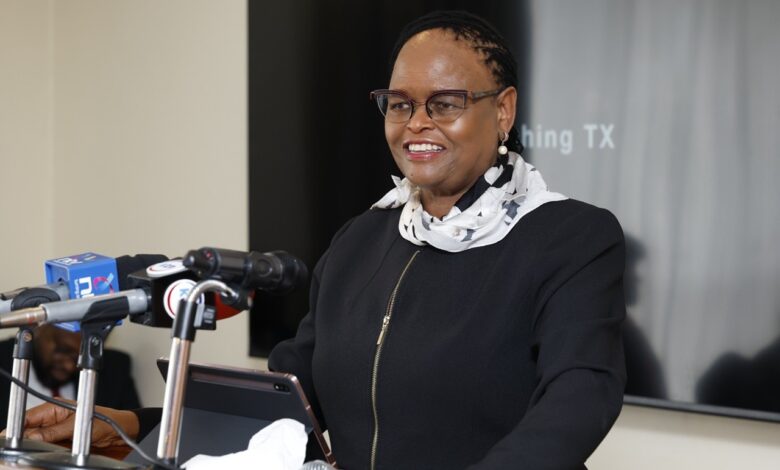
On Monday, August 11 during an engagement held in Nairobi themed “Regional Experience Sharing on Integrated Case Management System and Electronic Record Management,” CJ Koome announced that the Judiciary is working on an Artificial Intelligence Adoption Policy Framework. Think of it as a legal tech recipe book, designed to ensure AI helps deliver justice without burning the constitutional kitchen down.
“To ensure ethical, safe, and purposeful adoption, we are developing the Judiciary Artificial Intelligence Adoption Policy Framework to guide integration of AI tools while safeguarding judicial independence, data privacy, and due process,” she said.

The idea isn’t to let robots in wigs start banging gavels, but to use AI where it can really shine: case management, legal research, predictive analytics, and administrative support. Koome also made it clear that tech in justice must be inclusive. “The reality of the digital divide – especially for the indigent, the elderly, and those without digital literacy – means we must provide support,” she noted. To tackle that, ICT help desks will be popping up at Huduma Centres and court stations, ready to assist anyone struggling with e-filing or other online services.
But the road to digital justice isn’t all smooth. One big hurdle? Getting different justice sector systems to talk to each other. Koome revealed progress like linking the Judiciary’s system to the Office of the Director of Public Prosecutions (ODPP) but admitted more agencies still need to plug in, including the police, prisons, probation, and the children’s department.
Cybersecurity is another headache. “Safeguarding digital systems from cyber threats… comes at a high cost,” Koome said, adding that the Judiciary is pouring resources into robust defenses to keep hackers at bay.
The announcement came during a Nairobi meeting with Ethiopia’s Federal Supreme Court, led by its Vice President, Hon Abeba Embiale Mengste. The theme of the meeting was sharing regional experiences on integrated case management and electronic records. Justice Lenaola, the same one who earlier flagged those AI blunders,was also in attendance, this time offering Kenya’s ICT expertise to help Ethiopia go fully digital by 2026.
If the plan works, the courts of the future could be faster, more efficient, and just a little bit smarter. Though hopefully not in the habit of making up case law on the fly.








Join the discussion