
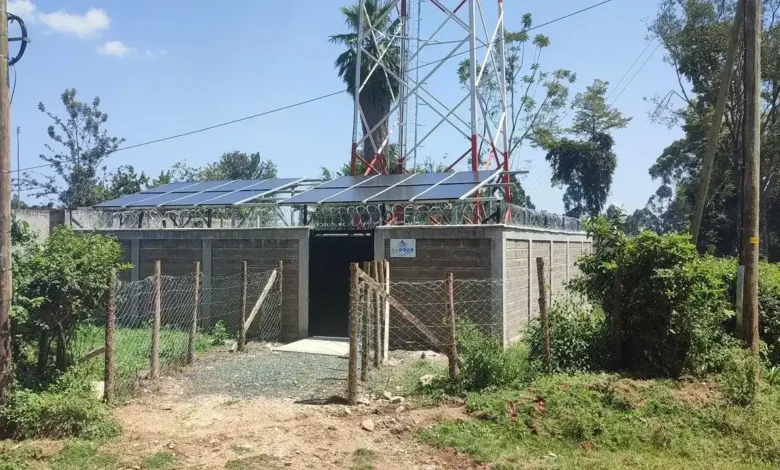
Safaricom is out to prove that rolling out 5G towers and laying fibre cables doesn’t have to come at nature’s expense. The telco has announced a KES 15 million investment in a two-year Biodiversity Restoration Project that will see it plant 250,000 trees across 7,000 sites hosting its base transceiver stations (BTS).
Yes, your favourite network masts are about to get leafy neighbours.
Greening the signal
As Safaricom continues firing up new towers to meet Kenya’s ballooning appetite for internet and voice services, it admits there’s an environmental cost to that growth. Think construction, digging, land disruption — all unavoidable, but not unfixable.
CEO Peter Ndegwa says the project is Safaricom’s way of “restoring ecosystems and advancing our decarbonisation journey” without slowing down connectivity. The company plans to partner with the public and private landowners who host its BTS sites, planting indigenous and fruit trees in each location. Communities around those areas are also set to be roped in, which is a win for local stewardship.

This isn’t just corporate PR in a green jacket. The initiative ties into Safaricom’s ambition to become net-zero by 2050, Kenya’s National Climate Change Action Plan, and the UN Sustainable Development Goals on climate action and life on land. Ndegwa insists the move reflects a belief that tech and sustainability don’t have to fight for space. They can grow side-by-side.
Not their first tree rodeo
Safaricom is already halfway through another tree-growing partnership with the Kenya Forest Service. That programme targets 5 million trees by 2030, through the rehabilitation of at least 5,000 hectares of degraded forest land. So far, they’ve grown over 2.5 million trees, covering more than 2,000 hectares nationwide.
The new biodiversity restoration effort adds a fresh, site-specific layer tying restoration directly to the telco’s infrastructure footprint.
So what does this mean for everyday Kenyans?
Expect BTS sites in schools, hospitals, church compounds, and private properties to start sprouting green zones. Think of it as nature’s version of network bars, only quieter and much better for the lungs. In a world where tech companies love talking sustainability while emitting enough CO₂ to toast the ozone, it’s refreshing to see boots (and seedlings) in the soil.
If Safaricom can plant a tree for every tower, maybe the rest of Kenya’s tech sector will follow suit. Or at least stop pretending Excel spreadsheets qualify as “carbon offsetting.”









Join the discussion