

Safaricom appears to have quietly rolled out a new, rather unusual behaviour inside the M-PESA SIM Toolkit, and it’s already sparking debate across Kenyan social media.
Multiple Airtel Kenya subscribers trying to send money from M-PESA to an Airtel line, or even just buying Airtel airtime/data using their Safaricom wallet, are now seeing unexpected pop-ups offering exclusive Safaricom bundles before they can complete the transaction.
An example screenshot shared widely online shows a menu encouraging the user to “Continue to send with M-PESA or enjoy special offers just for you”, followed by aggressively priced data and minutes bundles like KES 20 = 1.25GB for 1 hour or KES 10 = 100 minutes until midnight — deals significantly cheaper than the usual Tunukiwa offers.
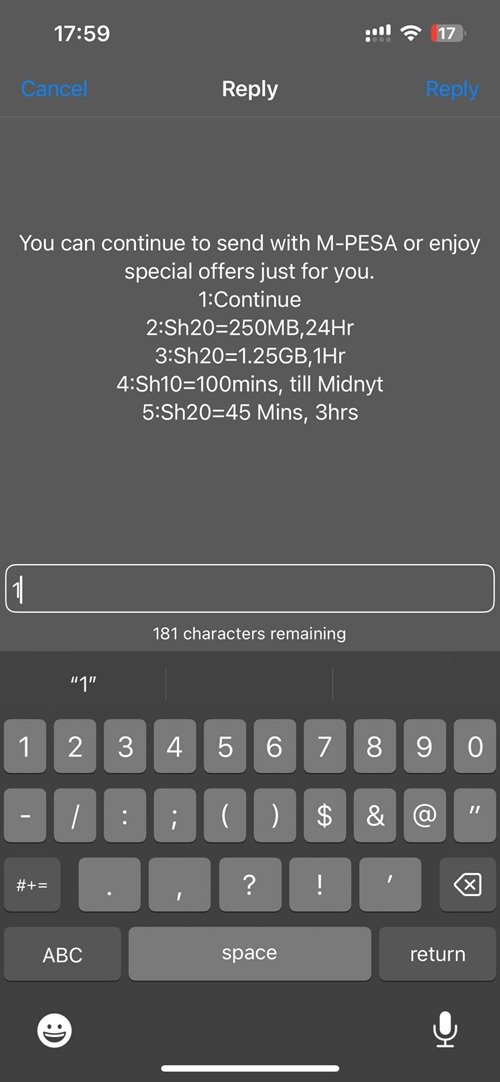
To some, this looks like Safaricom engaging in uncompetitive behaviour, slipping in last-minute marketing just as a customer is about to spend money on a rival network. To others, it’s a standard upsell, albeit one oddly placed within a money transfer workflow.
But then there’s the third group: savvy users who have already turned this into a hack.
Reports show that some Safaricom subscribers are now pretending to send money to an Airtel number on purpose. Not to complete the transfer, but to trigger the “special offers” menu. Once the discounted bundles appear, they purchase them for their Safaricom line and exit without sending anything to Airtel.
And honestly? The deals seem much better than what Safaricom normally advertises publicly.
For these users, “a win is a win.” For Safaricom, the money still stays within its ecosystem. But for Airtel… well, that’s another story.
These viral user reports in Kenya come just days after Safaricom’s international arm made a surprising claim in Ethiopia. According to Safaricom’s Ethiopian team, the new M-PESA app is being blocked on Ethio Telecom’s mobile data network, preventing users on the rival carrier from accessing the service.
Some Kenyans found the coincidence amusing. The sentiment online? Safaricom is getting a taste of its own medicine.
For years, Safaricom has been accused of wielding its market dominance in ways smaller telcos can’t match. And now, in Ethiopia, the tables appear to have turned.
Meanwhile, Safaricom is also rolling out another controversial M-PESA change
In addition to these new promotional pop-ups, Safaricom has recently updated the M-PESA SIM Toolkit to include a new mandatory verification step: after entering your M-PESA PIN when sending money, you now must reconfirm the recipient’s phone number before the transaction proceeds.
Safaricom claims the update is intended to “reduce wrong transactions.” But some users see it as an unnecessary extra tap, especially for a process millions of Kenyans perform daily.
Some users are welcoming it as added protection. Others argue that features like Hakikisha already solved this problem years ago.
Competition is usually good for the consumer, and right now, Kenyan users are benefiting from Safaricom’s fear of Airtel’s growing footprint. If you have a few shillings in your M-PESA and want to test the “Airtel hack” for cheap data or minutes, now is likely the time.