

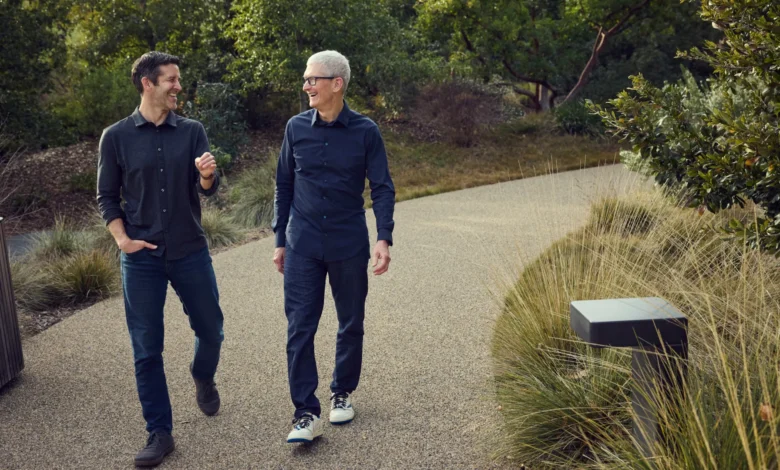
Apple announced on Monday, 20 April 2026, that Tim Cook will step down as Chief Executive Officer on 31 August. John Ternus, the company’s current Senior Vice President of Hardware Engineering, takes over on 1 September 2026. Cook transitions to Executive Chairman of the board, with a focus on policy engagement around the world. The change, per Apple’s official newsroom post, was unanimously approved by the board and follows what Apple calls a “thoughtful, long-term succession planning process.”
Arthur Levinson, Apple’s non-executive chairman for 15 years, becomes lead independent director on the same day. Johny Srouji, the longtime silicon chief, was also promoted to Chief Hardware Officer, taking over Ternus’s hardware engineering duties effective immediately.
This is Apple’s first CEO change since Cook succeeded the late Steve Jobs in August 2011.
Who is John Ternus?
Ternus, 50, has spent nearly his entire career at Apple. He joined the product design team in 2001 after graduating in mechanical engineering from the University of Pennsylvania and a brief stint at Virtual Research Systems, a small VR headset firm. He was promoted to Vice President of Hardware Engineering in 2013 and to Senior Vice President in 2021, becoming the youngest member of Apple’s executive team at the time.

His fingerprints are on nearly every recent Apple device. He oversaw the hardware teams behind the iPhone, iPad, Mac, Apple Watch, AirPods, and Vision Pro, and most recently led the development of the MacBook Neo, Apple’s first low-cost MacBook, launched last month. Many Apple watchers had already tipped him as the obvious successor.
Cook’s Legacy: From Jobs to $4 Trillion
When Cook took over in 2011, Apple was worth about $350 billion and was mourning Jobs, who died just six weeks after handing over. Today Apple’s market cap sits at more than $4 trillion, up more than 20-fold. Apple’s stock has appreciated over 1,700% on his watch.
Cook was never supposed to be a showman. Jobs hired him in 1998 to fix Apple’s broken supply chain. Cook, a former IBM and Compaq operations expert, closed warehouses, consolidated suppliers, and eventually turned Apple’s manufacturing into a competitive weapon. That operational muscle is what allowed Apple to ship hundreds of millions of devices a year without stockouts.
His quieter style also shifted the company. In 2014 he became the first Fortune 500 CEO to publicly come out as gay, a moment widely seen as cultural history. He aligned Apple more visibly with privacy, the environment, and manufacturing diplomacy, most recently navigating the Trump administration’s tariff pressure.
The Biggest Changes Since Jobs
Under Cook, Apple stopped being mainly an iPhone, iPad and Mac company and became an everywhere company.
Wearables exploded. Apple Watch arrived in 2015 and is now the world’s best-selling watch. AirPods landed in 2016 and quietly built a multibillion-dollar business of their own.
Services became a quiet giant. Apple Pay (2014), Apple Music (2015), Apple TV+ (2019), Arcade, Fitness+, and iCloud together now generate tens of billions annually and cushion Apple against hardware cycles.
Silicon independence changed the Mac forever. Apple dropped Intel and shipped the M1 chip in 2020, starting a performance and battery leap that the PC industry is still trying to match.
And the consumer iPhone kept getting bigger and pricier. The iPhone 17 series launched last September with flagship prices starting at around KES 125,000 in Kenya and the Pro Max crossing KES 380,000 at some local resellers, a reminder of how far the product line has drifted from its original price bands.
Not everything worked. The Vision Pro, a Cook-era bet on mixed reality, launched in 2024 at over $3,499 and has struggled to find mass buyers. Apple has also been criticised for lagging in generative AI, delaying a major Siri upgrade and revamping its AI leadership late last year by bringing in a Google veteran. An updated Siri built on a Google Gemini model is now expected this year.
What Ternus Inherits
Ternus takes over a company still dominant but facing real headwinds. Generative AI rivals like OpenAI and Google have moved faster. Tariffs and geopolitical friction with China complicate the supply chain Cook perfected. Memory costs are rising as AI chip demand surges. And with Jony Ive long gone to OpenAI, Apple has been without a cornerstone designer for years.
The message from picking Ternus is clear. Apple is betting that the next era will be won on hardware and product, not marketing. As Cook put it in his statement, Ternus has “the mind of an engineer, the soul of an innovator, and the heart to lead with integrity.”
Starting 1 September, we find out if that’s enough.
Tim Cook at Apple
Twenty-eight years inside Apple. Fifteen as Chief Executive. From a supply-chain fix-it hire under Steve Jobs to the architect of a four-trillion-dollar empire. Every turn that mattered.
The Ascent
March 1998
Joins Apple as SVP of Worldwide Operations
Poached from Compaq by a recently-returned Steve Jobs. His mandate: fix a supply chain in disarray. Cook closes warehouses, consolidates suppliers, and cuts inventory from months to days.
2002
Promoted to EVP, Worldwide Sales & Operations
Expands beyond operations into commercial strategy. Cook’s cross-functional grip on the business begins here.
January 2007
Named Chief Operating Officer
Cook takes over day-to-day operations, the same month Jobs unveils the iPhone. Apple’s next chapter starts with Cook running the engine room.
2009 & 2011
Runs Apple During Jobs’ Medical Leaves
Jobs steps back twice for treatment. Cook steers the company without wobble, quietly auditioning for the top job in full view of the board.
Taking Over
24 August 2011
Named Chief Executive Officer of Apple
Jobs resigns and recommends Cook. Apple is worth about $350 billion. Sceptics argue no operations guy can follow a product visionary. The doubt defines his first decade.
4 October 2011
iPhone 4S Launches, Siri Debuts
The first iPhone of the Cook era. Siri becomes Apple’s first serious voice assistant bet, a thread that runs all the way to today’s AI scramble.
5 October 2011
Steve Jobs Passes Away
Six weeks after the handover. Cook inherits a grieving company and a world certain Apple’s golden age has ended with its founder.
September 2012
Apple Maps Disaster & Forstall Exit
The in-house Maps launch is a public embarrassment. Cook issues a rare apology, then dismisses iOS chief Scott Forstall. His leadership-reshuffle playbook is born.
August 2014
Apple Buys Beats for $3 Billion
Apple’s largest acquisition ever at the time. Brings Dr Dre and Jimmy Iovine in, and lays foundations for Apple Music.
October 2014
Apple Pay Launches
Cook plants the flag in fintech. It becomes the template for how Apple monetises services layered on top of hardware.
30 October 2014
Comes Out Publicly as Gay
In a Bloomberg Businessweek essay, Cook becomes the first openly gay CEO of a Fortune 500 company. A defining cultural moment far beyond tech.
New Categories
24 April 2015
Apple Watch Goes on Sale
Cook’s first fully-owned product category. Mocked at launch. Now the best-selling watch on earth and the backbone of Apple’s health ambitions.
30 June 2015
Apple Music Launches
Apple goes subscription. Services stop being a side hustle and start becoming the growth engine.
February 2016
Refuses to Unlock San Bernardino iPhone
Cook publishes an open letter defying the FBI. Privacy becomes Apple’s signature political position and a marketing wedge against rivals.
December 2016
AirPods Ship
A quiet launch that becomes a cultural phenomenon. AirPods alone grow into one of the world’s largest audio businesses.
April 2017
Apple Park Opens in Cupertino
The $5 billion ring-shaped headquarters opens. A Jobs vision, built on Cook’s watch. The Steve Jobs Theater hosts its first keynote that September.
2 August 2018
First $1 Trillion Company
Apple becomes the first publicly traded U.S. company to cross a trillion-dollar market cap. Seven years into Cook’s tenure.
June 2019
Jony Ive Leaves Apple
Apple’s long-time design chief departs. A quiet end of an era. Ive later joins OpenAI’s hardware project in 2025.
November 2019
Apple TV+ Launches
Apple enters original streaming, spending billions on prestige content. A year later it wins Ted Lasso’s global audience.
The Trillions
March 2020
COVID-19: Apple Closes Global Stores
Apple is one of the first companies to shut retail worldwide. Cook’s supply-chain instincts are tested in real time. Work-from-home products and services boom.
November 2020
Apple Silicon M1 Ships
The Mac breaks from Intel after fifteen years. The M1 chip rewrites laptop performance expectations. Years of quiet silicon investment finally pay off in public.
August 2020
Crosses $2 Trillion Valuation
Two years after hitting one trillion. During a pandemic. The double was enough to silence most remaining doubters.
April 2021
AirTags Launch
A small, quiet product that expands the Find My network into a hardware category of its own.
August 2021
$750 Million Stock Payout
Ten years after taking over, Cook cashes out a large tranche of shares. He continues to say he plans to donate most of his fortune.
January 2022
Briefly Touches $3 Trillion
Apple is the first company in history to do it. A macro correction pulls the stock back soon after, but the ceiling is gone.
AI, VR & the Handover
February 2024
Apple Vision Pro Launches
Cook’s moonshot. A $3,499 mixed-reality headset positioned as the next platform. Reviews are respectful, sales are disappointing. The bet remains unresolved at handover.
June 2024
Apple Intelligence Announced at WWDC
Apple’s branded AI effort debuts. The promised new Siri slips. Critics say Apple is playing catch-up to OpenAI, Google, and Anthropic.
September 2025
iPhone 17 Series & iPhone Air Launch
A confident hardware year. The series lands in Kenya at a starting KES 125,000, with the iPhone 17 Pro Max 2TB crossing KES 380,000 at some local resellers.
Late 2025
Apple Hits $4 Trillion
Another threshold broken. Apple now trails only Nvidia and Alphabet among the most valuable companies on earth.
March 2026
MacBook Neo & iPhone 17e
Apple’s first genuinely low-cost MacBook, plus a more affordable iPhone 17e. Both are Ternus-led hardware projects, quietly previewing the next chapter.
20 April 2026
Cook Announces He Is Stepping Down
Apple’s board names John Ternus, SVP of Hardware Engineering, as the next CEO. Cook will become Executive Chairman. Johny Srouji is promoted to Chief Hardware Officer.
31 August 2026
Final Day as Chief Executive
Fifteen years to the month since taking over. Cook oversees a summer transition, working closely with Ternus on handover.
1 September 2026
Becomes Executive Chairman
Cook stays on the board, focused on global policy engagement. John Ternus takes over as CEO and joins the board. A new Apple era begins.
The Legacy in Numbers
Cook inherited Apple at roughly $350 billion. He leaves it worth more than ten times that, with wearables, services, and silicon all built under his watch.
Sources: Apple Newsroom, CNBC, TechCrunch, CNN, NBC, Fortune, 9to5Mac, NPR. Compiled by Tech-ish Kenya.




Join the discussion