
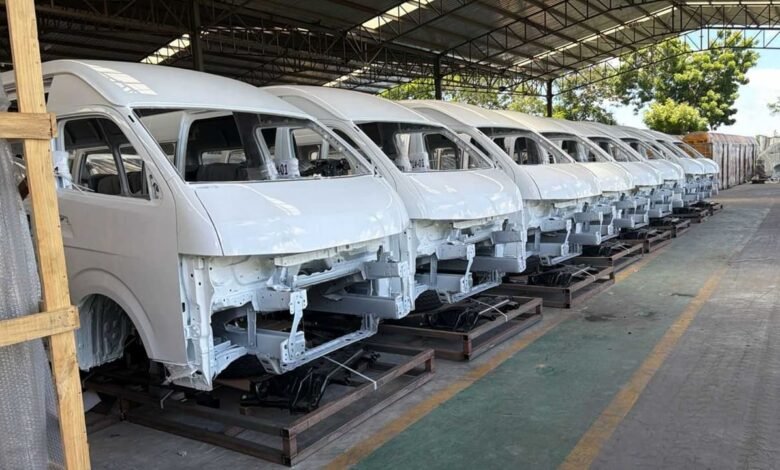
BasiGo has hit another important milestone in Kenya’s e-mobility journey. Last week, the company announced that it has started local assembly of its electric vans in Kenya, becoming the first to deliver locally assembled electric vans in the country.
For a company that launched in 2021 and brought its first electric bus to Kenya in early 2022, this feels like a natural next step, even if building a clean transport business in this market has clearly not been the easiest hobby anyone could pick. Still, BasiGo keeps stacking milestones.
The new locally assembled vans are the Ma3e model, and BasiGo says they are being built in partnership with Associated Vehicle Assemblers (AVA) in Mombasa using Complete Knocked Down kits. The first 22 locally built units are set for delivery to customers in April and May.

BasiGo has commenced local assembly of its electric vans in Kenya – the Ma3e model, delivering the country's first locally assembled electric vans. In partnership with Associated Vehicle Assemblers (AVA), a leading Kenyan


BasiGo says the Ma3e is designed for high-utilisation operations and offers up to 300km of range (NEDC). The company is targeting several use cases here, including public transport, school shuttles, staff transport, airport transfers, and hotel shuttle services. That gives the van a much wider commercial brief than a typical niche EV rollout. However, for public transport, the 300km range means these electric vans cannot do long distances on a single charge.

What stands out to me is that BasiGo is not presenting this as a concept or pilot in the abstract. The company has already spent the last 10 months operating two electric vans on intercity routes, including Nyahururu-Nyeri-Nakuru and Nairobi-Thika. According to BasiGo, this testing has already validated both the product and the operating model, helping build a reservation pipeline of over 500 units.
In its statement, the company said local assembly is now “the critical next step to unlock scale of the Ma3e.” BasiGo added that it plans to deploy “thousands of electric vans across Kenya,” arguing that the move will help advance the country’s climate goals while positioning Kenya as “a blueprint for clean, inclusive transport solutions.”
This local assembly milestone came only days after another major announcement. Earlier last week, BasiGo said its electric bus project had achieved Gold Standard Certified project status, which it described as the first verified electric bus carbon project in Africa.
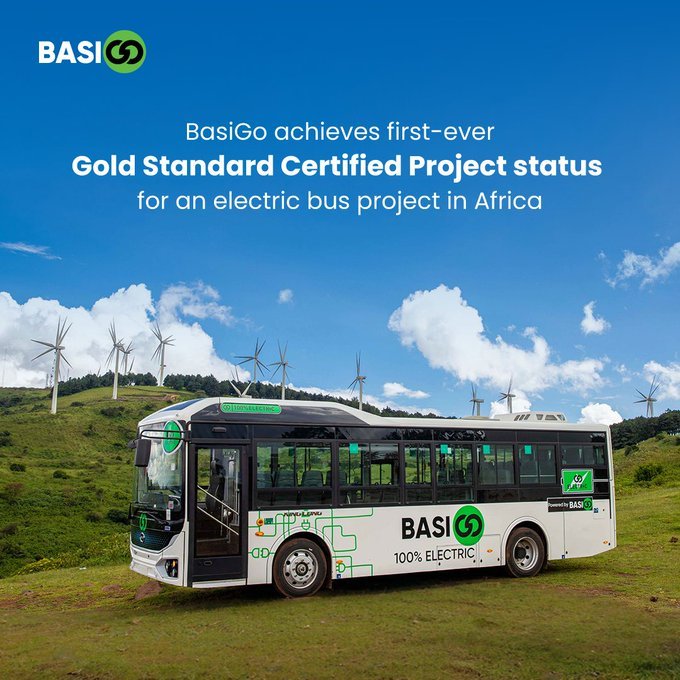
This pushes BasiGo beyond vehicle deployment and into the climate finance conversation. In the company’s words, its electric bus project generates emissions reductions that are “transparent, traceable, and verifiable by design,” backed by onboard telematics that record “every kilometer and kilowatt-hour in real time.” BasiGo also said it is already contracting the sale of its first cohort of Gold Standard VERs to Impact4Climate.
Then came yet another win this week. BasiGo announced it had been named a BloombergNEF 2026 Pioneers Winner, selected in the Wildcard category. The company framed that recognition as proof that Africa can lead the world in affordable, low-carbon public transport.

Taken together, these announcements show a company moving on multiple fronts at once. Since its early Nairobi bus debut, BasiGo has expanded into Rwanda, secured funding, deepened local assembly ties with AVA, explored electric matatus, and kept building out its footprint. Now, with electric vans entering local assembly, carbon credits entering the mix, and global recognition landing almost back-to-back, BasiGo looks increasingly like one of the more serious clean transport players to watch in Kenya.








Join the discussion