
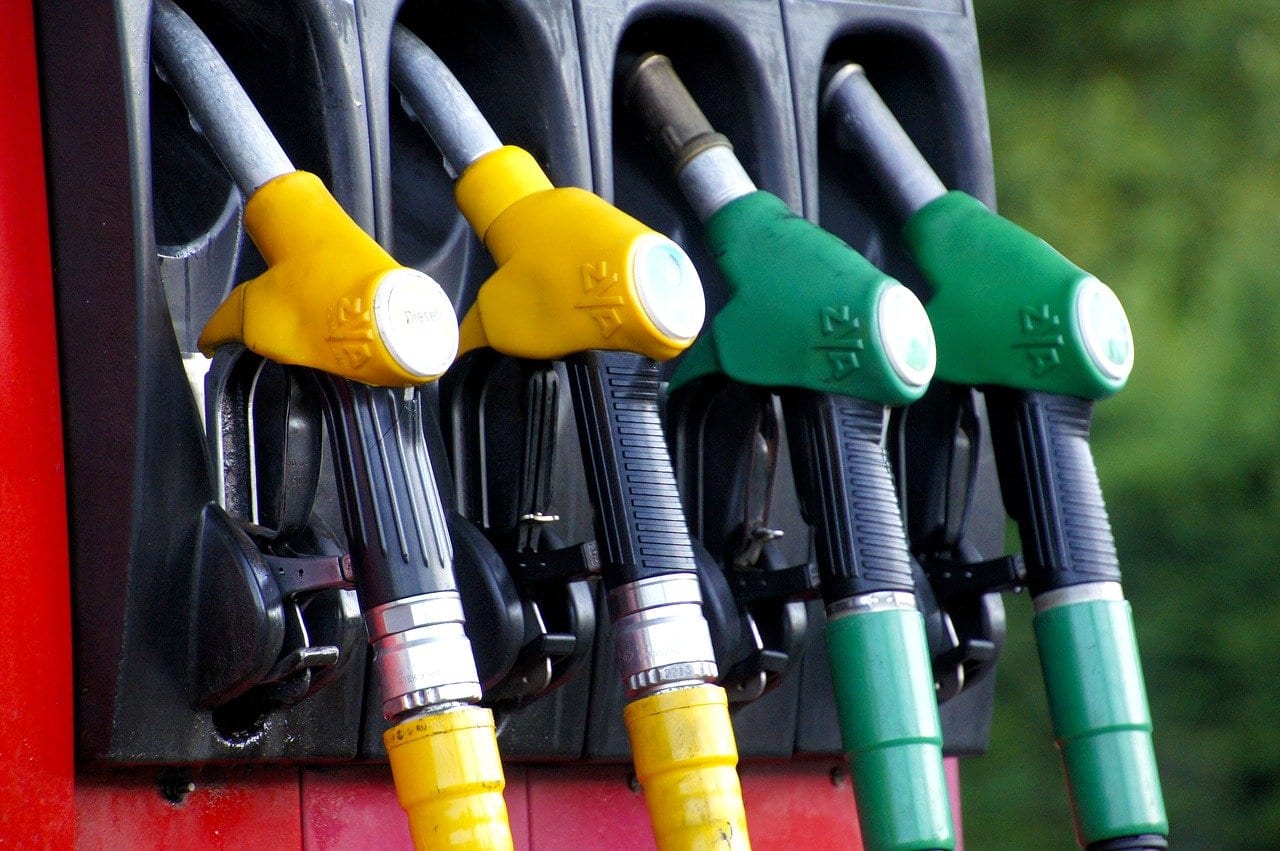
On the morning of 30th April 2026, Trade Cabinet Secretary Lee Kinyanjui issued a one-page press release that received almost no public attention. It announced a “temporary adjustment of fuel standards” for six months. Buried in the third-to-last paragraph was the actual decision: the sulphur ceiling for petrol and diesel sold in Kenya will be raised to 50mg/kg, up from the 10mg/kg ceiling set under the new KS EAS 177:2025 (diesel) and KS EAS 158:2025 (petrol) standards.
That is not a small adjustment. It is a five-fold increase in the legally permitted sulphur content of the fuel going into your car. It rolls Kenya’s fuel quality back to where it stood in 2015, when the East African Community first adopted what was then called “low sulphur” fuel. The world has moved on. The waiver moves us back.
The Ministry’s stated reason is the war in the Middle East and disruption of shipping through the Strait of Hormuz. That reason is real, but it is also incomplete. To understand what is actually happening, you need three pieces of context that the press release does not give you.
Context one: the prices have already broken records
Two weeks ago, on 14th April, EPRA announced the steepest single-cycle fuel price jump in Kenya’s history. Diesel rose by KES 40.30 per litre and petrol by KES 28.69. Even after President Ruto intervened the following day and slashed VAT from 16% down to 8%, Nairobi pump prices settled at KES 197.60 for super petrol and KES 196.63 for diesel — the highest the country has ever seen. We covered the chaotic 24-hour VAT U-turn here.

Households are already absorbing a transport shock. Matatu fares have climbed. The cost of moving food to market has climbed. And the next EPRA review on 14th May will be calculated on cargoes landed during the very window when the Strait of Hormuz disruption is at its peak. Today’s standards waiver is, in part, the government quietly admitting that it cannot get clean fuel into the country at a price the political system can survive.
Context two: the bad-fuel scandal is still live
In early April, three of Kenya’s most senior petroleum officials resigned in a single weekend after the DCI uncovered what looks like an organised scheme to fabricate a fuel shortage and slip a substandard cargo into the national pipeline. The petroleum PS, the EPRA Director General, and the Kenya Pipeline MD all stepped down. The cargo at the centre of the scandal, aboard the MT Paloma, allegedly carried fuel with sulphur at 0.0043% (43mg/kg), against the legal limit of 10mg/kg, plus benzene and manganese well outside specification, according to The Daily Nation’s investigation.
Read that figure carefully. The fuel that triggered arrests, resignations, and a criminal investigation had a sulphur level of 43mg/kg. The waiver issued today permits 50mg/kg. In other words, the cargo that was illegal three weeks ago would be legal under today’s rules. This may be coincidence. It may not. It is, at the very least, a fact that the Ministry’s press release does not address.
Context three: this is the G2G deal failing in real time
Kenya’s Government-to-Government fuel import framework, signed in 2023 with Saudi Aramco, ADNOC, and ENOC, was supposed to insulate Kenya from exactly this kind of supply shock. The pitch was that bulk sovereign procurement on 180-day credit would deliver stable fuel and stable prices. Instead, Kenya now has the most expensive petrol in East Africa — Tanzania, Uganda, and Ethiopia are all cheaper — and the framework’s first real stress test has produced a quality crisis, a procurement scandal, and now a regulatory rollback. If the G2G deal worked as advertised, today’s waiver would not be necessary.
What 50mg/kg sulphur actually does to your car
Here is the part that affects you directly.
Modern petrol and diesel engines are built around emissions control systems that assume clean fuel. Every used car imported into Kenya since 2022 has had to meet the Euro 4 standard or better. Many imports from Japan and Europe are Euro 5 or Euro 6, because that is what those markets sell. Those vehicles have, depending on engine type:
- Three-way catalytic converters (petrol)
- Diesel oxidation catalysts and Diesel Particulate Filters, or DPFs (diesel)
- Oxygen sensors (lambda sensors) that read the exhaust to fine-tune combustion
- Selective Catalytic Reduction systems, or SCR, on newer diesels
Sulphur is the primary poison for all of them. The International Council on Clean Transportation, in its study of 50ppm sulphur fuel impact on Euro VI vehicles, documents a cascading failure pattern. Sulphur poisons the diesel oxidation catalyst, which then dumps unburnt hydrocarbons into the DPF, which then overheats during regeneration and can fail catastrophically. Replacing a DPF on a typical European diesel SUV costs more than KES 200,000 in parts alone. Catalytic converters on petrol cars are not much cheaper. Oxygen sensors fail faster. Engine oil thins out because sulphur products contaminate it during the power stroke.
For the matatu owner running a 2018 Toyota Hiace, this means shorter service intervals, more soot, and a slow erosion of fuel economy. For the new-era cars in Nairobi traffic, it means a real risk of an expensive emissions repair within the six-month window. For the Scania and Isuzu trucks running the Northern Corridor, it means the Euro 4 SCR systems they were designed around are about to be fed something they were not engineered for.
The damage will not show up immediately. That is the trap. Sulphur poisoning is cumulative. By the time the warning lights come on, the parts are already gone.
How to protect yourself over the next six months
There is no perfect mitigation, because Kenyans cannot opt out of the national fuel supply. But there are practical steps:
The single most useful thing diesel drivers can do is drive long enough, and fast enough, often enough, for passive DPF regeneration to occur. That means at least one journey per week of 30 minutes or more above 80km/h. City-only diesel driving with high-sulphur fuel is the fastest route to a clogged DPF.
Shorten your oil change interval. Manufacturers’ service schedules assume the fuel matches the standard the car was built for. With sulphur five times higher than that, halving the interval is a reasonable precaution, particularly for any diesel built in the last seven years.
Buy from major branded stations. The bad-fuel scandal proved that quality control across the supply chain is not what it should be. Stations affiliated with the larger oil marketers have tighter procurement controls than independents.
Watch the dashboard. A DPF warning light on a diesel, or a check-engine light caused by an oxygen sensor fault on a petrol vehicle, are both early signals. Do not ignore them. The cost of a forced regeneration at a dealership is a fraction of the cost of a replacement.
Petrol drivers should be alert for rough idling, hesitant acceleration, and sudden drops in fuel economy — all signs of a catalytic converter or oxygen sensor under stress.
The wider cost
Kenya was, until today, on a trajectory toward Euro 6 and 10ppm sulphur, with the Climate and Clean Air Coalition and UNEP supporting a roadmap to that goal. That roadmap matters because vehicle exhaust is the largest source of urban PM2.5 in Nairobi, and PM2.5 is what triggers asthma attacks, hospitalises children, and shortens lives. Burning higher-sulphur fuel produces sulphur dioxide, which contributes to acid rain and respiratory disease. The waiver is six months long on paper. In atmospheric terms, the soot it permits will be in Nairobi’s lungs for considerably longer.
It will also reward the worst actors in the market. The fuel adulteration cartels that EPRA has been chasing for years thrive on regulatory grey zones. A waiver that legalises higher sulphur levels makes their business easier and the inspectors’ job harder. If you are running a scheme that involves cutting diesel with kerosene or selling export-bound product domestically, today is a good day for you.
The Ministry says the waiver will be reviewed at the end of six months, or earlier if global conditions improve. That is the part to watch. Six-month “temporary” measures in Kenyan policy have a way of becoming permanent. The 16% VAT on fuel was once a temporary measure too.
For now, the directive stands. The fuel will be dirtier. The engines will pay. And the question of whether this was crisis management or cover-up will be settled, eventually, in a courtroom that the country has not yet built.






Join the discussion