

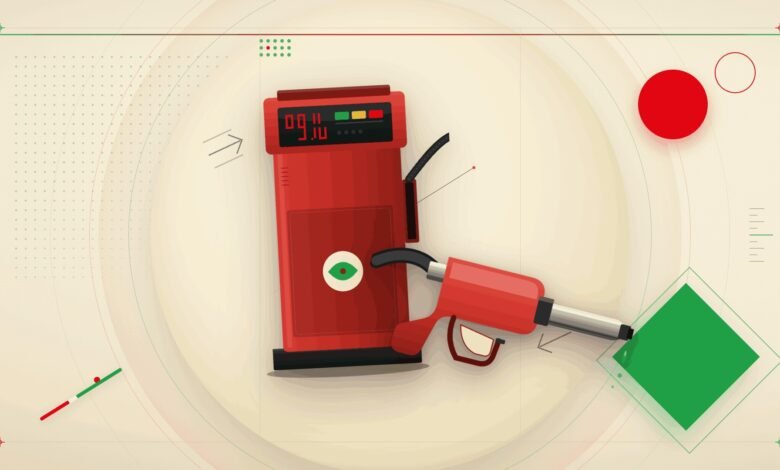
The Energy and Petroleum Regulatory Authority (EPRA) issued an addendum on Monday evening that rewrites the fuel prices it announced just four days earlier. From midnight on Monday 19 May 2026, a litre of diesel in Nairobi drops by KES 10.06 to KES 232.86. Kerosene jumps by KES 38.60 to KES 191.38. Super petrol stays at KES 214.25. The new prices run until 14 June 2026.
The official trigger, in EPRA’s own words, is a petition by public transport operators about the risk of motor fuel adulteration caused by the wide price gap between diesel and kerosene. The political trigger is harder to miss. The addendum arrived hours after a nationwide transport strike paralysed the country, four people were killed and 30 injured in protest-linked incidents, 348 were arrested, and a closed-door negotiation at Transcom House ended with matatu operators publicly contradicting Energy Cabinet Secretary Opiyo Wandayi while cameras rolled.
We explained the underlying numbers from the 14 May review when diesel first hit a record KES 242.92. The addendum walks part of that back. It does not change the conditions that produced the original number.
The new prices, town by town
The mid-cycle change keeps super petrol untouched but reshapes the diesel and kerosene picture across all 223 towns EPRA prices for. A snapshot of the major centres:

| Town | Super Petrol (KES/L) | Diesel (KES/L) | Kerosene (KES/L) |
|---|---|---|---|
| Nairobi | 214.25 | 232.86 | 191.38 |
| Mombasa | 211.09 | 229.58 | 188.09 |
| Nakuru | 213.15 | 232.27 | 190.81 |
| Eldoret | 213.92 | 233.09 | 191.63 |
| Kisumu | 213.91 | 233.08 | 191.63 |
| Mandera | 234.90 | 255.04 | 213.56 |
Mandera, as always, pays the highest pump price in the country because it is the furthest town from Mombasa port. Mombasa pays the lowest. The new diesel-kerosene gap in Nairobi is KES 41.48 per litre. Before the addendum, it was KES 90.14.
Why the kerosene price had to rise
That gap is the entire engineering case for the addendum.
Diesel and kerosene are both middle distillates. They sit close to each other on the refining ladder, which means a diesel engine will run on a mixture of the two, at least for a while. The problem is what happens after. Kerosene has higher sulphur content and a lower cetane number than diesel. Mixed into a diesel tank, it knocks the engine, fouls fuel injectors, damages catalytic converters, and produces dirtier emissions. A 2021 study from Kisii University documented exactly these effects in samples taken from filling stations in western Kenya. Repair bills for vehicles affected by adulterated diesel typically range from KES 45,000 to several hundred thousand depending on the make.
When the price gap between the two products is large, adulteration becomes profitable. Buy cheap kerosene, mix it into diesel at perhaps one to nine, and you pocket the difference on every litre sold. Members of the National Assembly Energy Committee warned last week that the May pricing cycle had reopened exactly this loophole. EPRA’s own 2018 data, cited in those parliamentary discussions, showed that of roughly 33 million litres of kerosene consumed in Kenya each month, only around 5 million was going to lighting and cooking. The rest was disappearing into diesel tanks.
The anti-adulteration levy introduced in 2019 was supposed to close the gap permanently. Wide pricing cycles since have repeatedly reopened it. Closing it by adjusting prices rather than by enforcement is the cheapest tool EPRA has. It is also the one that lands hardest on poor households.
A confused day, a public contradiction
The addendum landed at the end of a day that did not go well for the government.
Matatu saccos including Super Metro, Forward Travellers, Latema Travellers and K-Trans had announced suspensions on Sunday. By Monday morning, Nairobi, Mombasa, Nakuru, Eldoret, Kisii and Nyeri were on foot. Boda boda riders switched off ride-hailing apps and reverted to roadside pickups as demand tripled. Police removed registration plates from matatus parked to block highways. Interior Cabinet Secretary Kipchumba Murkomen reported four killed, 30 injured and 348 arrested by evening.
CS Wandayi convened talks at Transcom House with Transport CS Davis Chirchir and the Transport Sector Alliance that evening. He came out and told the press a breakthrough had been reached on the diesel-kerosene gap. While he was still speaking, a representative of the matatu sector walked up and said the strike was still on. Aluta continua, were the exact words. Matatu Owners Association president Albert Karagacha put the position plainly: operators are paying loans, the KES 10 diesel cut on offer was not enough, and operators would keep vehicles off the road on Tuesday.
The Transport Sector Alliance’s published demands include the resignation of Wandayi, the disbandment of EPRA itself, and a flat fuel price closer to KES 140 to KES 150 per litre across all three products. Treasury Cabinet Secretary John Mbadi told the press the strike was “uncalled for”. Wiper leader Kalonzo Musyoka called for the fuel hike to be reversed and Wandayi to resign. At time of publication, reports on whether the strike would continue into Tuesday were conflicting, with the Standard reporting the Transport Sector Alliance had called off the action and Capital FM and the Star reporting that operators intended to stay off the roads.
What the addendum does not fix
The adulteration risk was not new information on Monday. EPRA has known for years that wide price gaps between diesel and kerosene drive engine-damaging fuel mixing. The Petroleum Institute of East Africa has lobbied for price parity since 2018. The gap was visible in the very numbers EPRA published on 14 May. The agency had four days to act preemptively. It acted only after the country stopped moving.
It is also worth saying plainly what the new kerosene price means for households. Kerosene at KES 191.38 in Nairobi is the highest figure on record. According to KNBS data, around 5% to 10% of Kenyan households still depend on paraffin as a primary cooking fuel, with usage concentrated in informal urban settlements and low-income rural areas. Those families will absorb a 25% price jump overnight. The earlier policy of cushioning kerosene with subsidy money — approximately KES 5 billion drawn from the Petroleum Development Levy Fund this cycle, down from KES 6.2 billion the cycle before — was designed to protect exactly those households. The cushion has now been partly redirected to diesel users instead.
The structural picture has not changed either. Taxes and levies make up roughly about KES 65 per litre for petrol and KES 75 for diesel, even after April’s VAT cut from 16% to 8%. Kenya holds no strategic petroleum reserve, while Japan holds 260 days, South Korea 210 and India 25. The Government-to-Government import deal has produced more scandal than savings. The Strait of Hormuz crisis is in its fourth month with no resolution in sight, and the cargoes that will determine prices for the 14 June review are landing now under the same conditions that produced May’s record numbers.
None of that is solved by an addendum.
What to watch next
For motorists, the new diesel price takes effect at midnight on 19 May. Public transport fares, which operators had already moved to raise by up to 50%, will adjust. Food and bulk goods that move by diesel truck get cheaper relative to last week but stay higher than they were a month ago. Manufacturers running thermal power and freight will see some relief on input costs.
For kerosene-dependent households, the squeeze is immediate. KES 191.38 per litre is unprecedented territory, and there is no signal that the subsidy will return to its previous level.
For the broader policy picture, the next regular EPRA cycle lands on 14 June 2026. The prices then will reflect cargoes landing in May, under crisis conditions the addendum does not address. A second mid-cycle change inside a month is now part of the recent pattern of Kenyan fuel policy. So is changing course only after the country has stopped moving.
The practical takeaway: diesel costs less from Tuesday than it did on Monday, kerosene costs much more, and the conditions that produced this week’s crisis are still in place.





Join the discussion