

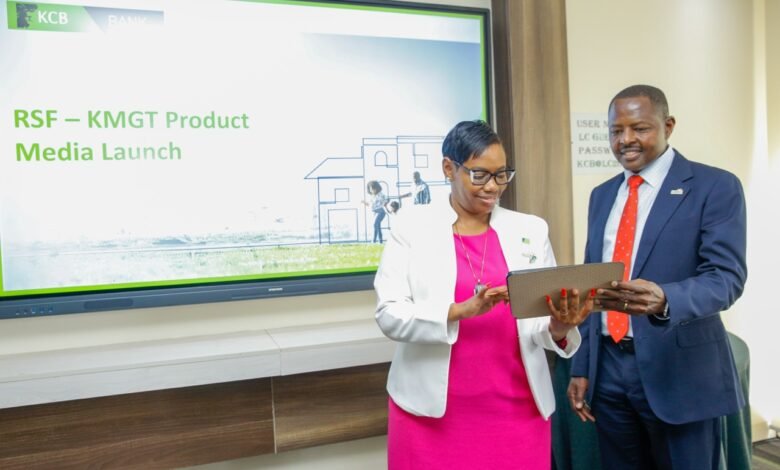
For most Kenyans who don’t have a payslip, a mortgage has always been a closed door. KCB Bank Kenya wants to change that, and the lever it’s pulling is your M-Pesa history.
On April 29, 2026, KCB launched a new mortgage product specifically designed for micro, small and medium enterprises (MSMEs) and informal-sector workers. The headline numbers: loans of between KES 1 million and KES 4 million, repayable over up to 15 years, at a single-digit interest rate. According to reporting from The Standard, the rate sits at 9.9% per year, with the bank also dropping its broader affordable housing mortgage rate from 9% to 8.9% for customers who can implement checkoff arrangements.
That is significantly cheaper than the industry average mortgage rate in Kenya, which the Central Bank of Kenya has historically pegged at around 12.9% (per BuyRentKenya’s KMRC explainer). It is also priced in the same neighbourhood as the Kenya Mortgage Refinance Company (KMRC) backed loans that competitors like Stanbic offer at 8.99%. Notably, KMRC CEO Johnstone Oltetia was at the KCB launch, which strongly suggests this product is plugged into the KMRC refinancing pipeline, the same vehicle the government uses to subsidise long-term housing finance.
Who actually qualifies
The product targets people whose income is real but doesn’t show up on a payslip. KCB explicitly names SMEs, artisans, boda boda operators, gig-economy workers and digital content creators as the intended customers.

To qualify, you need to have run your business for at least two years. The Standard’s coverage adds another detail the press release didn’t mention: the loan is available to applicants up to 75 years old, which is unusually generous for a mortgage product.
The interesting bit: how KCB will judge if you can pay
This is where the story gets technically meaningful, and where it connects to the broader fintech moment in Kenya.
Conventional Kenyan mortgages depend on a payslip, an employer letter and six months of bank statements. If you sell mitumba on a stall in Gikomba, that paperwork doesn’t exist. KCB says it will instead look at what financial-services people call alternative data. According to Caroline Wanjeri, KCB’s Director of Mortgage Business, the bank will assess affordability using transactional history, mobile money flows, business records, savings patterns and other consistency signals.
In practical terms, that means your M-Pesa statement, your till activity, your Pochi la Biashara behaviour and your savings habits across mobile and bank channels become the evidence base for a multi-million shilling loan. This is the same logic that powers products like Fuliza, M-Shwari and KCB M-Pesa, only stretched across 15 years and a much larger ticket size. Globally, this approach is well-established. Plaid’s primer on alternative credit data explains how cash-flow and gig-economy income data can expand credit access to people with thin credit files, while still letting lenders price risk properly.
It also fits a clear pattern at KCB. Last year, the bank rolled out a new risk-based pricing model that calculates each borrower’s loan rate using a market reference (KESONIA) plus a personal risk score; we covered that shift in detail in our piece on KCB’s new loan pricing under the CBK’s risk-based model. The MSME mortgage is essentially the housing-finance application of the same idea: behaviour, not job title, decides what you can borrow.
Why this matters for the bigger picture
Kenya’s mortgage market is tiny. Wanjeri put penetration at about 3%, and the Kenya Permanent Mission to UN-Habitat reported that as of December 2022 there were just 27,786 active mortgages in the entire country, against a government target of one million. At the same time, the Kenya National Bureau of Statistics figures show roughly 16.7 million Kenyans, about 83.5% of all employed people, work in the informal sector. The mismatch is the point. Mortgages have effectively been a product for civil servants, big-firm staff and senior corporate earners.
A KES 4 million ceiling won’t buy you a house in Kileleshwa. It can, however, get you a one or two-bedroom unit in many of the affordable-housing developments coming online under Boma Yangu, or fund a serious upgrade on a self-build in Kitengela, Juja, Athi River or Eldoret. For a digital creator earning irregular but solid income from YouTube and brand deals, or a Bolt driver with three years of consistent earnings, this could be the first realistic mortgage offer they’ve ever seen.
The questions worth asking
A few things the launch glossed over, and that we’d want answered before recommending anyone sign:
How is “consistent” defined when reading mobile money flows? A boda rider’s income in November looks different from January. The risk model needs to be transparent.
What happens to the 9.9% rate over 15 years? KCB’s broader move to risk-based pricing means most variable-rate loans will reprice; will MSME mortgages be fixed, variable, or hybrid?
What are the total costs? Stamp duty (4% of property value), legal fees (about 2% of the loan), valuation fees and mortgage protection insurance can add up to 7% to 8% of the purchase price, on top of the loan itself. KCB’s standard mortgage cost schedule already lists these.
What happens on default? A two-bedroom property in an affordable-housing scheme is harder to repossess and resell than a salary-account deduction, and the social cost of foreclosure on informal earners is higher.
These aren’t reasons to avoid the product. They are reasons to read the offer letter carefully and negotiate.
Bottom line
For years, the standard advice to a hustler asking about a mortgage was, in effect, get a salaried job first. KCB is now saying your enterprise itself can be the qualifier, and it’s pricing the loan low enough to make the offer credible. Whether the underwriting holds up at scale, and whether the rate stays this attractive, is the next thing to watch.
If you fit the profile, KCB’s mortgage desk at the Property Centre on Aga Khan Walk is the place to start, or any of the bank’s 260-plus branches.





Join the discussion