
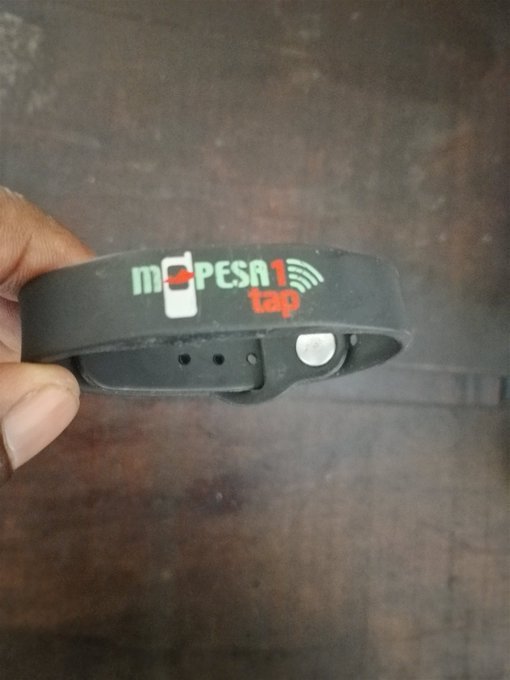
About a decade after Safaricom tried to make contactless payments mainstream with the now-defunct M-PESA 1Tap, Kenyan finance players are still chasing the same promise: make paying at the till feel as effortless as tapping and walking away.
I actually used the M-PESA 1Tap sticker back then, and the problem was never the idea. The problem was that it still felt like extra work for ordinary people, especially since you needed either the aforementioned phone sticker on the back of your phone, a card or a wristband that was only available in Nakuru. Unfortunanely, M-PESA 1Tap failed to mature despite Safaricom continuing to pursue the broader contactless vision through its newer M-PESA Tap-to-Pay plans for Kenya.
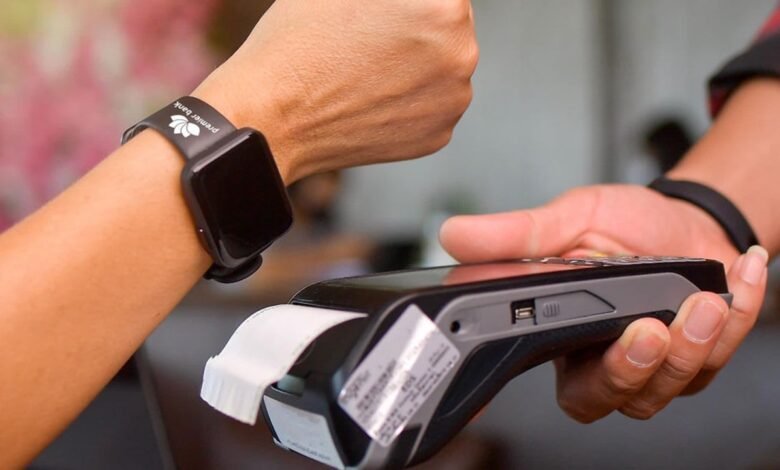
That is what makes Diamond Trust Bank’s new move interesting, but they are not the first Kenyan. DTB has now joined Premier Bank Kenya in offering NFC-powered wearables for tap-and-pay transactions, meaning this is no longer just an old Safaricom experiment that fizzled out and sat in the archives. Premier Bank publicly rolled out Premier Tap last year, while DTB now has a live consumer portal and product page for its own wearables. In other words, the banks have picked up a payments idea Safaricom could not quite commercialize at scale and are trying again with a more bank-card-native model.

Who has used them?


On DTB’s side, the pitch is fairly straightforward. The bank says its wearables are powered by Mastercard and Tappy Pay, and currently come in three forms: silicone bands, ceramic rings, and ceroxy rings. To get started, you need an active DTB account, a DTB-issued debit card, the Tappy Pay app, and a branch visit for setup.

DTB also allows customers to link up to eight wearables to one account, which is a surprisingly generous number for a product category that still feels niche. The pricing is public too: the Silicone Band costs KES 1,200, the Ceroxy Ring costs KES 2,400, and the Ceramic Ring costs KES 2,900.
Premier Bank’s setup is both broader and narrower at the same time. Broader, because it lists a wider variety of form factors, including smartwatches, sunglasses, bracelets, ceramic rings, key fobs, key holders, phone covers, and more. Narrower, because Premier only allows up to three wearables per card.
The bank says customers can buy the gadgets from any Premier Bank branch, and earlier coverage around the launch said Premier Tap was made available through branches and the My Premier App. So compared to DTB, Premier appears to be casting a wider lifestyle net, but with a tighter cap on how many wearable devices one customer can rotate through.
The sharpest differences show up in transaction controls and how each bank explains security. Premier is much clearer: it says the default contactless limit is KES 200,000 for Mastercard Standard cards and KES 600,000 for Mastercard WorldElite cards, with a PIN required for any transaction above KES 5,000.
DTB also leans heavily on security language, emphasizing tokenization, encrypted NFC transactions, remote lock and delete controls, and the fact that personal data is not stored directly on the wearable. But DTB does not spell out a PIN threshold the way Premier Bank does. Instead, DTB frames the product around a KES 10,000 daily cap and a KES 5,000 single-transaction limit, information that was disclosed on X and not in the FAQs. That suggests DTB may be managing risk through much tighter transaction ceilings.
Pricing is another split between the two. DTB is transparent about what each wearable costs, while Premier’s public FAQ says the devices can be purchased at branches but does not list retail prices. However, some say they got them for free.

That lack of clarity matters because wearables still have to answer a very basic consumer question: why should I buy another payment gadget at all? And this is where I think the banks are solving a real problem in a slightly awkward way. We already know Kenyan financial institutions can push tap-and-pay straight into the smartphone. We’ve seen KCB’s tap-to-pay rollout for NFC-enabled smartphones and AbsaPay’s phone-based tap-to-pay approach. Safaricom’s own newer M-PESA Tap-to-Pay direction is also heading there.
So yes, DTB joining Premier Bank Kenya is notable. It tells us NFC wearables are no longer a one-off curiosity in the Kenyan market. But I still think the real story is bigger than rings and wristbands. The long-term winner in tap-and-go payments is probably not additional hardware you have to buy, size, replace, or explain to a cashier. It is the device already in your pocket.
Wearables may help banks show off innovation and give customers a stylish alternative, but phones remain the more practical path to mass adoption. Safaricom was early with the idea, banks are now trying to refine it, and the market finally seems closer to the point where tap-and-pay might actually stick.






Join the discussion