

Kenya’s drone delivery market has a new entrant, and it is targeting a part of the business the current leaders have mostly left alone.
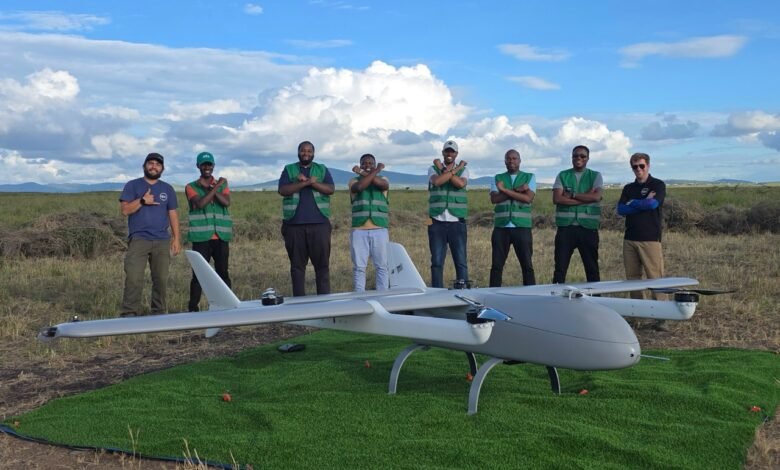
The Good Drone Company (GDC), which builds autonomous cargo drones, has announced an exclusive partnership with ThatcherX, a Kenyan drone operator, to run cargo drone services across the country. The two say they have worked together for several years on blood and vaccine deliveries with the Ministry of Health and several county governments. The new deal formalises that relationship and points it at commercial cargo, not just medical supplies.
The announcement comes right after the inaugural flight test of GDC’s drone at the Konza National Drone Corridor, Kenya’s first airspace approved for flights beyond the operator’s line of sight. That detail matters, and we will come back to it.
What is actually flying
GDC’s aircraft is a hybrid VTOL fixed-wing drone. VTOL means it takes off and lands vertically, like a helicopter, then switches to winged flight for distance. According to GDC, the drone can carry up to 25 kg and has a maximum range of about 1,000 km, though not both on the same flight. It cruises at up to 170 km/h and is designed to fly without a pilot. Electric motors handle the vertical lift. A small petrol engine powers forward flight, so the drone refuels and goes again instead of sitting on the ground to recharge.

Those numbers describe a different class of machine from what Kenya is used to. Zipline, the best known operator in the country, flies small battery-powered drones that drop lightweight medical packages by parachute. We already covered Zipline expanding its blood, vaccine and emergency drug deliveries to clinics in Homa Bay County. That model is built for speed and small, urgent health loads.
GDC is pitching something heavier and longer in range, and it wants to carry ordinary commercial cargo as well, from pharmaceuticals to humanitarian aid to cash in transit. In short, it is not trying to out-Zipline Zipline. It is trying to open a different lane.
Who does what in this deal
The roles split cleanly. GDC supplies the drone technology. ThatcherX is the local operator that flies it and deals with regulators on the ground.
According to the companies, ThatcherX holds a Remote Operator Certificate (ROC) from the Kenya Civil Aviation Authority (KCAA). That is the licence a company must hold to fly drones commercially in Kenya. The announcement credits ThatcherX cofounders Derrick Ngokonyo and Simon Kandie for driving the partnership.
So GDC brings the hardware and the design. ThatcherX brings the local operating base and the regulatory standing needed to fly at scale. Neither side can do this alone, which is why the “exclusive” framing makes sense for both of them.
Why Konza is the part to pay attention to
Flying a cargo drone across Kenya at scale is not only about the aircraft. It is about permission to fly long distances without a person watching the drone the whole way. That is what beyond visual line of sight, or BVLOS, means, and it is the difference between a hobby flight and a real logistics network.
The Konza National Drone Corridor, approved by the KCAA in 2025 and run with an Israeli-built air-traffic system for drones, is the first place in Kenya set up for exactly this kind of flying. It gives operators a controlled, monitored space to prove their technology, with a digital portal for flight approvals and automatic systems to keep drones from colliding. Testing there gives GDC and ThatcherX a legal sandbox to demonstrate the drone before any wider rollout, and it is a strong signal that the regulator is in the loop.
What to watch next
The announcement is a statement of intent more than a launch. There is no published price, no commercial launch date, and no list of paying customers yet. The medical work with the Ministry of Health shows the drone can do the job in controlled settings. Commercial cargo at national scale is a harder test, and Kenya already has experienced operators competing for the same airspace and the same clients.
The other open question is the licence itself. ThatcherX is not listed on the KCAA’s published roster of certified drone operators, which may simply mean that list is out of date or that the certificate sits under a different company name. It is worth confirming as the partnership moves from test flights to paid routes.
For now, the useful thing to understand is this. Kenya is shifting from small medical drone drops towards heavier, longer-range cargo flights, and it finally has a regulated corridor to test them in. Whether GDC and ThatcherX can turn one successful test flight into an affordable, working delivery business is the question to follow over the next year.







This is incredibly inspiring