
If you’ve been following my coverage here on Techish Kenya, you know I haven’t minced words when it comes to Starlink’s pricing strategies in the country. Back in March 2026, I wrote a scathing piece arguing that Starlink Mini’s ridiculous activation fee was actively holding back adoption in Kenya. At the time, asking a Kenyan consumer to shell out an exorbitant KES 16,250 activation fee on top of hardware and shipping costs just to choose an installment plan felt completely counter-intuitive to bridging the digital divide.
Well, it looks like I can officially claim some vindication.
In a quiet, unannounced move, Starlink has completely restructured its entry costs for Kenyan buyers. The massive KES 16,250 activation fee for the Starlink Mini has been completely waived. Furthermore, the company has also scrapped the KES 3,250 activation fee for its Standard kit. Whether you are paying in installments or buying upfront, that punitive activation tax is officially gone.
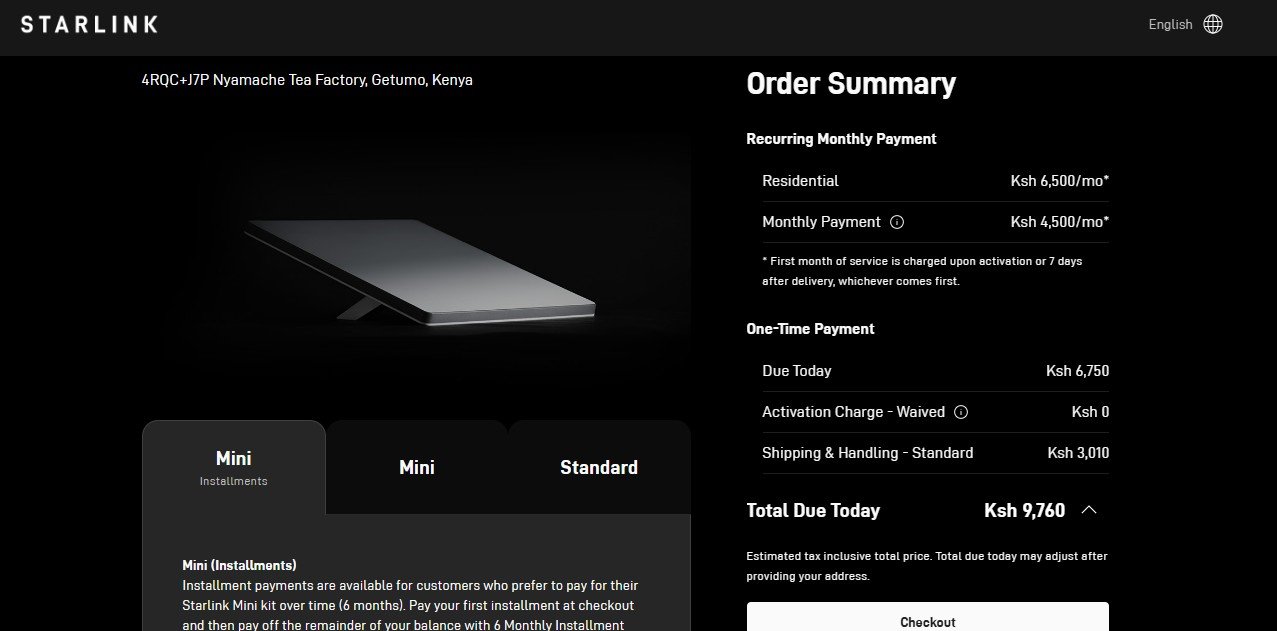
For most Kenyans, the monthly installment plan is the most viable path to owning a Starlink Mini satellite dish. Previously, the initial financial hurdle was steep. Under the old system, you had to pay KES 6,750 upfront for the hardware, add the KES 16,250 activation fee, and pay KES 3,010 for shipping, bringing your very first payment to a painful KES 26,010 before you even browsed a single web page.

However, that reality has completely changed.
- Hardware (First installment): KES 6,750
- Activation charge: Waived (KES 0)
- Shipping & handling: KES 3,010
- Total due today: KES 9,760
By removing the activation fee, Starlink has successfully brought the upfront entry cost to under KES 10,000. Once your kit arrives, the ongoing monthly commitment remains a dual-tier obligation for the first six months. You will pay KES 4,500 per month to clear the remaining hardware balance, alongside KES 6,500 per month for the unrestricted Residential internet service, bringing your total monthly commitment to KES 11,000/month until the hardware is paid off.
Upfront purchase options for Starlink Mini vs. Standard
If you prefer to bypass monthly hardware debts and buy your kit outright, the pricing landscape has similarly shifted in your favour. Buying the compact kit outright now dispenses with any hidden activation overheads. Your checkout summary looks like this:
- Starlink Mini Kit: KES 27,000
- Activation Charge: Waived (KES 0)
- Shipping & Handling: KES 3,010
- Total due today: KES 30,010
Buying the Mini upfront also gives you access to the cheaper Residential Lite service tier, which defaults to KES 4,000/month, making it a much more sustainable long-term option if you don’t need maximum unrestricted bandwidth. If you require the heavier terrestrial footprint of the larger model, the new direct purchase structure looks like this:
- Standard Kit: KES 49,900
- Activation charge: Waived (KES 0) (Previously KES 3,250)
- Shipping & handling: KES 3,010
- Total due today: KES 52,910
Like the Starlink Mini, the Standard kit can also be paired with the KES 4,000/month Residential Lite package.
Starlink Kenya’s lessons
Why is Starlink suddenly giving up these lucrative upfront activation fees? To understand that, we have to look at how their previous experiments failed.
Back in 2024, Starlink ambitiously introduced kit rentals in Kenya to combat the hardware pricing wall. It seemed like a fantastic idea at the time, but less than two years later, the program has been completely terminated. While no explicit reason was given, it’s likely that due to high rates of hardware defaults, logistical tracking nightmares, and underperforming local returns.
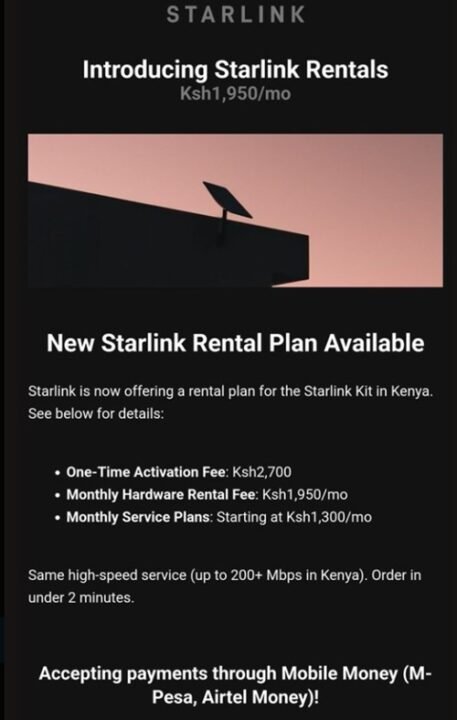
Similarly, Starlink has completely killed off the entry-level KES 1,300/month 50GB data plan that it launched to target budget users who subscribed to the rental kit. The reason for this is clear from Ookla’s network data: severe network congestion. With thousands of Kenyans onboarded, 25,000 in total as of this writing, download speeds took a steady hit, dropping to a median of 34.55 Mbps by Q1 2026. The network grew so overloaded that Starlink was forced to temporarily freeze new sign-ups entirely in Nairobi.
By eliminating the low-tier 50GB plan and abandoning kit rentals, Starlink is signaling a major pivot. They no longer want casual, low-spend users clogging the network. Instead, by waiving the activation fee on installment plans, they are making it easier for serious users to enter the ecosystem, while ensuring those users commit to the higher-value KES 6,500/month or KES 4,000/month service brackets.
Starlink is learning its lesson in the Kenyan market. The removal of the activation fee is a massive win that addresses my structural criticisms from earlier this year, making premium satellite internet far more accessible to the average tech consumer upfront.








Join the discussion