

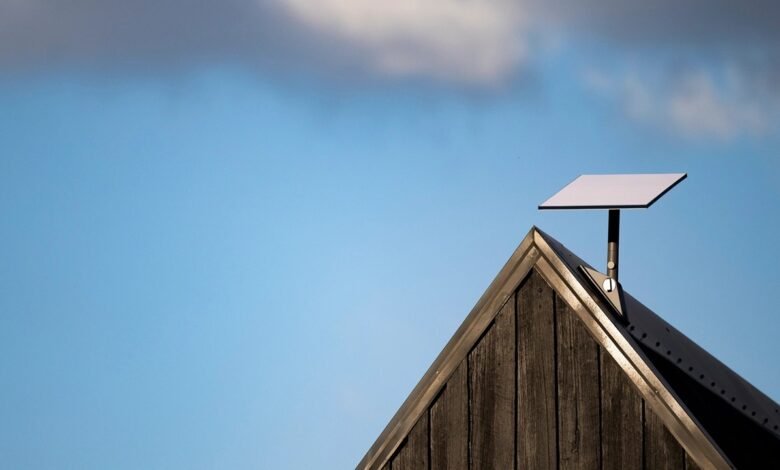
SpaceX switched Starlink on in Côte d’Ivoire on Thursday 16 July 2026, and in Seychelles two days later. They are the 27th and 28th African countries where the service is on sale, out of 54.
Starlink is satellite internet. SpaceX operates thousands of small satellites in low Earth orbit, a few hundred kilometres up, and a dish at the customer’s house links to whichever satellite happens to be passing. Because no cable is involved, the service turns up in places fibre and mobile masts have never reached, which is most of its appeal in Africa. The limit is capacity. A satellite passing over a town carries a fixed amount of bandwidth and everyone underneath shares it, so a provider that signs up too many customers in one area has to add satellites or stop selling.
Côte d’Ivoire
The Ivorian regulator, the Autorité de Régulation des Télécommunications/TIC de Côte d’Ivoire (ARTCI), gave a local entity called Starlink Network CIV a provisional licence lasting 12 months. Djibril Ouattara, the Minister of Digital Transition and Technological Innovation, announced it on 11 June during the government’s Gouv’Talk series, and said the terms would be reviewed at the end of that period based on service quality. ARTCI had spent 2024 warning that Starlink held none of the licences it needed to operate in the country.
The ministry’s stated purpose is rural coverage. It wants the service reaching remote communities, schools and health facilities that fibre and mobile networks have not served. The government is doing this alongside a 5G rollout in towns of more than 25,000 people.

Starlink’s residential plan in Côte d’Ivoire costs CFA 28,746 a month, roughly USD 50, for speeds up to 100 Mbps, according to Space in Africa. The Standard dish is CFA 247,466 and the Mini is CFA 148,148.
Orange and MTN already sell satellite broadband there, each through a deal with the French operator Eutelsat, Orange since January and MTN since April. Both use satellite capacity to extend mobile and fixed networks they already run, where Starlink sells the dish directly to the household.
The gaps in the map
Coverage does not decide where Starlink sells. Its satellites already pass over every African country. Licences decide it, and the cost of a licence varies enormously, from USD 32,000 to USD 575,000 across the continent on Space in Africa’s figures.
Checking Starlink’s coverage map, another 18 UN-recognised African countries plus Western Sahara are pencilled in before the end of 2026, though it’s worth noting that Starlink has pushed such dates back before. Eight countries carry no date at all: South Africa, Algeria, Egypt, Libya, Morocco, Sudan, Eritrea and Djibouti. Ethiopia is missing from that table altogether, and a separate check of Starlink’s data in June placed Ethiopia in the no-date group, so eight is a floor rather than a count.
South Africa is the largest market Starlink cannot sell in. The Department of Communications and Digital Technologies told parliament in June, in a written answer reported by ITWeb, that ICASA has received no licence application from Starlink of any kind. Network licences there require 30% ownership by historically disadvantaged groups, and Starlink is waiting on a proposed rule change that would let foreign operators meet that through investment instead of shares.
Amazon has dealt with the same requirement another way. On 15 July it signed a distribution agreement with Herotel, South Africa’s largest fixed internet provider, for a satellite service called evry launching in 2027. Herotel takes out the licences. Amazon Leo, as the satellite arm is called since being renamed from Project Kuiper, supplies the capacity and needs no ICASA licence of its own, which Trevor Vieweg, who runs Amazon Leo’s global business, confirmed to TechCentral.
Namibia has gone worse for Starlink than South Africa. Its regulator CRAN rejected the application outright on the grounds that the company is wholly foreign owned, and Namibian law sets the local ownership requirement at 51%.
Kenya
Starlink has been on sale in Kenya since July 2023. The Communications Authority counted 24,999 subscribers at the end of March 2026, which is 0.9% of the fixed internet market and only 2,717 more than three months earlier. Safaricom added 83,107 fixed subscribers over that same quarter and ended it with 941,501.
Speeds have fallen as the subscriber base has grown. Ookla measured a median download of 34.55 Mbps in March 2026, against about 47 Mbps a year earlier, as Business Daily reported. Satellite was nonetheless the fastest-growing fixed internet technology in the country that quarter, up 11.4%.
Then in early July, Starlink stopped taking new customers in Nairobi, Kiambu, Mombasa, Machakos, Murang’a, Kirinyaga and Kwale. We covered the freeze on 7 July. The website tells buyers in those counties that “Starlink service is currently at capacity in your area”, then offers a deposit to hold a place in a queue. No reopening date was given, and we have found no announcement since that any of the seven have reopened. Space in Africa counted 11 African markets on 23 July where residential service was sold out or waitlisted, most of them capitals and large cities.
Twenty-eight countries makes the African business sound bigger than it is. Space in Africa estimates roughly 300,000 African subscribers as of June 2026, about 3% of Starlink’s global base, with Nigeria, Zimbabwe and Zambia holding around 64% of them between them.
What SpaceX is doing
The hardware SpaceX has shown this month costs less to make rather than carrying more traffic. The V5 dish, which we covered on 16 July, weighs 1.1kg and draws 35 to 50 watts where the previous model drew 75 to 100, and in the United States it is sold only with the cheaper 100 Mbps residential plan. A leaked Mini 2, which we covered on 20 July, adds a built-in battery and USB-C charging. Both lower the cost of getting connected. Putting more bandwidth over Nairobi is a separate job that takes satellites and ground stations.
There is also a version of Starlink that involves no dish. Airtel Africa agreed with SpaceX in December 2025 to offer Starlink Direct-to-Cell across all 14 of its African markets, Kenya included, covering about 174 million subscribers. Ordinary smartphones connect to the satellites in places with no mast. The service begins with text messages and limited data, and each country has to approve it separately.
Kenyan rules have moved in the meantime. The CA now requires every Starlink customer to verify their identity against the national population register, and it has replaced the old satellite licence with a more expensive one. Amazon has applied for a Kenyan satellite licence and is building its first African ground station in the country.
What to watch
The 2024 freeze in Nairobi ran from November to June, about seven months, and Starlink lost customers during it rather than gaining them. Whether this one lasts as long is the first thing to watch. The second is the Communications Authority’s next quarterly report, covering April to June 2026, which will show what the freeze has done to subscriber growth. The third is whether the 100 Mbps residential plan and the V5 dish reach Kenya, because together they would cut both the monthly bill and the upfront cost.
For anyone in the seven counties, nothing has changed since early July. You can pay the deposit and join the queue with no date attached, or buy fibre or fixed wireless from a provider that can still take the order.






Join the discussion