

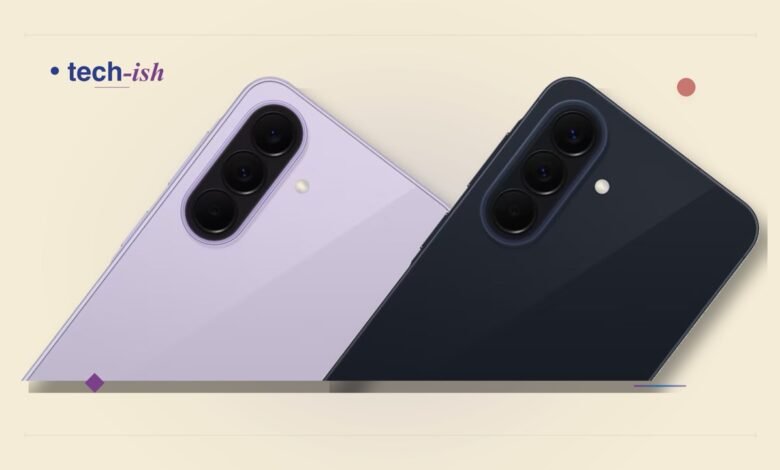
Samsung has a new sales angle for two phones already on shelves in Kenya. The Galaxy A37 5G and Galaxy A57 5G arrived here earlier this year. Samsung is now marketing them less as ordinary mid-range handsets and more as working tools for entrepreneurs, small business owners, and content creators.
The pitch is simple. Your phone is your shop, your camera, and your office, so it should last for years, edit your photos, and stay readable in the sun. Below is what the phones actually offer, what they cost, and where that pitch holds up.
First, the basics. These are two phones, not a wide range. The A57 5G is the stronger and pricier. The A37 5G sits a step below but shares most of what matters day to day. Both sell at Samsung Experience Stores and authorised dealers nationwide.
We already broke down the official Kenyan prices and full specifications when the phones launched in our earlier coverage. Samsung’s official starting prices are KES 60,900 for the A57 5G and KES 49,000 for the A37 5G. The 256GB versions cost more, roughly KES 66,700 to 68,300 (A57) and KES 57,800 to 60,200 (A37).

Street prices are now lower. We checked two Kenyan online stores on 26 June 2026.
| Variant | Samsung official | BrandCart | Avechi |
|---|---|---|---|
| Galaxy A57 5G (8GB / 128GB) | KES 60,900 | KES 57,495 | KES 44,999 |
| Galaxy A37 5G (6GB / 128GB) | KES 49,000 | KES 47,495 | KES 39,999 |
BrandCart also lists the A57 256GB at KES 63,995, and Avechi the A37 256GB from KES 51,999. Before chasing the lowest number, check the warranty. Street prices move often, so confirm both before you pay.
The strongest part of the pitch: six years of updates
The headline promise is six generations of Android upgrades and six years of security patches for both phones. This one checks out, and it matters more in Kenya than the marketing lets on.
Here is why. A phone bought today ships with Android 16. Six generations of upgrades takes it to roughly Android 22, with security support to around 2032. Most Android phones outside Samsung and Google’s Pixel line get only two or three years of major updates. In Kenya, where people keep phones longer because of cost, six years of support is worth more than the spec sheet alone suggests.
The two parts matter differently. Security patches close newly found holes that attackers use. OS upgrades keep new apps working over time. Apple’s iPhones have offered this long window for years, a main reason people pay more for them. Samsung now offers it on a phone starting at KES 49,000.
The AI features, explained plainly
Samsung groups the phones’ AI tools under the name “Awesome Intelligence.” Two stand out.
Circle to Search with Google lets you draw a circle around anything on your screen and search it without opening another app. Samsung’s example is circling a fabric pattern while thrifting to find where to buy it. That works. Two caveats. It needs an internet connection, so it uses your data bundle. And it is a Google feature found on many Android phones, not a Samsung exclusive.
Object Eraser uses AI to remove unwanted people or objects from a photo, so a stranger who wandered into your product shot can be wiped out in a few taps. Results on a mid-range phone will not be as clean as on Samsung’s flagships, so treat it as a quick fix rather than a studio tool.
Where the pitch is thinner
The hardware is an incremental upgrade, not a leap. The A57 uses Samsung’s new Exynos 1680 chip. The A37 uses the older Exynos 1480, the same generation as last year’s A56. Reviewers who ran benchmarks found the speed gain over the previous models to be small. Both phones keep the 6.7-inch 120Hz screen, the 5,000mAh battery, and 45W wired charging from before. The A57’s brighter Super AMOLED+ panel hits a 1,900-nit peak, which makes it readable in direct sunlight. The A37 uses a standard AMOLED panel but reaches the same peak brightness.
Prices also rose this year. Samsung lifted A-series prices across the board, mainly because a worldwide shortage of memory chips has pushed component costs higher. We saw the early effect locally, before the official launch, when grey-market shops in Nairobi were selling units at wildly different and often inflated prices. Official pricing has since settled, but still sits above what the A36 and A56 cost at launch. Samsung lists the full feature set in its own announcement.
At these prices you have real alternatives. The Xiaomi 15T, Google Pixel 10a, and Nothing Phone (3a) all compete in the same bracket. Samsung’s case rests less on raw hardware and more on the long software support, Knox security, and its local service and warranty network.
So who is this actually for
If you run a small business or make content, the real reason to consider these phones is the six years of updates, not the AI tricks. The AI tools are handy, but most are not exclusive to Samsung, and the hardware gains this year are modest. Decide first whether you need the pricier A57. For many people the cheaper A37 covers the same daily work. Then compare it against the Xiaomi and Pixel options, and check the warranty behind any bargain price. The phone worth buying for a business is the one that keeps getting updates and still fits your budget.






Join the discussion