

Infinix launched the HOT 70 series in Kenya on 17 July at a Nairobi event called The Night of HOT, complete with a Savara anthem and a claim to be the best value smartphone under KES 20,000. That claim is easy to make on a stage. It is unusually easy to test this year, because the HOT 70 arrives in the hardest year in a decade to build a cheap phone, and the phone was clearly built with that in mind.
The year that broke budget phone maths
AI data centres have spent the past year buying up the world’s memory chips, the RAM and storage every phone needs. By late 2025, DRAM prices were up 172% year on year, according to TrendForce, and by early 2026 research firm Omdia estimated that memory made up nearly 60% of the cost of building a phone that retails under $400. We already covered the lawsuit accusing Samsung, SK Hynix and Micron of inflating RAM prices, and the pressure has not let up.
Budget phones absorb this worst, because memory is a bigger share of what they cost to make. Some brands are cutting specs: Motorola and Samsung have both shipped new budget phones with 4GB of RAM. Some are cutting products outright: Nothing cancelled its CMF Phone 3 Pro rather than sell it at nearly double the old price. IDC expects entry-level brands to keep passing costs to buyers through 2026. Kenya is feeling it already. Smartphone shipments into the country fell 16% year on year in the first quarter of 2026, Omdia reports, because higher prices are making people hold their phones longer. Two quarters earlier, the same market grew 17%.
Where the HOT 70 attacks
Kenyan retailers list the HOT 70 from around KES 18,000 for the 4GB and 128GB version, rising to about KES 26,000 for the 8GB and 256GB unit we have in hand. Checked against public spec sheets rather than Infinix’s marketing, its sharpest edge is the processor. The engine of choice in this bracket this year is MediaTek’s Helio G81: the TECNO Spark 50 runs it, and so does the Redmi 15C. The HOT 70 runs the Helio G100 Ultimate, a newer chip built on a more efficient 6-nanometre process, where the G81 is a 12-nanometre design. In practice, apps open faster and the phone does the same work on less battery. It is roughly a generation’s gap between phones sold at the same counter.

Charging is where the bracket’s real trade-off lives. The Spark 50 has the biggest battery of the group, 6,700mAh to the HOT 70’s 6,000mAh. It refills at 18W, which in practice means hours on a cable. The Redmi 15C charges at 33W and takes about half an hour to reach 50%. The HOT 70 charges at 45W, with Infinix claiming 50% in about 25 minutes. A bigger battery sounds like the safer buy, but a sizable battery you can top up meaningfully in the time it takes to get dressed changes how you use a phone. There is bypass charging too, which powers the phone directly during long gaming sessions instead of pushing heat through the battery.
Then there is memory, the very thing 2026 is squeezing. Every HOT 70 keeps a microSD slot, and the range holds an 8GB, 256GB option in a year when the industry is retreating to 4GB. Rivals sell 8GB and 256GB versions of their phones too, but on entry-level budget processors. Nothing else in the bracket pairs this much memory with a chip of this class at these prices.
There is also a smaller, physical point: at 7.49mm and 195 grams, the HOT 70 is thinner and lighter than both the Redmi 15C and the Spark 50.
The long game Infinix is promising
Two more arguments Infinix makes for this phone are about how it ages. One is what the company calls Battery Self-Repair Technology: Infinix says battery health stays above 80% even after six years of use, where typical phone batteries degrade noticeably much sooner. The other is the 72-month fluency certification printed on the retail box, the company’s guarantee that the phone should still feel smooth in 2032.
Backing that up is a commitment to three Android version upgrades and five years of security updates, also printed on the box, which almost nothing else under KES 20,000 offers, as we noted in our guide to the best smartphones under KES 20,000. Infinix also says the phone uses faster UFS storage where rivals in this bracket ship slower eMMC, one more reason apps and files should stay quick as the phone fills up.
Built to take everyday punishment
Durability is where Infinix has visibly spent. The HOT 70 is rated IP65: sealed against dust, and able to take rain, splashes and a rinse under a tap. The box spells it out as “Max Dustproof, Daily Water-Resistant”, and both of its direct rivals stop at IP64 splash resistance. Swimming is the one thing it is not built for; that is the Pro’s territory.
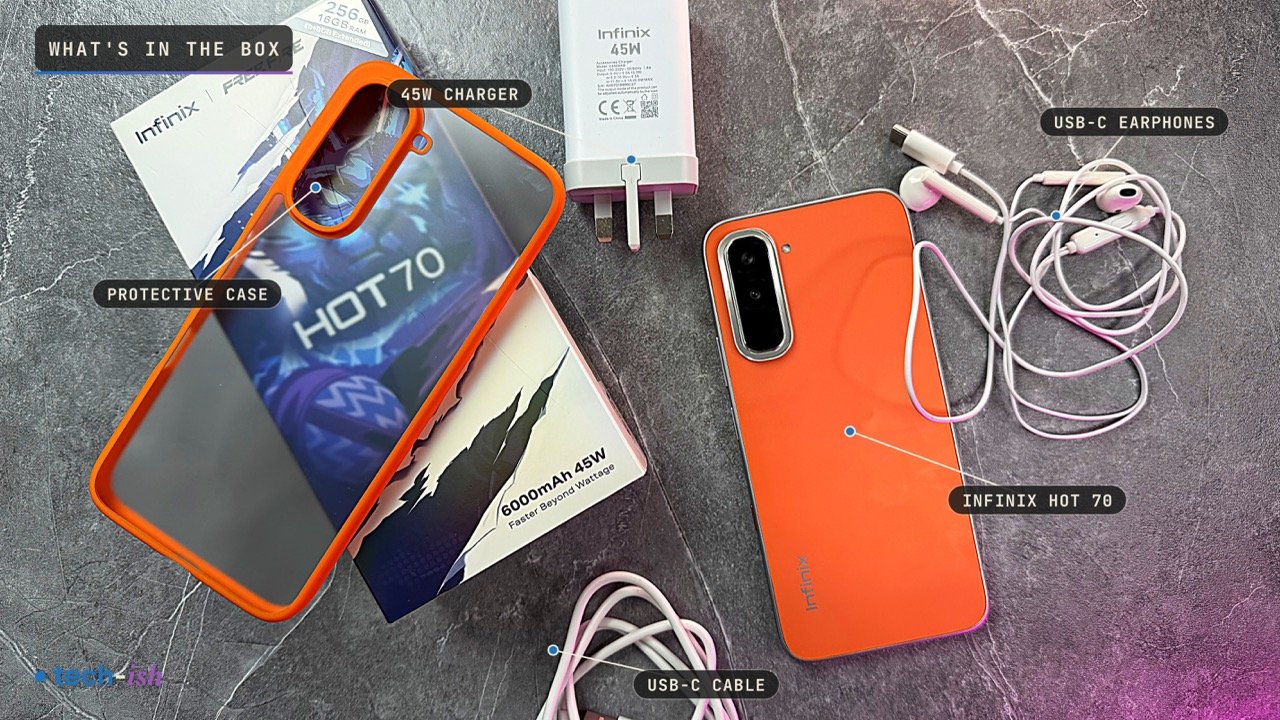
Drops are covered by SGS certification, tested with 1.5 metre falls and repeated face-down impacts, and there is a TPU case in the box from day one. The speaker has its own recovery trick: if it takes in water, the Folax assistant plays a tone that physically vibrates the water back out.
The colour trick, the screen and the rest of the sheet
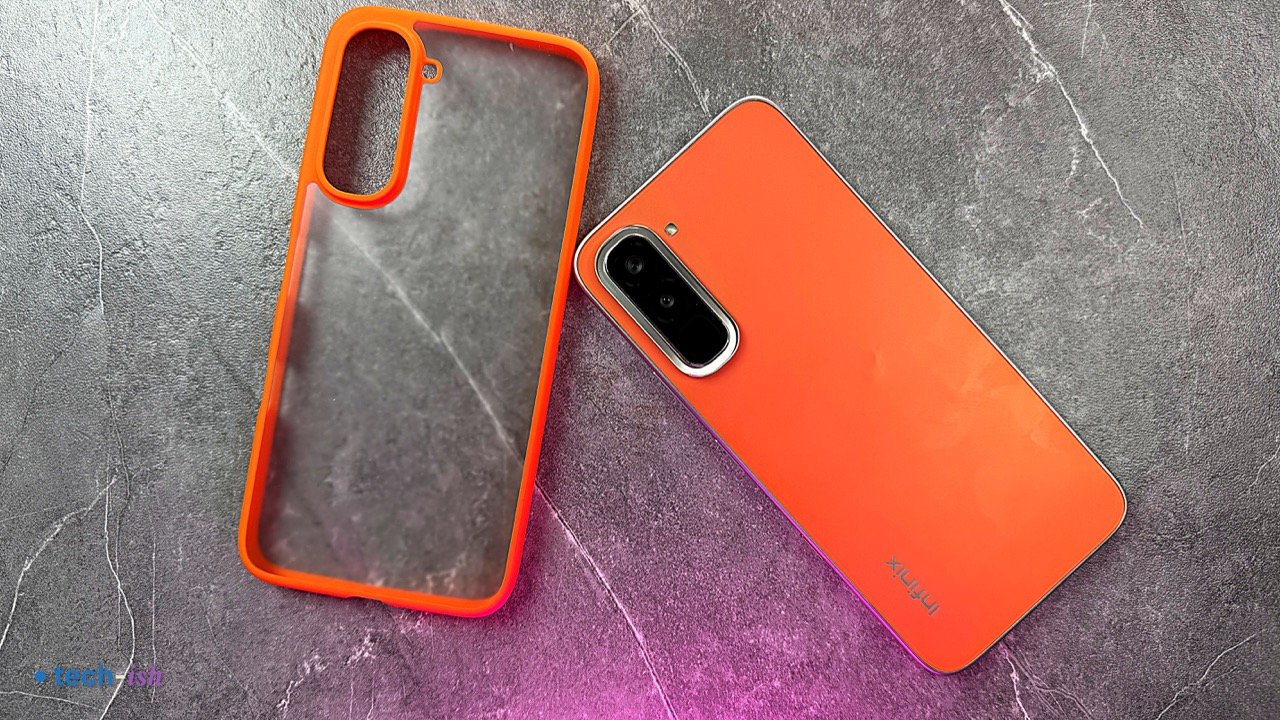
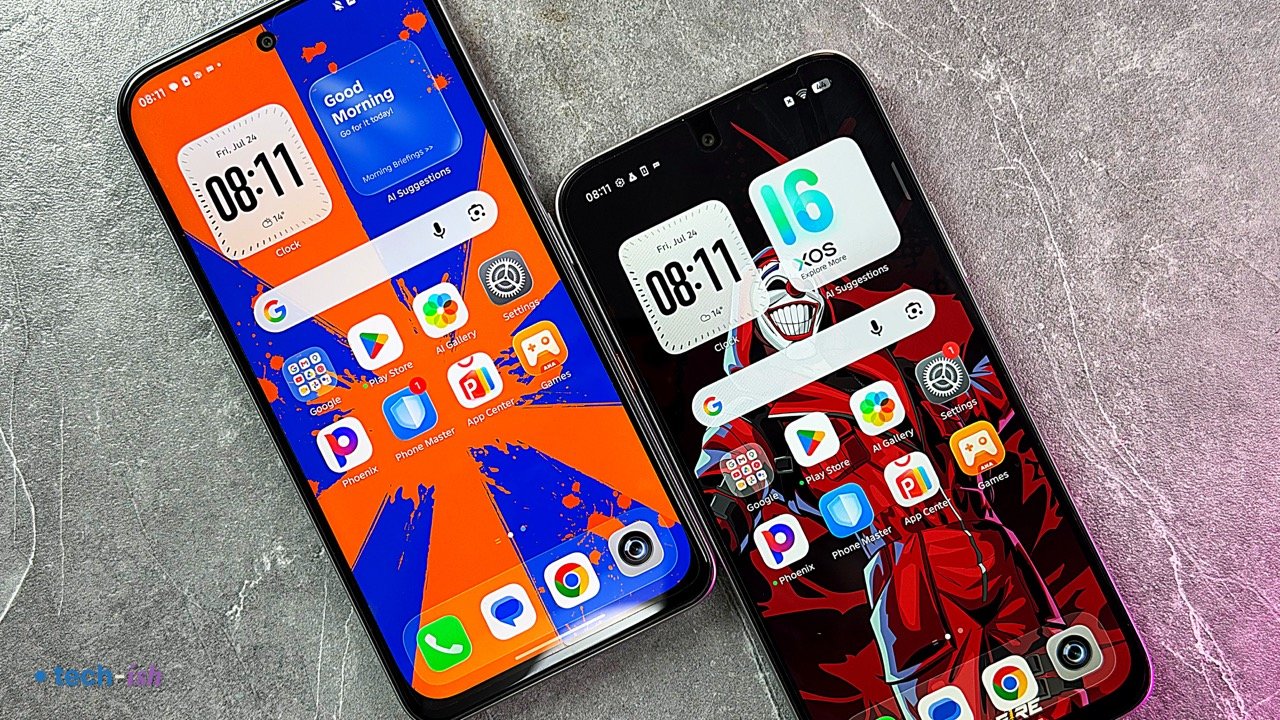
The design is where the HOT 70 refuses to play it safe with price. It comes in six colourways under what Infinix calls its Dynamic Shine Design. Ours is the Thermo Orange, with a back that reacts to temperature: cold turns it a deep orange, warmth turns it light, and with carefully applied heat you can set a semi-permanent pattern of your own into the cover.
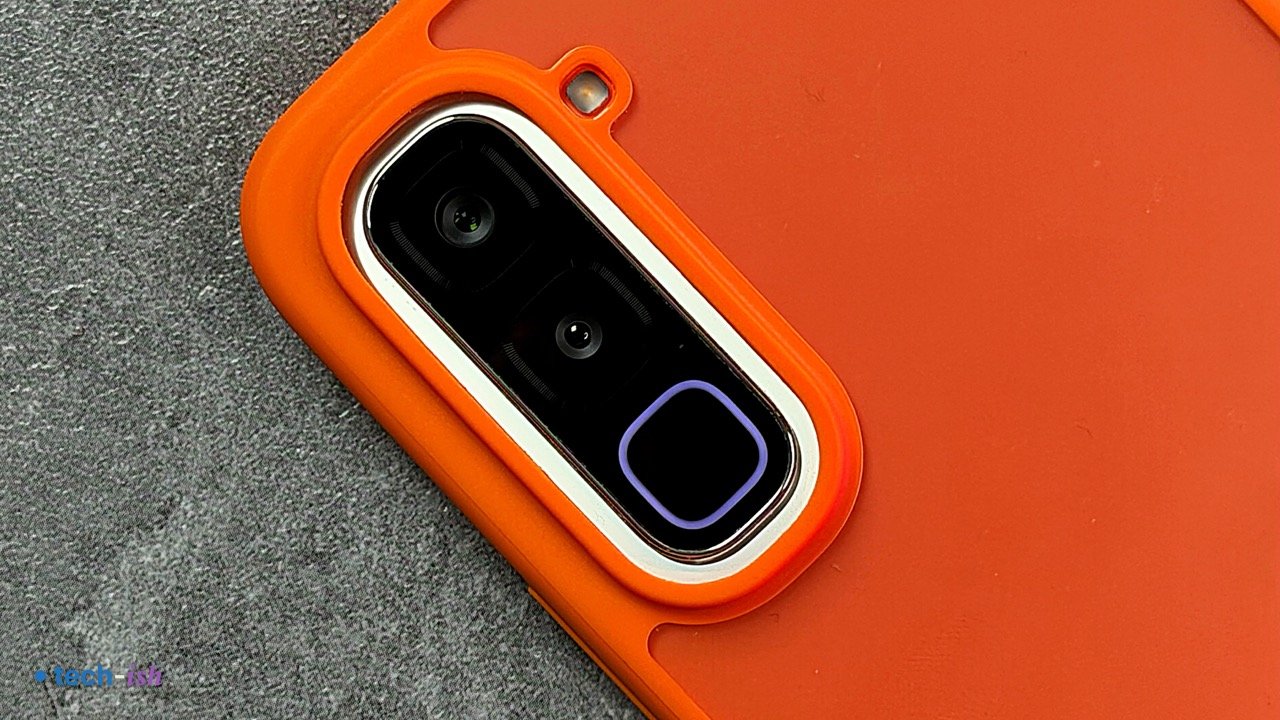
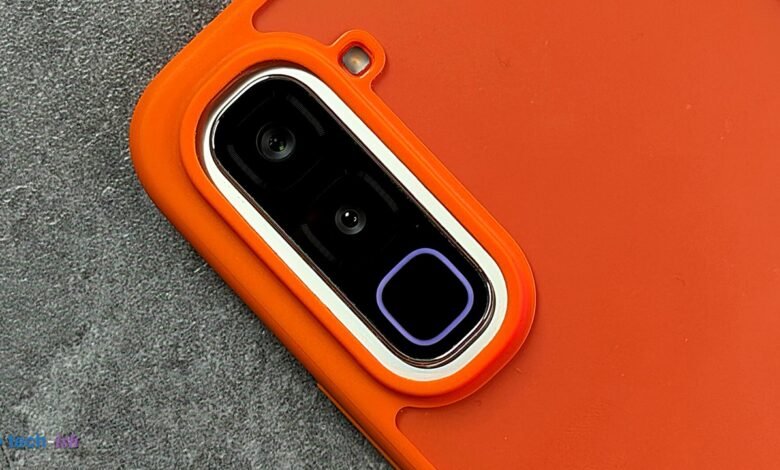
The Quiet Violet and Green Texture versions have a light-catching flame texture instead, every colour gets the Crystal Mood Island camera ring that shifts colour as it catches light, and next to the cameras sits the Active Halo, a small light ring that glows for calls, messages and charging when the phone is lying face down.
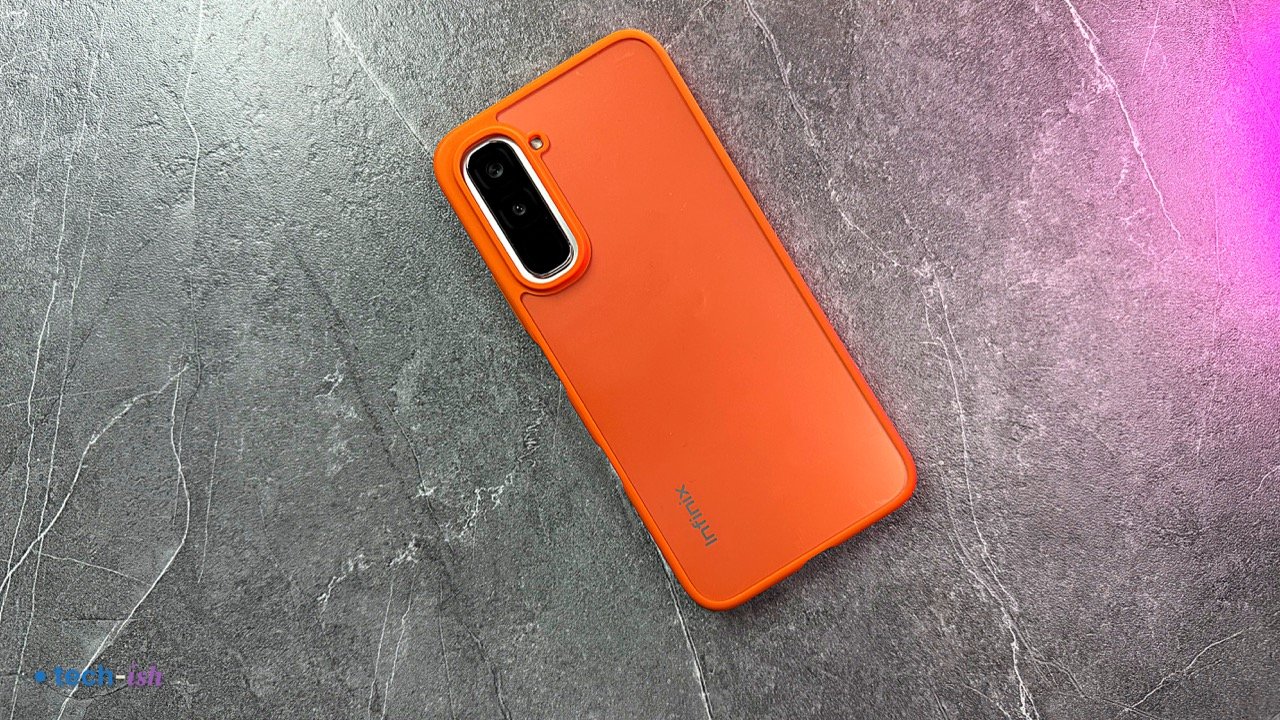
The screen is a 6.78 inch 120Hz panel with 700 nits of brightness and an always-on display, easily readable in Nairobi sun. It is HD+, meaning 720p, so text and photos are less crisp than on a Full HD screen, and that is the main criticism in the phone’s first reviews. Photography runs through a 50MP autofocus camera on the back and an 8MP camera up front, with an AI Live Photo mode that picks the sharpest frame of a moving subject.
A couple of more things included:
- A side-mounted fingerprint reader.
- An infrared blaster that turns the phone into a TV remote.
- Two nano SIM slots plus the microSD.
- UltraLink, which lets two Infinix phones exchange messages over Bluetooth up to 1.5 kilometres apart with no network at all.
- Pure Voice noise cancellation for calls in loud places.
- The XGuard security suite with app locking and advert control.
The AI tools run through a physical side button: a short press captures whatever is on screen into a note, contact or calendar entry, a long press calls up the Folax assistant, and Kenyan units add the AI Class Timetable, which turns a photographed school timetable into a schedule with reminders.
What the HOT 70 Pro 5G adds
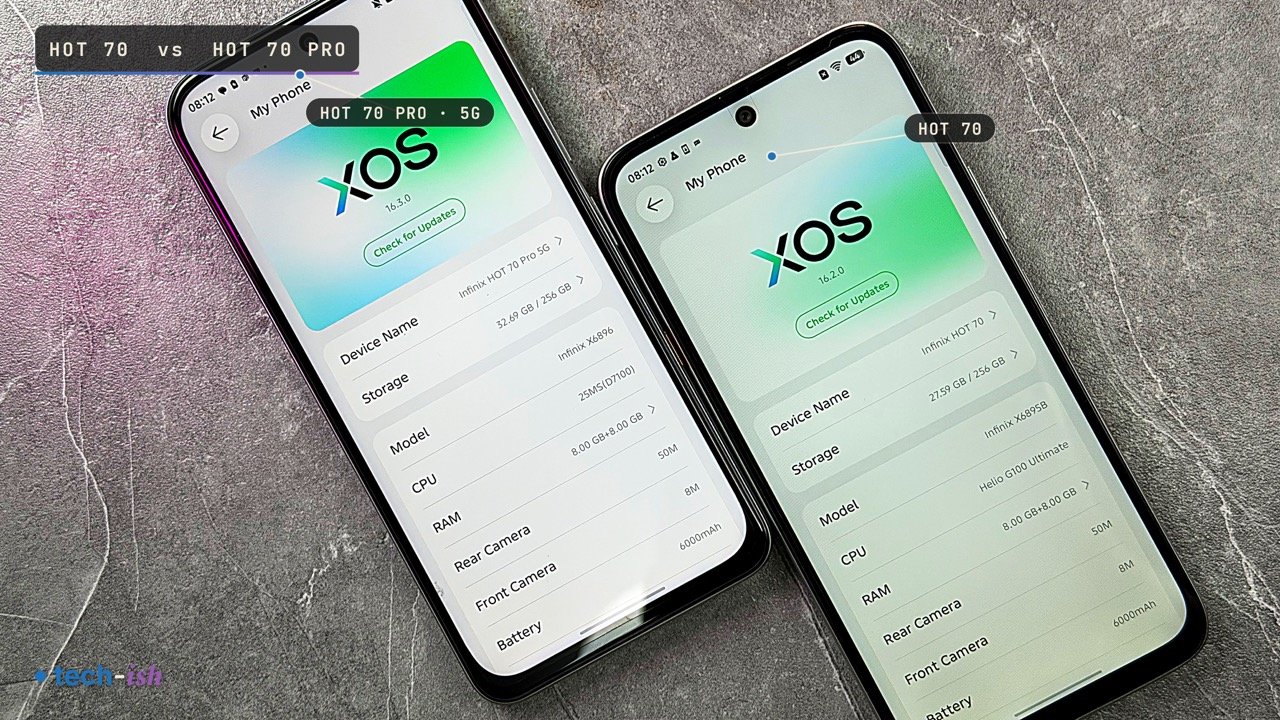
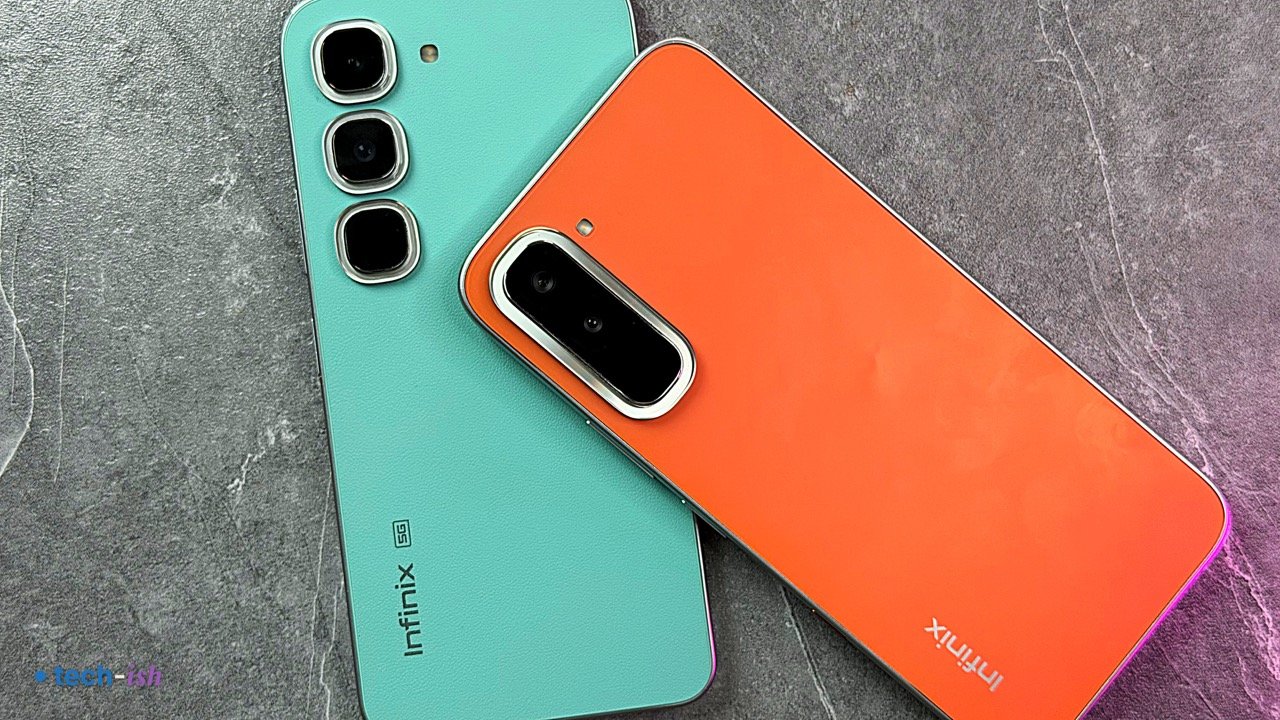
Above the standard phone sits the HOT 70 Pro 5G, selling in Kenya at roughly KES 36,000 to 38,000 depending on the retailer. The extra money changes the phone in the exact places the standard model is weakest: a sharper 6.76 inch Full HD+ display at 144Hz, a stronger IP68 rating that survives two metres of fresh water for half an hour, MediaTek’s Dimensity 7100 with 5G, a 50MP Sony IMX882 camera, and the Active Matrix Cube, a small LED screen on the back for notifications and mini games.
Whether you should pay for the 5G is a separate question from whether you should pay for the screen. The Communications Authority’s latest sector data puts 5G at about 1.7 million subscriptions, under 3% of Kenya’s mobile internet connections, while 4G carries 71% (CA sector statistics). Coverage is growing, and Safaricom now has 5G sites in all 47 counties, but for most buyers in 2026 the Pro’s 5G is future-proofing. The Full HD+ screen and the deeper water sealing are what you will notice every single day.
What to make of it
Transsion, the company behind Infinix, TECNO and itel, shipped 47% of Africa’s smartphones in the first quarter of 2026, and phones under $200 were three quarters of the continent’s market. That is the territory the HOT 70 sells in, and the Communications Authority still counts 28.5 million feature phones in use in Kenya, the upgrade pool every brand in this bracket is fighting for. Device financing is widening that pool further, and pay-as-you-go retailers already list the HOT 70 on daily-instalment terms.
The HOT 70’s case is the package: a newer chip than its direct rivals, the fastest charging in the bracket, real water resistance, generous memory in the year memory got expensive, and update promises that outlast the competition. Its trade-offs are a 720p screen and no 5G, with the self-repairing battery and six-year smoothness standing as Infinix’s long-term promises. If sharpness matters most to you, the Pro or a Full HD rival deserves your money. If you want the most complete phone under KES 20,000, the HOT 70 is now the one to measure everything else against.




Join the discussion