
When Apple announced price increases across much of its Mac and iPad lineup last week, the explanation sounded straightforward. CEO Tim Cook said the company had little choice but to “offset the surging costs of memory and storage chips.” For many consumers, it appeared to be another unavoidable consequence of the AI boom. Now, however, those soaring memory prices are themselves being challenged in court.
Samsung Electronics, SK hynix and Micron, the three companies that together manufacture almost all of the world’s DRAM chips, have been sued in a US federal class-action lawsuit alleging they deliberately restricted memory supply and fixed prices, creating what the plaintiffs describe as a global “RAMpocalypse.” Filed in the US District Court for the Northern District of California, the lawsuit seeks to represent millions of consumers and businesses that purchased conventional DRAM or devices containing it from October 26, 2022 to the present.
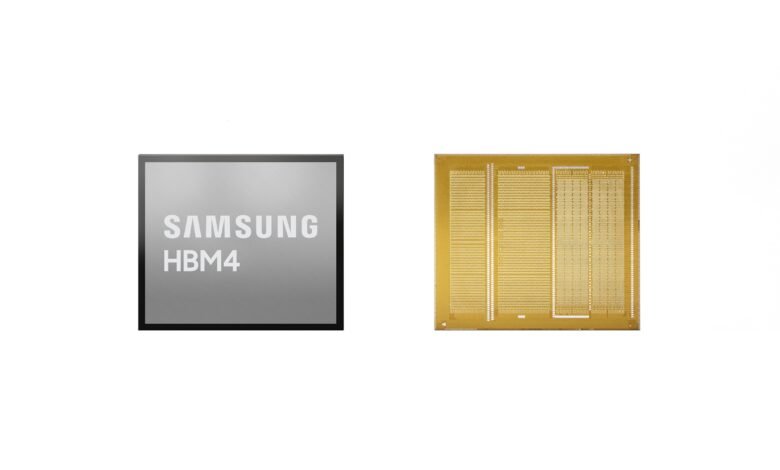
At the heart of the complaint is a simple allegation: that the three dominant manufacturers coordinated their shift toward producing High Bandwidth Memory (HBM), the premium memory powering AI servers, not simply because demand was growing, but because doing so allowed them to keep supplies of conventional DRAM artificially low.
According to the complaint:

"The DRAM oligopolists have simultaneously cut production, coordinated a pivot to HBM and exit from DDR3 and DDR4, and otherwise decreased and locked up conventional DRAM supply while prices charged up with mind-blowing scale and rapidity."
HBM commands significantly higher margins thanks to explosive demand from AI infrastructure. This explains why Samsung’s memory business alone is now more profitable than Amazon or even Meta. DDR3 and DDR4, meanwhile, continue to power millions of everyday products including laptops, desktop PCs, smartphones, networking equipment and countless enterprise systems. The lawsuit argues that instead of expanding production as prices rose, as a competitive market would normally encourage, the three companies all reduced output together.
"None of the three used the others' retreat to expand and win customers. All three pulled back together."
That coordinated pullback, plaintiffs argue, helped drive DRAM prices up by roughly 697% between the third quarter of 2024 and the first quarter of 2026, a staggering increase that has since rippled through the entire technology industry.
Apple’s recent Mac and iPad price increases are specifically referenced in the lawsuit as evidence that consumers are now paying the cost of those higher memory prices. But Apple isn’t alone. Manufacturers across the PC industry have warned that memory is becoming one of the biggest cost pressures they face, while competitors such as Dell have recently used Apple’s price hikes to position their own products as better-value alternatives.

@Dell XPS 13. Just $699, $599 for students.
🔗msft.it/6013vsEKP

What stands out isn’t just that memory has become expensive, but that manufacturers have increasingly stopped talking about prices eventually falling. Instead, many are preparing customers for what Lenovo recently described as a “new normal” of elevated memory costs.
The lawsuit argues that shouldn’t necessarily have happened.
"In a competitive commodity market, prices climbing at that rate pull supply toward them. At least one of three large producers... would expand output... That did not happen."
Instead, the complaint alleges that capacity expansion gave way to process upgrades and investment in high-value AI memory products, a strategy the plaintiffs claim was economically irrational “but for its anticompetitive effect of restricting supply and output of conventional DRAM.”
The lawsuit also explains why competitors have been unable to step in. Building a modern DRAM fabrication plant costs an estimated $15 billion to $20 billion, takes years to complete, relies on decades of accumulated manufacturing expertise, and requires customer qualification periods that can last 12 to 18 months. Combined with US export restrictions affecting advanced chipmaking equipment, the plaintiffs argue these barriers effectively prevent new entrants from increasing supply.
"The practical consequence is that when the three firms restrict supply, no outsider can expand output to undercut them."
Perhaps most damaging is the lawsuit’s reliance on history.
Samsung and SK hynix previously pleaded guilty to criminal DRAM price-fixing charges brought by the US Department of Justice in the 2000s, paying $300 million and $185 million respectively, while several executives received prison sentences. Micron avoided prosecution after cooperating with investigators. The complaint also references another period of sharply rising DRAM prices between 2016 and 2018 that triggered both a US class action and an investigation by Chinese regulators.
"The conduct alleged here is the third such cycle in the same market, among the same firms," the plaintiffs argue.
The companies have not been found liable in the new case, and Samsung and SK hynix had not publicly responded to the allegations at the time of publication. Micron declined to comment.
For anyone planning to buy a new laptop, desktop, smartphone or tablet, the cost of memory is no longer just a behind-the-scenes semiconductor story. It’s rapidly becoming one of the biggest factors determining how much your next device will cost.








People will think that nothing will come of this, but the damage has already been done. When this bubble either deflates or pops (a question of when, not if), they\’re gonna be screwed, and before people start chanting Too big to fail™ or National Security™, the US is uncomfortably close to insolvency. They can\’t afford to keep throwing money at Big Tech while getting little or nothing in the way of returns (They might be willing to sacrifice everything for a mass surveillance police state, but that\’s not gonna last either because people are vandalizing the tools being used, datacenters are stalling out if not getting outright cancelled, and local politicians who sell out their townships and communities are getting sacked left and right).
Tangent aside, the reason they\’re screwed is because no one was really paying attention when this happened back in 2001, but now everyone and their mom knows they\’re doing some shady shit. They sacrificed their reputation for the sake of ultra-high time preference gains which will mean squat in the long run because markets are teleological; their purpose is to serve human wants and needs which they now fail to do. Doesn\’t matter what excuses they cook up, last I checked, humans with unsatisfied wants and needs are uncompromisingly brutal towards whatever entity (or entities) prevents them from satisfying these.