

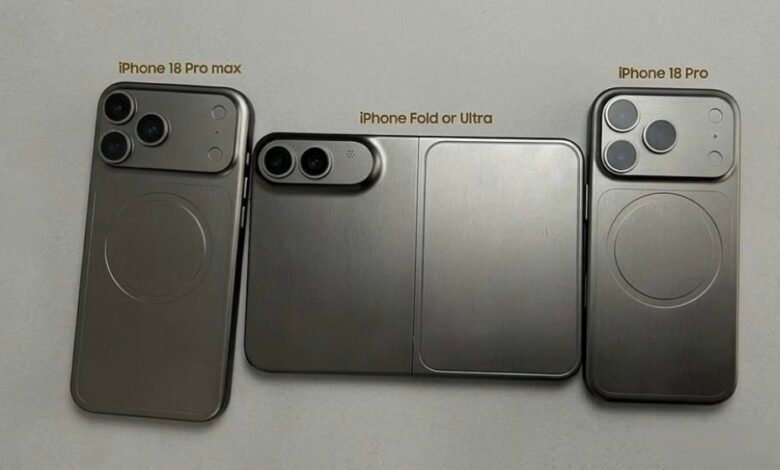
Apple is quite late to the foldables party. Samsung is eight generations in as of the new Galaxy Z Fold 8 series. Huawei, Honor, Google and even TECNO and Infinix have all had a go. When leaks of a foldable from Apple first hit the interwebs, I expected to shrug at the iPhone Ultra (or iPhone Fold) when it shows up at Apple’s September event. Instead I keep finding reasons it could go well.
Most of the credit, oddly, goes to Samsung.
Samsung just proved the shape works
We covered the Galaxy Z Fold 8 launch in July. Samsung split its Fold line in two and gave the standard Fold 8 a shorter, wider, passport-shaped body with a 4:3 inner screen. Reviewers like it. T3 said it sets a new bar for folding phones after a week of use, and PhoneArena described the shape as the most exciting change in foldables since the original Galaxy Fold.
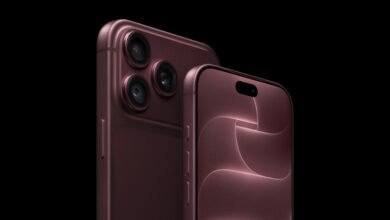
This is the same style device Apple is rumoured to be building. Leaks point to a 7.76-inch inner display at 4:3, a 5.49-inch cover screen, and a wide book-style fold. We noted back in April that Huawei’s Pura X Max, Samsung’s Fold 8 and Apple’s rumoured foldable are essentially one idea from three companies. Samsung and Huawei have now tested that idea in public, and buyers responded well. Apple gets to launch into a shape the market has already approved.

The app library is already built
Foldables have always had a software problem. On Android, apps meet a square inner screen and behave unpredictably. Some scale, some letterbox, some break. Apple starts from 15 years of iPhone apps plus a full iPad catalogue, and the Ultra’s inner screen is roughly an iPad mini. If Apple lets the device run iPad-class layouts open and iPhone layouts closed, the software question that dogged Android foldables for years is answered before a single developer updates anything.
Then there is the lock-in. If you own AirPods, a Watch and a Mac, the Ultra slots into a setup you already live in. That guarantees Apple a floor of buyers other Android companies have to fight for.
Apple cannot afford another Vision Pro
The Vision Pro gives Apple every reason to be paranoid. MacRumors reported in January that IDC expected just 45,000 units shipped in the 2025 holiday quarter, down from 390,000 in all of 2024, and that digital ad spend for the headset fell by over 95%. Whatever Apple says publicly, the headset did not become the next platform. The foldable is now the company’s most visible new product category. It also happens to be the first big launch under John Ternus. We wrote about the roadmap he inherits, and the Ultra headlines it. Apple has reportedly chased a crease-free inner display “regardless of cost”.
There is also a chance Apple adopts newer battery chemistry. Samsung used silicon-carbon cells for the first time in the Fold 8, and we have seen what that chemistry does in the Honor X9d, which fits 8,300mAh into a 7.76mm body. A Weibo leak puts the Ultra’s battery at 5,500mAh, which would be the largest ever in an iPhone. Apple has not confirmed the chemistry, so treat that as my speculation. But a 4.5mm-thin device with a battery that size is hard to do with old lithium-ion.
What could still go wrong
Design first. Samsung’s flat, squared-off Fold 8 looks better than what Google shipped with the Pixel Fold line, and better than most leaked renders of Apple’s device. Apple’s version has to look considered, not like two iPhone Airs on a hinge. The 3D-printed mock-ups floating around suggest something closer to a Surface Duo, and I am not convinced yet with that design.
Price second. Every credible leak puts the starting price above $2,000, with top storage near $2,900. We already flagged that this means way over KES 250,000, before Kenyan import maths makes it worse. There is also no guarantee the device officially reaches Nairobi shelves at all. Samsung Kenya skipped the local launch of the Fold 7 and Flip 7 entirely, so grey imports may end up being the only route for any of these foldables.
Then the timing of Apple Upgrade, the new Klarna leasing programme launched on 28 July. Apple has just made renting an iPhone from $17.99 a month the default way to afford one in the US, weeks before its most expensive iPhone ever. Apple has not linked the two, and I have no proof it planned them together. The timing still bothers me. The Fold 8 costs $1,899.99 and the Fold 8 Ultra $2,099.99. If Apple prices meaningfully above Samsung, every review will put the two figures side by side.
Battery third. The Fold 8 runs 4,800mAh and gets through a full day in reviews. If the 5,500mAh leak is wrong and Apple ships something in the 4,000s to hit that 4.5mm figure, reviewers will measure it against the Fold 8’s full day and it may come up short.
And software last. Apple named the Vision Pro’s OS visionOS rather than stretching iPadOS over it. I would not be surprised by a distinct name for the foldable’s software, some blend of iOS and iPadOS behaviour. Whatever Apple calls it, the important part is that apps move between the two screens without the mess Android foldables took years to sort out.
Conclusion
Apple is walking into a category other companies spent seven years de-risking at their own expense. Samsung has tested the shape. The apps exist. The Vision Pro left Apple needing a win. What remains open is how the device looks and what it costs.



Join the discussion