
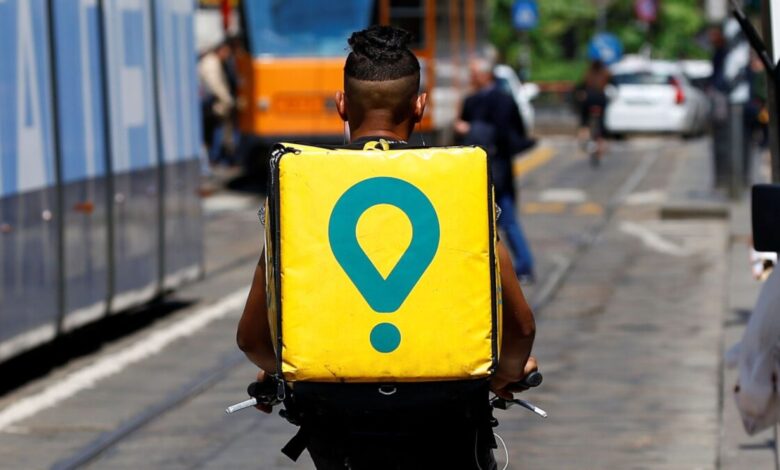
Glovo Kenya and electric bicycle company eBee have launched a training programme called ‘She Delivers’ that puts women through rider instruction before they sign up as couriers on the Glovo app. The first cohort is 16 women. Glovo says it wants women to make up 5% of the couriers on its Kenyan platform within a year, up from 1% today. The two companies announced the programme on 1 September 2026.
eBee runs the training. It covers e-bike handling, defensive road safety, basic maintenance, navigation and what the release calls “delivery-platform readiness”, which is the app side of the job: accepting orders, finding addresses, closing deliveries. Participants ride electric bicycles rather than motorbikes.
The numbers behind the target
Glovo says more than 2,500 couriers are active on its platform in Kenya on any given day. If 1% of them are women, that is roughly 25. Getting to 5% means roughly 125. So the target is about 100 more women on the app within twelve months, and the announced pilot covers 16 of them. Glovo and eBee have not said when the next cohort starts or how many cohorts they plan to run.
The 1% figure is worse than the boda boda sector it sits next to. A 2018 National Crime Research Centre study that interviewed 1,202 boda boda riders found 2.6% of them were women.

Glovo’s own courier count has moved. When we covered the opening of Glovo’s Nairobi headquarters in May 2026, the company put daily riders at about 2,200. Both figures come from Glovo, and neither has been independently audited.
What eBee brings
eBee was founded in Kenya in late 2021 and sells and rents electric bicycles in Kenya and Uganda. Its bikes start at KES 104,999 including VAT, with a KES 20,000 deposit and daily, weekly or monthly instalments after that. It rents to businesses from KES 8,000 a month excluding VAT, servicing included, and its FAQ says it does not rent to individuals. The bikes do up to 30km/h and cover 60 to 80km on a charge, which takes four to six hours. eBee lists one service hub in Kenya, on Chaka Road in Kilimani.
This is not eBee’s first delivery partnership in Nairobi. Jumia ran a pilot with eBee in November 2021, and eBee’s stated goal then, as now, is a million of its bikes on African roads by 2030.
“Electric bicycles remove heavy physical exertion and lower operating expenses, making last-mile delivery a genuinely viable, high-earning opportunity for women,” said Maarten Fonteijn, Managing Director of eBee Africa, in the announcement.
The part the announcement leaves out
The release does not say who pays for the bicycles the 16 women will ride, whether they own them, rent them or repay them over time. It does not give the training’s length or cost, or say whether the women are paid during it. It mentions “optimized asset financing” as something the partnership will build towards using lessons from the pilot, which means the financing does not exist yet. We have asked Glovo Kenya for the terms and will update this piece if the company responds.
Cost also moves in the wrong direction this year. Kenya’s Finance Bill 2026 shifted electric vehicles, batteries and e-bikes from zero-rated VAT to VAT-exempt from 1 July 2026. Importers can no longer reclaim VAT on their inputs under exemption, and that unreclaimed cost lands in the retail price. Our reporting at the time put the expected retail increase at 10 to 14%.
Liz Wambua, Head of Operations at Glovo Kenya, called ‘She Delivers’ “a core business strategy to build a more inclusive, resilient, and sustainable logistics ecosystem” in the release. Yvonne Muribi, one of the 16 riders, said the training and bike access “gives us the confidence to navigate traffic safely and build an independent income on our own terms”.
Whether a courier job is worth taking is a separate argument from who gets to take it. Riders on the platform are independent contractors, not employees, and Kenyan law has no middle category between the two. We looked at that gap and the court cases testing it in May 2025. Glovo has told earlier coverage its riders earn KES 25,000 to KES 35,000 a month.
There is also a change of owner coming. Uber agreed in July 2026 to buy Delivery Hero, the German company that owns Glovo, at €41.50 a share. That values Delivery Hero at about €13 billion. The deal is expected to close in the second half of 2027 and needs approval from the Competition Authority of Kenya, which would put Glovo and Uber Eats under one owner here. A year-long diversity target set in September 2026 runs its course inside that transition.
The checkable thing is the number. Glovo has put a date and a figure on it: 5% of Kenyan couriers, women, by September 2027. That is about 125 riders on today’s base. Sixteen have started.








Join the discussion