
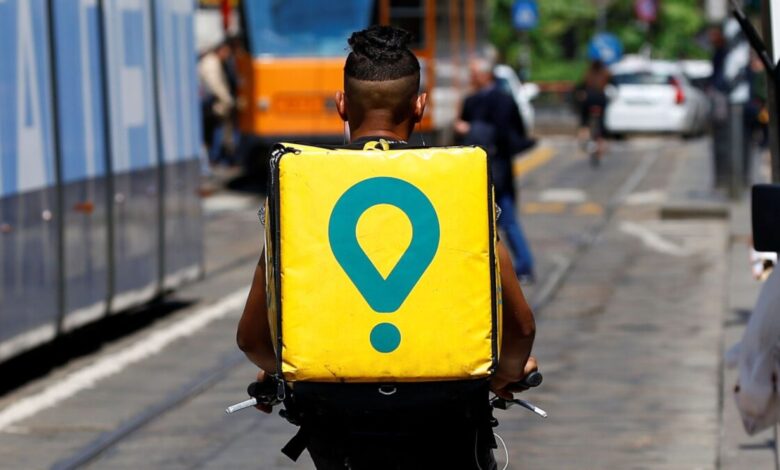
Glovo has officially opened its new Nairobi headquarters and committed to investing an additional KES 10 billion in Kenya by 2030. The launch on May 7 was attended by Cabinet Secretary for Investments, Trade and Industry Lee Kinyanjui, the Spanish Ambassador, and a long list of senior government officials. Co-founder Sacha Michaud said the office hosts more than 600 staff and that figure will double to 1,200 within two years. Managing Director Caroline Mutuku framed the new building as the next stage of Glovo’s Kenyan growth.
The announcement is being delivered as a vote of confidence in Kenya. It is, but it is also more specific than that. Glovo is not making this commitment in a vacuum. It is making it because Kenya has become, by a clear margin, its strongest market in Africa.
Glovo is winning Kenya, and the data shows it
The Competition Authority of Kenya’s April 2024 market study found Glovo to be the most-used food delivery platform at 33%, and the most-preferred grocery delivery platform at 46%, well ahead of Jumia, Uber Eats, and Bolt Food. SensorTower’s Q1 2025 data showed Glovo’s active Kenyan users grew from 208,000 to 314,000 over the quarter, while Uber Eats’s weekly downloads collapsed from 21,800 to 1,300. Jumia Food shut down across all seven of its African markets, including Kenya, in December 2023. Bolt Food remains in Kenya but is a distant fourth on most measures.
Against that backdrop, Glovo’s claim of around 40 percent year-on-year order growth in 2025 is consistent with the wider data. The 2026 KNBS Economic Survey reports that Accommodation and Food Service grew 15.6 percent in 2025, the strongest performing major sector in the economy, and Information and Communication grew 4.8 percent. Glovo sits at the intersection of both. The new HQ is the physical confirmation of a market position the company has been building for six years.

It is worth noting that Glovo’s Kenyan expansion is also partly a regulatory response. In April 2024, the Competition Authority of Kenya ordered Glovo and Uber Eats to open offices in the country so consumer complaints could be resolved locally rather than from Barcelona. The new headquarters is in line with that directive.
The wider context the press release does not explain
The press release describes Glovo as a “Spanish technology platform.” That is technically correct but incomplete. Since July 2022, Glovo has been roughly 94 percent owned by Delivery Hero, the German delivery group, in a €2.3 billion deal. The brand and Barcelona headquarters remain. Corporate decisions sit with the German parent.
That ownership matters because the group has one of the heaviest regulatory tails in European tech, including a €329 million EU cartel fine in June 2025, more than €205 million in Spain labour fines, and an antitrust settlement in Morocco in July 2025 over abuse of dominance. None of this means Kenya is the next problem market. It is context for how riders, regulators, and competitors will read the next four years.
The labour question, in honest numbers
Glovo’s Couriers Pledge launched in Kenya in October 2022, we covered the company’s promises around earnings, insurance, and parental support. The pledge was developed with Fairwork, the Oxford-based gig-economy ratings body. Glovo scored 7 out of 10 in Fairwork Kenya’s first 2021 ratings, the highest score in the country. The score then dropped: 4 out of 10 in 2022, and 3 out of 10 in Fairwork’s 2023 Kenya report. Fairwork has not published a Kenya report for 2024 or 2025.
Glovo remains the only Kenyan platform in the 2023 study whose riders could be shown to earn at least minimum wage after costs. That is genuinely better than Bolt, Uber, and the rest. It is also a low bar.
Outside Kenya, Glovo riders in Casablanca staged a 48-hour strike in September 2025 over pay and conditions. In Lagos, more than 100 Glovo riders protested in May 2024 over insurance claims that went unpaid for months. Kenyan ride-hailing drivers struck for five days in July 2024. Delivery riders here have not yet organised at the same scale, but we have written before about how Kenyan platform workers sit outside the protections of conventional labour law. The 2,200 riders Glovo says move its orders every day are operating in that gap.
A regulatory threat closer to home
One more thing the announcement does not mention. NACADA’s 2025 alcohol policy proposes to ban online alcohol sales and home delivery, which we have already explained and which would directly affect Glovo’s Kenyan business. Alcohol is a meaningful weekend revenue category for delivery platforms and an income line for riders. If the policy is enforced as written, Glovo’s order volumes will take a hit at the same time it is committing to spend more in the country.
What to actually watch
Glovo is staying in Kenya because the numbers add up. It leads the market, the user base is growing, the wider digital economy is supportive, and the new headquarters partly satisfies an existing regulatory directive.
The questions for the next two years are narrower. Whether the doubling of headcount produces senior engineering and product roles or stays mostly commercial. Whether Fairwork’s score recovers from 3 out of 10. Whether Kenyan regulators move on platform worker classification before riders force the conversation, as has already happened in Spain and Morocco. And whether NACADA’s online alcohol ban is enforced.
The rider economics, the parent company’s regulatory record, and Kenya’s own platform-worker laws are what will decide whether the figure delivers anything that lasts.









Join the discussion