

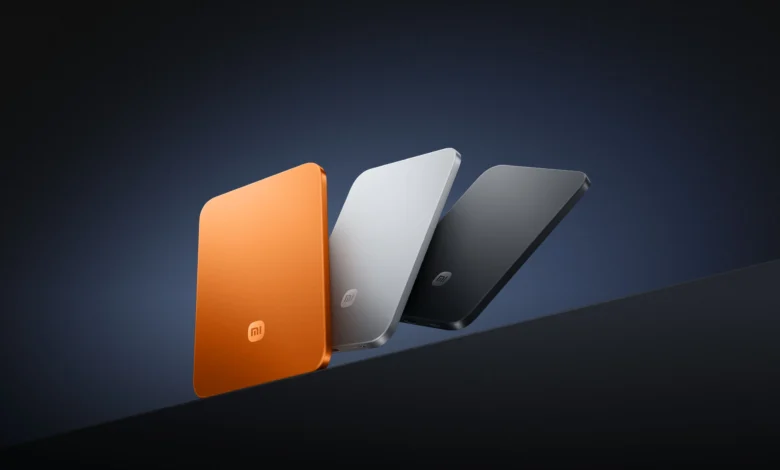
Xiaomi has teased a new Wireless Power Bank Series with two products coming to India. These are products we’ve already seen in other markets.
- The Xiaomi UltraThin Magnetic Power Bank 5000
- The Xiaomi Magnetic Power Bank 10000
The first charges your devices wirelessly at 15W, while the second one can hit 45W charging over a cable. The 5000 is already sold in Kenya through independent retailers: Price Point lists it at KES 8,500 and NextBuy at KES 9,000.
With both being magnetic powerbanks, rather than using a cable, you just slap them on your phone. Apple started this with MagSafe in 2020. It is now an industry standard called Qi2, and we’ve seen Google include magnets since the Pixel 10, and with the whole Pixel 11 lineup. Most other Android phones have no magnets at all, and Samsung keeps them in a case rather than in the phone. However, Galaxy S27 leaks point to a redesign that will allow Qi2 magnetic wireless charging.
The Xiaomi Power Bank 5000 is the more interesting of the two. It is just 6mm thick and weighs 98g, and it gets there on a silicon-carbon cell with 16% silicon content, the same chemistry that let Xiaomi put a 7,000mAh battery in the compact Xiaomi 17. Wireless output is 15W on Xiaomi phones and 7.5W on iPhones. The USB-C port does 22.5W, and it can run wireless and wired at the same time to charge two devices. It has been on sale since January 2026, starting in Japan and reaching Australia, Singapore, Malaysia, Thailand and parts of Europe since.

The 10000 went on sale in China in May 2026 as the Jinshajiang UltraThin Magnetic Power Bank 10000, at CNY 369, roughly KES 7,000. It is 13.2mm thick, weighs 195g, and has two 5,000mAh silicon-carbon cells. It does 45W over USB-C, 20W wireless, and refills itself at 30W.
Worth knowing before you buy either one: the number on the label is not what reaches your phone. In one test the 5000 put about 3,600mAh into a handset, and took 79 minutes to move that phone to 79%. Conversion losses do this to every powerbank, so it is not a Xiaomi problem. Roughly two thirds of the printed capacity is the realistic figure.




Join the discussion