
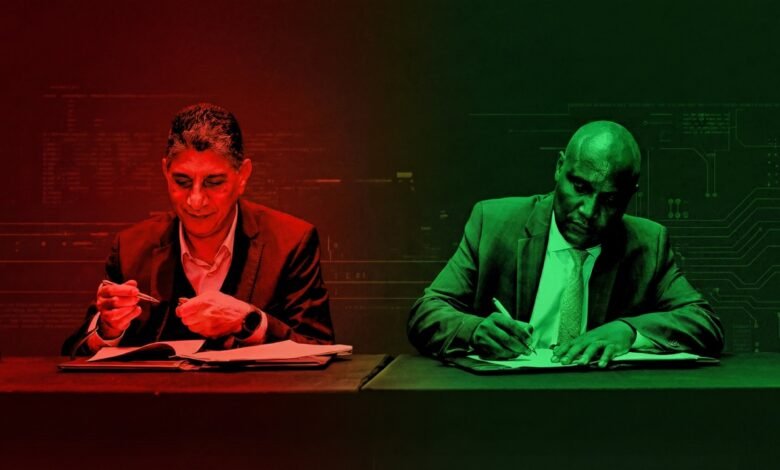
The High Court on Tuesday declared the government’s sale of a 15 per cent stake in Safaricom unconstitutional, null and void. A three-judge bench of Francis Gikonyo, Roselyne Aburili and Tabitha Ouya quashed every agreement, approval and arrangement behind the sale, and ordered the shares restored to the Government of Kenya, to be held on behalf of Kenyans.
Those shares left state hands eleven weeks ago. On 30 June the government sold 6,009,814,200 Safaricom shares, 15 per cent of the company, to Vodafone Kenya at KES 34 each in one block trade on the Nairobi Securities Exchange. That was KES 204.3 billion. The government also took KES 40.2 billion as an advance on dividends from the 20 per cent it kept, so Treasury banked KES 244.5 billion in total. The trade took Vodafone Kenya from 40 per cent of Safaricom to 55, cut the government from 35 per cent to 20, and left the 25 per cent held by ordinary investors on the NSE alone. Vodafone Kenya is owned by Vodacom Group, the South African operator that Vodafone Group majority owns.
What the court actually found
The petitioners attacked the KES 34 price as well as the process. The judgment that arrived on Tuesday turns on process.
Selling a state asset of this size is a public policy decision, the bench held, and the constitution requires the government to take decisions like that to the public first. That is what public participation means: the state has to ask, and it has to hand over enough information for the asking to be real. The court found that neither the Cabinet nor the National Assembly put the sale through anything that met that standard.

The government also never told the public who was buying, the bench said, and kept that quiet for the length of the process.
“We accordingly find that the Government of Kenya engaged in unexplained obscurity on the identity of the proposed buyer, made misrepresentation and concealed material information in respect of the partial divestiture throughout the process,” the judges ruled.
They went further on what that does to a public participation exercise. “Concealing or withholding material information and documents during public participation violates constitutional transparency requirements and invalidates the resulting policies or projects because it renders public engagement a cosmetic formality rather than a meaningful exercise,” the court said.
The bench added that the shortage of information also made it hard for the Cabinet itself to weigh the sale properly.
If you hold Safaricom shares, nothing changes for you today. The 25 per cent public float was never part of the sale and is not part of these orders. Safaricom traded at KES 36.50 on Tuesday, up 1.8 per cent on the day and above the KES 34 the state accepted in June.
The money is already spent, or at least placed
The KES 244.5 billion did not sit in a Treasury account. It went into the National Infrastructure Fund, a state investment company set up under a law President William Ruto signed on 9 March this year, which buys stakes in infrastructure projects that earn revenue. The fund now holds about KES 340 billion, and the Safaricom money is most of it. The rest came from the Kenya Pipeline Company IPO.
That fund was in Parliament as recently as last week. We reported on Monday that the Departmental Committee on Finance and National Planning, chaired by Molo MP Kuria Kimani, found the fund’s investment policy short on rules for risk assessment, project ranking, borrowing limits and exposure caps. The National Assembly approved that policy on 1 September.
Vodacom has also started using the majority it bought. In August, Safaricom shareholders voted to let Vodacom name the shortlist for Safaricom’s chief executive, a change Vodacom could push through because it now controls 55 per cent of the votes.
How the case got here
Tony Gachoka, Professor Fredrick Ogola and others went to court in early 2026 to stop the sale on constitutional grounds, arguing it was an unlawful disposal of a strategic national asset. The same three judges froze the deal on 18 May, saying then that constitutional compliance could not be subordinated to commercial convenience. Treasury went to the Court of Appeal, which lifted the freeze on 26 June without deciding whether the sale was lawful. The substantive case was argued on 29 June. The government closed the trade the following day, one day after the hearing and with the judgment still pending. That judgment is Tuesday’s ruling.
The state can appeal, and in this case it has appealed once already and won. Until it does, the orders stand as read: the agreements are quashed and the 15 per cent goes back to the government. The difficulty is the practical part. Those are 6,009,814,200 shares that settled on the NSE eleven weeks ago, and KES 244.5 billion of the proceeds is already inside the National Infrastructure Fund.






Join the discussion