

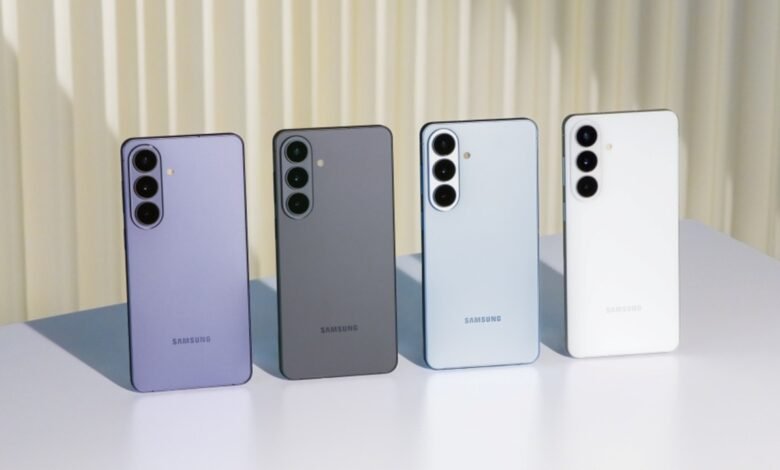
Samsung has raised the price of the Galaxy S26, Galaxy S26+ and Galaxy S26 Ultra in the United States by USD 100, or about KES 12,900, seven months after the phones went on sale. The new prices went live on Samsung’s US online store on Thursday 1st October 2026. The Galaxy S26 now starts at USD 999.99 or about KES 129,000, the S26+ at USD 1,199.99 or about KES 155,000, and the S26 Ultra at USD 1,399.99 or about KES 181,000. The 1TB Galaxy S26 Ultra went up by double that, USD 200 or about KES 25,900, and now costs USD 1,999.99, about KES 259,000.
| Model | Storage | Before | Now | Now in KES |
|---|---|---|---|---|
| Galaxy S26 | 12GB + 256GB | USD 899.99 | USD 999.99 | about 129,000 |
| Galaxy S26 | 12GB + 512GB | USD 1,099.99 | USD 1,199.99 | about 155,000 |
| Galaxy S26+ | 12GB + 256GB | USD 1,099.99 | USD 1,199.99 | about 155,000 |
| Galaxy S26+ | 12GB + 512GB | USD 1,299.99 | USD 1,399.99 | about 181,000 |
| Galaxy S26 Ultra | 12GB + 256GB | USD 1,299.99 | USD 1,399.99 | about 181,000 |
| Galaxy S26 Ultra | 12GB + 512GB | USD 1,499.99 | USD 1,599.99 | about 207,000 |
| Galaxy S26 Ultra | 16GB + 1TB | USD 1,799.99 | USD 1,999.99 | about 259,000 |
South Korea, Samsung’s home market, moved on the same day. Samsung confirmed that every 256GB and 512GB model there now costs 149,600 won more, about KES 14,200. The 256GB Galaxy S26 went from 1,254,000 won to 1,403,600 won, about KES 133,000, and the 1TB Galaxy S26 Ultra went from 2,545,400 won to 2,821,500 won, an increase of 276,100 won or about KES 26,200.
Why phones are getting more expensive
Every phone carries two kinds of memory: RAM, the working memory apps run in, and storage, where photos and files live. The companies that make both, Samsung’s own chip business among them, have been shifting production towards the high-bandwidth memory that AI data centres buy, which leaves less for phones and laptops. DRAM, the most common kind of RAM, has doubled in price in the six months since the S26 launched. The 1TB Ultra, the only S26 with 16GB of RAM and a terabyte of storage, carries the most memory in the range, and it took twice the increase in both countries.
Samsung has not given a reason for the US increase. It has blamed memory before, though. When the S26 and S26+ launched at USD 100 more than the Galaxy S25 and S25+ in February, Won-Joon Choi, the chief operating officer of Samsung’s mobile business, said the memory shortage alone made a significant contribution to that price. The Ultra escaped then, launching at the same USD 1,299.99 as the S25 Ultra, so this is its first increase.

Put the two increases together and the entry price of a Galaxy S phone in the US has gone from USD 799.99 for the 128GB Galaxy S25 in 2025 to USD 999.99 for the 256GB Galaxy S26 today.
Not everything moved. The Galaxy S26 FE, which we covered when it launched in Kenya at KES 103,100 last month, kept its US price, and so did the Galaxy Z Fold 8 and Samsung’s other foldables. Amazon and Best Buy were still selling the S26 range at the old prices on the day of the change.
What this means for Kenya
Samsung Electronics East Africa, which sets Samsung’s Kenyan prices, has not announced new ones. The S26 range went on pre-order here in February at KES 120,900 for the 256GB Galaxy S26, KES 144,400 for the 256GB S26+, and KES 171,400 and KES 197,300 for the 256GB and 512GB S26 Ultra.
Those Kenyan prices were set in February, before the memory costs Samsung has now passed on in the US and Korea. Two markets repricing on the same day points to a decision made at Samsung’s headquarters in Suwon rather than by each country office. We expect Kenyan prices to rise in the coming weeks, possibly within days.
The importers who sell below Samsung’s recommended price will feel it as well. In June we found the Galaxy S26 Ultra selling for KES 124,000 brand new from one Kenyan importer, against a launch price of KES 171,400. Those shops restock from abroad, and their next batch will cost them more than the last.
So if you have been waiting for an S26 to get cheaper, the Kenyan prices on shelves today, official and imported, were set before this increase, and we do not expect them to go any lower.






Join the discussion