

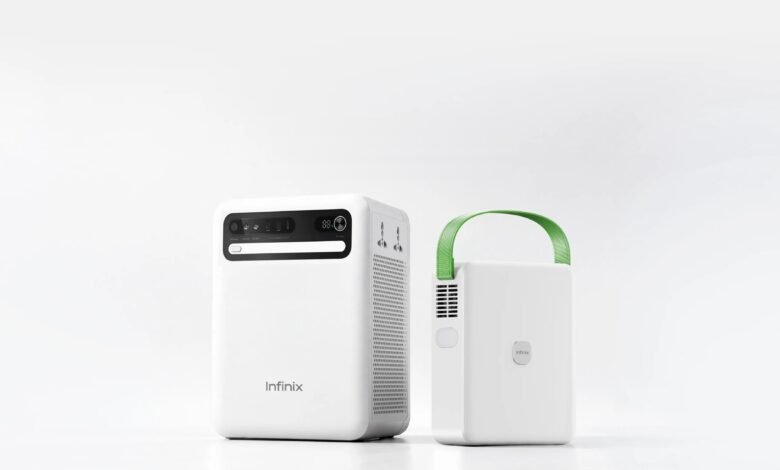
Infinix, the phone brand owned by Transsion, now sells home batteries. Its new XEnergy range launched in the Philippines on 10th October 2026 with two models:
- the XEnergy L1000, a 1kWh unit built to sit at home and take over when the power goes,
- and the XEnergy S320, a smaller 320Wh one with a handle.
The L1000 costs about USD 271. The S320 costs about USD 111.
Both are on Infinix’s global website, but neither is on its Kenyan site or on Xpark, its authorised Kenyan online store, so there is no Kenyan price yet.
So what does 1kWh keep running when the lights go off at 7pm, and for how long?

What the L1000 and S320 are
XEnergy L1000
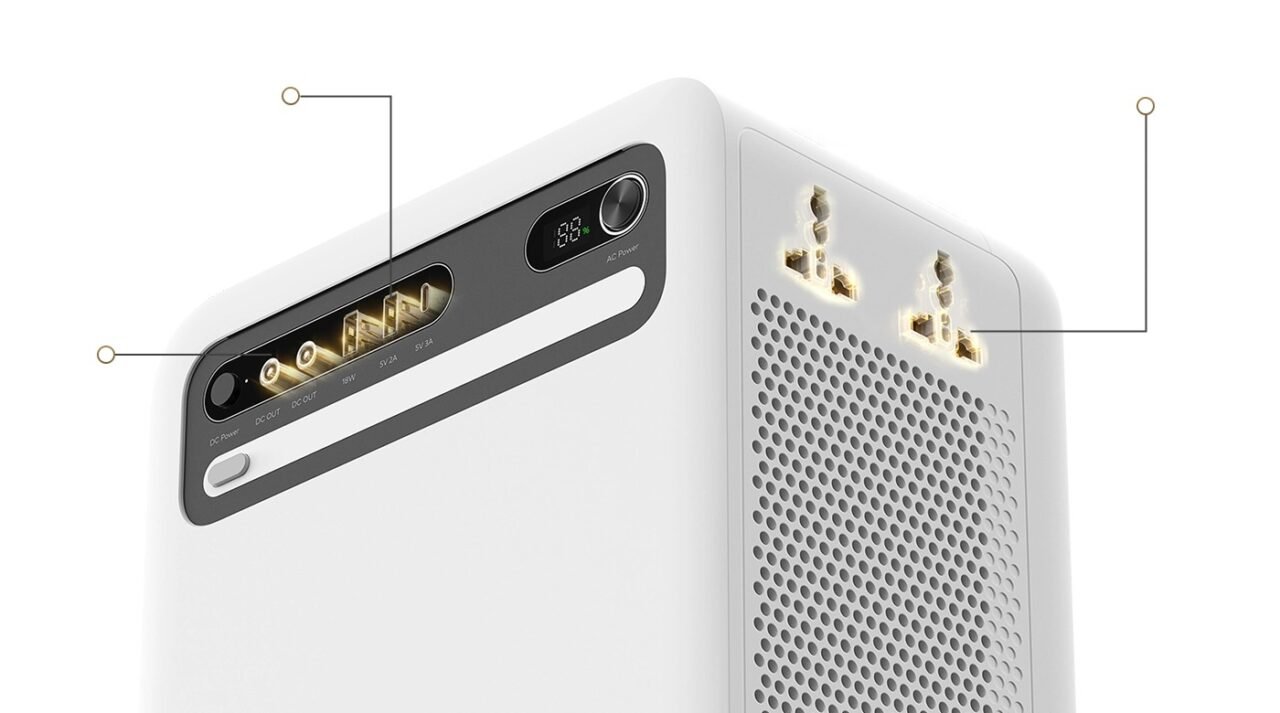
A power station is a big battery with an inverter inside it. The inverter turns the battery’s direct current into the 230V alternating current that comes out of a wall socket, so you can plug ordinary appliances straight into it. The L1000 has two such sockets, together rated at 500W, plus two 12V DC barrel ports, two USB-A ports and one USB-C port. The USB ports are slow at 15W, so it won’t fast-charge a laptop over USB-C. You’d use the socket and the laptop’s own charger.
The battery is lithium iron phosphate (LiFePO4), a different chemistry from the one in your phone. Infinix says the cells are heat-resistant and rates them for 6,000 charge cycles, against 500 for an ordinary power bank in its own comparison. It weighs about 9.35kg, so it’s portable the way a microwave is portable. It recharges from the grid in about an hour, or from up to 400W of solar panels in about 2.5 hours, and it can charge and power things at the same time.
That last part is what makes it a UPS, an uninterruptible power supply. You leave the router, the TV or the desktop plugged into the L1000 all the time. While the grid is on, mains power passes through to them and tops up the battery. When the grid drops, the L1000 switches to its battery within 20 milliseconds. Kenya’s mains runs at 50Hz, so 20 milliseconds is the length of one wave of mains power. Infinix pitches that as fast enough for Wi-Fi routers, computers and other sensitive electronics. So if your router sits on an L1000, your Wi-Fi should stay up through a blackout, as long as your provider’s own network does. We’d still test a desktop PC on it before trusting it with unsaved work.
XEnergy S320
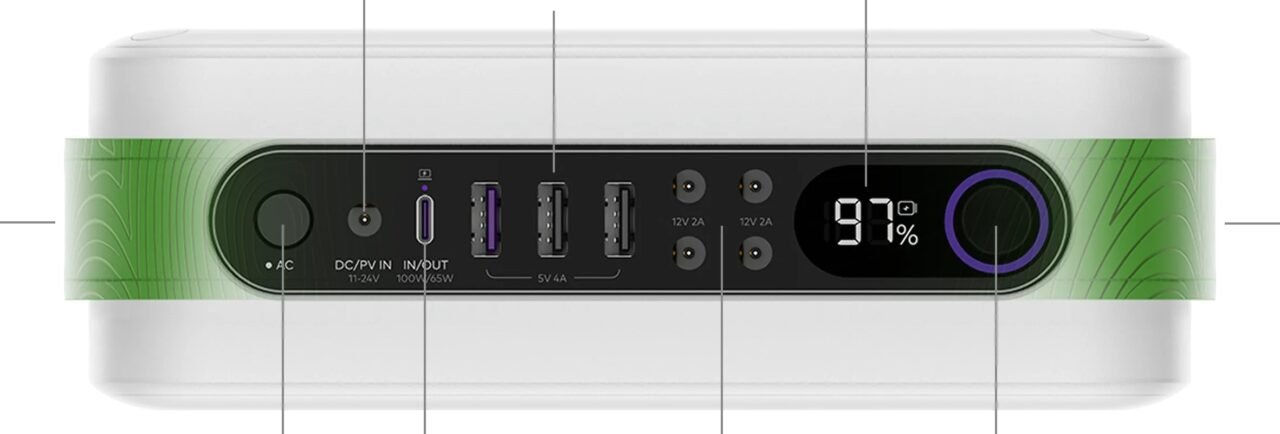
The S320 is a different kind of product. It has no wall socket at all. Its outputs are a two-way USB-C port rated 100W/65W, three USB-A ports and four 12V DC ports, which makes it a very large power bank with a light on it. It weighs 3.3kg. Infinix also quotes its capacity as 100,000mAh, a phone-battery unit; 320Wh is the number to compare.
| XEnergy L1000 | XEnergy S320 | |
|---|---|---|
| Battery | 1,000Wh LiFePO4 | 320Wh (100,000mAh) LiFePO4 |
| Rated cycles | 6,000+ | 3,000+ (to 80% capacity) |
| Wall sockets | 2, 500W total, 600VA peak | None |
| Other outputs | 2x 12V DC (60W), 2x USB-A and 1x USB-C (15W) | 1x USB-C (100W/65W), 3x USB-A, 4x 12V DC |
| UPS switchover | 20ms or less | Not listed |
| Charging | Grid 1,000W (about 1 hour), solar 400W (about 2.5 hours) | Solar up to 100W, 80W wall adapter, 65W USB-C |
| Weight | About 9.35kg | 3.3kg |
| Warranty | 1 year | 1 year |
| Price (Philippines) | PHP 16,999 | PHP 6,999 |
| Kenya price | Not announced | Not announced |
What 1kWh runs
Two numbers here are easy to mix up. Watts measure how hard a device pulls power at any moment. Watt-hours measure how much energy is stored. A 1,000Wh battery can, in theory, run a 100W device for 10 hours or a 10W device for 100 hours. So to know how long the L1000 lasts, add up the watts of what you plug in and divide.
Infinix does exactly that division in its launch material: 15.38 hours for a 65W laptop, 62.5 hours for a 16W fan, 100 hours for a 10W bulb. Every one of those is 1,000 divided by the device’s watts. That assumes every watt-hour in the battery reaches the device, and it doesn’t. Turning battery power into mains power loses energy as heat, and Infinix’s own spec sheet gives the L1000’s battery-mode conversion efficiency as 87% at best. So the energy that comes out of the sockets is about 870Wh, and real runtimes are at least 13% shorter than the ones Infinix advertises.
Here is what that looks like with the appliances Infinix itself lists on the L1000’s page: a 90W TV, a 60W fridge, a 70W laptop, a 30W fan and a 30W bulb.
- Everything at once, 280W: about three hours.
- A working evening with the laptop, fan and bulb, 130W: about six and a half hours.
- The laptop alone at 70W: about 12 hours. On Infinix’s 65W example, about 13 hours, not 15.38.
So in an evening blackout, the L1000 keeps the lights, the Wi-Fi, a TV and a laptop going until bedtime. It won’t carry all of that through the night.
The fridge needs its own warning. A fridge compressor pulls a burst of power as it starts, and Infinix’s launch material itself says fridge use “depends on the refrigerator’s startup and running power requirements”. The L1000 can push past 500W only briefly: up to 600W for 60 seconds, up to 690W for 30 seconds. A small fridge may start on that. A large one may trip it. Check the fridge’s label before you count on it.
The 500W limit matters most for anything that heats, like a kettle, an iron or an instant shower. A typical electric kettle is rated around 1,500W, three times what the L1000 can give. So you can’t use the kettle until the power is back.
How it compares on price
In April we reviewed the EcoFlow River 2, a 256Wh power station that cost KES 30,000, and the verdict was that it’s too small: three to five hours once a laptop and a 5G router are both running on it. The L1000 stores four times as much energy for about KES 35,100 at its Philippine list price. Per kilowatt-hour, that’s about a third of what the River 2 cost. The River 2 is lighter and has an app. The L1000’s page mentions no app.
Infinix says the L1000 gives “10 years of reliability”, but its warranty is one year.
If Infinix brings the L1000 to Kenya near its Philippine price, it would cost about what the River 2 did and store four times the energy. Until then, the lesson works for any power station: shop on watt-hours, take some off for conversion loss (13% on the L1000), and check each appliance’s watts against the output limit before you buy.







Join the discussion