

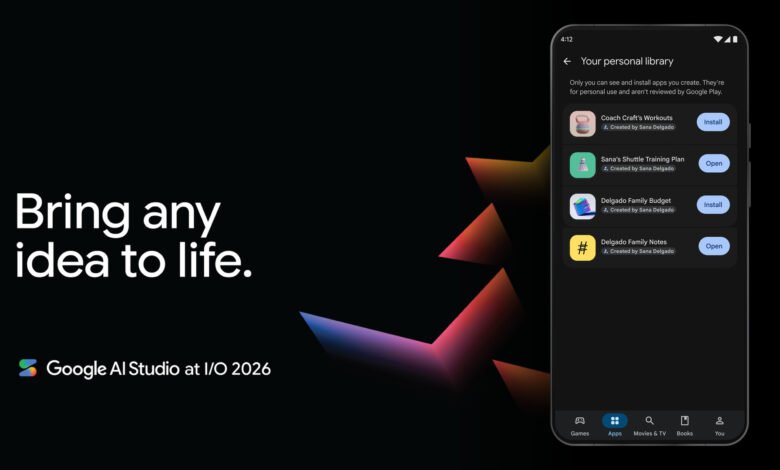
If you’ve built an Android app with Google’s AI tools, Google Play can now put it on your phone for you, in the US at least. Google announced this yesterday. People can now launch these personal apps through Play with an ordinary Google account, with no developer account needed. It is rolling out to “select markets, including the U.S.” for users aged 18 and over. The US is the only market Google names.
The apps in question come out of Google AI Studio, Google’s website for building with its Gemini AI models, which learnt to make native Android apps in May. You describe the app you want in ordinary words, something like “a daily task tracker that saves everything on the phone”, and an AI agent writes the whole app in Kotlin, the programming language most professional Android developers use. It then runs the app on a simulated Android phone that streams to your browser, and you keep asking for changes in the same chat until it does what you want. Making software that way, by describing it and letting the AI write and fix the code, usually without reading the code yourself, is what people call vibe coding. We explained where the term came from last year.
Why getting it onto a phone was the hard part
The fiddly part has been getting the app out of the browser and onto a real phone, and Google’s own instructions gave two ways.
- One was a USB cable: switch on Developer Options and USB debugging on the phone, plug it into a computer running Chrome or Edge, and let AI Studio push the app across.
- The other went through the Play Store, but that needed a Google Play developer account, which carries a one-time registration fee of USD 25, or about KES 3,200, and the app only reached Play’s internal testing track, a private release for up to 100 testers.
That’s a lot of setup for someone who only wanted a family budget app. The new route drops both.

Google says personal apps stay “private, secure, and separate from the public store catalog”. In the screenshots Google released, they sit on a “Your personal library” page in the Play Store’s Apps tab, each with an Install or Open button and a “Created by” label carrying the maker’s name. The note at the top of that page reads: “Only you can see and install apps you create. They’re for personal use and aren’t reviewed by Google Play.”
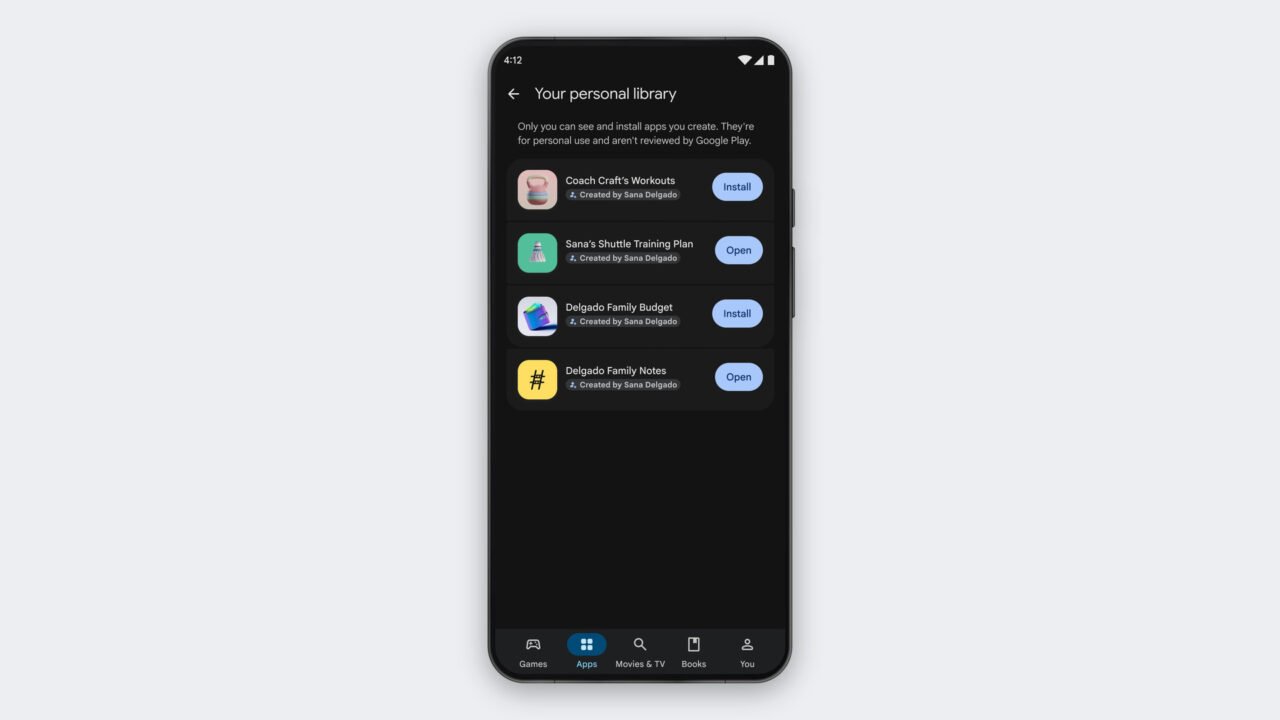
Google marks the images as simulated, so the finished screen may look different. So where the feature is live, putting your own app on your phone should look like installing anything else from Play, with no cable and no developer settings.
Google says that in the coming months you’ll be able to share personal apps with “a close circle of friends and family”, so that family budget app could reach the rest of the household. If an app outgrows the family, Play will help its maker “graduate to a professional developer account”, and from then on the app goes through the same Trust & Safety reviews as every other developer’s. A Play developer account costs USD 25, and Google’s rules for new personal developer accounts require a closed test with at least 12 testers, opted in for 14 days in a row, before an app can go public.
The apps themselves stay simple. AI Studio’s Android apps run entirely on the phone with no server behind them, so features such as Firebase, Google’s cloud database, and multiplayer are left out, and only phones and tablets are supported, not Wear OS watches or Android TV.
What about Kenya?
AI Studio itself is available in Kenya, and it already has the same 18-and-over age limit as the new Play feature. So Kenyans can build Android apps in it today and put them on their phones with the USB cable. Whether the personal library in Play is switched on for Kenyan accounts is another matter. Google has not published the list of “select markets” beyond the US.
The cable route should also survive Google’s tighter rules on installing apps. In March we wrote about Google’s developer verification rules, under which a phone makes you wait 24 hours, once, before it will install apps from developers who haven’t registered with Google. Google began enforcing verification on 30th September 2026 for apps from a list of participating app stores in Brazil, Indonesia, Singapore and Thailand, and plans to extend it to all apps on certified Android phones worldwide in 2027. Apps installed with the Android Debug Bridge, the tool behind the cable route, don’t need verification.
Google’s announcement leaves several things out:
- It does not list the other markets or give a date for more.
- It does not say whether apps made with tools other than AI Studio can use the personal library, how updates to an app reach your phone, or how many people the friends-and-family circle can hold.
- And it does not explain how personal apps, which Google’s own screenshot says Play does not review, fit into developer verification once that reaches more countries.
For someone in the US who gave up at the cable or the USD 25 fee, this removes both. Kenyans who want to try vibe coding an Android app don’t have to wait for Play, though. AI Studio and a USB cable already get the app onto your phone, without a Play developer account, and we’ll add Kenya here if Google switches the personal library on for it.





Join the discussion