

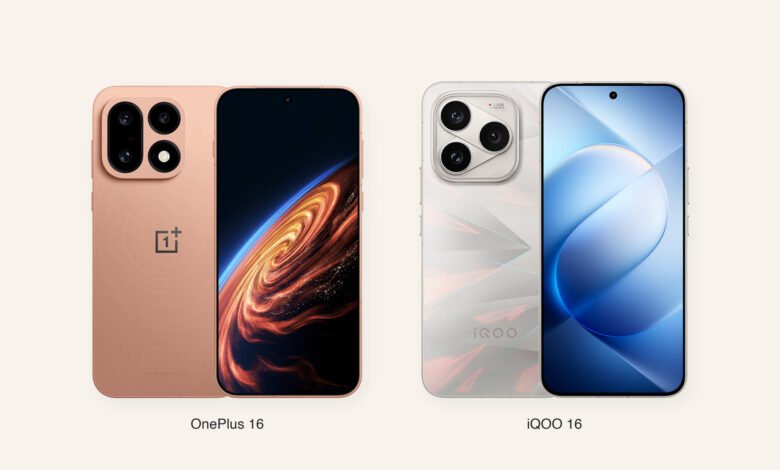
The OnePlus 16 went on sale on Tuesday 13th October 2026. The iQOO 16 has been on sale since 29th September, and on 13th October we went through its price and specs against the iQOO 15. Both run Qualcomm’s Snapdragon 8 Elite Extreme Gen 6, the faster of the two flagship chips Qualcomm announced in September. And both cost the same: about 895 for 12GB of RAM and 256GB of storage.
Each phone comes in four versions, and OnePlus and vivo set identical list prices for all four, up to about USD 1,267 or KES 165,000 for 16GB and 1TB. OnePlus is the performance brand of OPPO, and iQOO is the performance brand of vivo, so these are two rival phone groups pitching a gaming flagship at the same buyer. Take the chip and the price out of the decision, and it comes down to battery, screen, cameras and body.
KES and USD figures in this piece use KES 19.38 and USD 0.149 to the yuan, the rate on 13th October 2026.
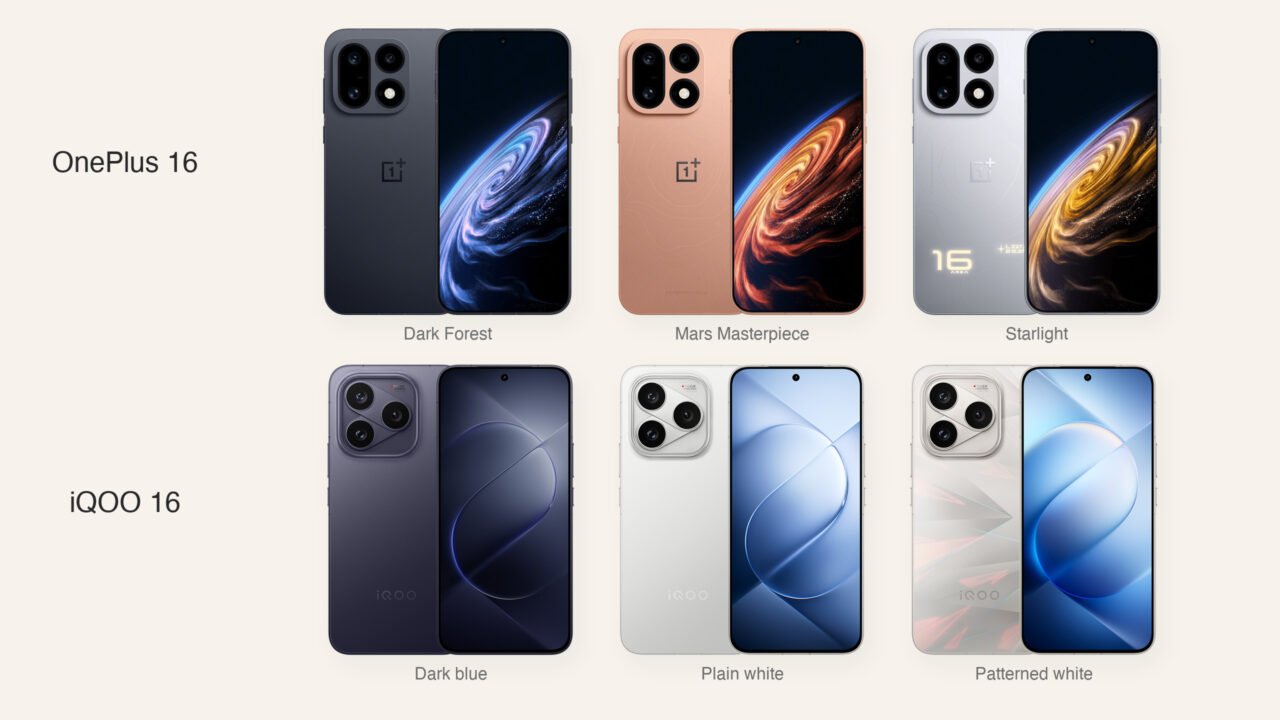
OnePlus 16 vs iQOO 16 specs
| Spec | OnePlus 16 | iQOO 16 |
|---|---|---|
| Chip | Snapdragon 8 Elite Extreme Gen 6 | Snapdragon 8 Elite Extreme Gen 6 |
| Screen | 6.78-inch OLED, 2772 x 1272 (1.5K), 450 pixels per inch | 6.85-inch AMOLED, 3168 x 1440 (2K), about 508 pixels per inch |
| Refresh rate | 1Hz to 165Hz everyday, up to 185Hz in supported games | Up to 165Hz |
| Peak brightness, whole screen | 2,000 nits | 2,800 nits |
| Battery | Two 4,500mAh cells, counted as 9,000mAh (rated 8,780mAh) | One 8,400mAh cell (rated 8,170mAh) |
| Battery energy | 33.93Wh | 31.34Wh |
| Wired charging | 100W, 1% to 100% in 52 minutes | 100W, full-charge time not announced |
| Wireless charging | 50W | 40W |
| Reverse charging | 27W by cable | By cable (OTG), wattage not announced |
| Main camera | 200MP, 1/1.4-inch sensor | 50MP, 1/1.3-inch sensor |
| Telephoto | 50MP 3x periscope, 1/1.95-inch | 50MP 3x periscope, 1/1.95-inch |
| Ultra-wide | 50MP | 50MP |
| Front camera | 50MP | 32MP |
| Water and dust | IP66, IP68, IP69, IP69K | IP68, IP69 |
| Size | 161.42 x 76.67 x 8.45 to 8.55mm | 163.75 x 76.90 x 8.30 to 8.55mm |
| Weight | About 217g to 220g | About 222.5g to 229.8g |
| Software | ColorOS 17 (Android 17) | OriginOS 7 (Android 17) |
| In the box | Charger, cable, case | Charger, cable, case |
| Years of Android updates | Not announced | Not announced |
| Launch outside China | Not announced | India “very soon”, no date |
The OnePlus has about 8% more battery
OnePlus builds its battery from two 4,500mAh cells wired in series, and it calls the pair the equivalent of 9,000mAh. iQOO uses one 8,400mAh cell. In energy terms the OnePlus holds 33.93Wh against the iQOO’s 31.34Wh, about 8% more.

Don’t read much into the battery-life claims. OnePlus says 23.8 hours of video and iQOO says 32 hours of streaming drama, but each company ran its own test in its own lab, so the two numbers don’t compare.
Wired charging is the same, up to 100W on both, and both come with the charger in the box. On a wireless pad the OnePlus is faster, 50W against 40W, but neither phone includes a wireless charger. OnePlus also lists 27W reverse charging by cable, so you can top up earbuds or a watch from the phone. Both can run straight off the charger while you play plugged in, skipping the battery so it stays cooler. On the iQOO you have to switch that on yourself.
Sharper screen on the iQOO, faster one on the OnePlus
A screen’s resolution is the grid of pixels that makes up the picture. The iQOO’s 2K panel has 3168 x 1440 pixels, about 29% more than the OnePlus’s 1.5K panel, so small text and fine detail look crisper. More pixels take more power to drive. To keep that in check, iQOO uses Samsung’s new M16 light-emitting material and LEAD 2.0 panel design, which we went through in September. vivo’s own lab puts the screen at 31% less power than a 1.5K one.
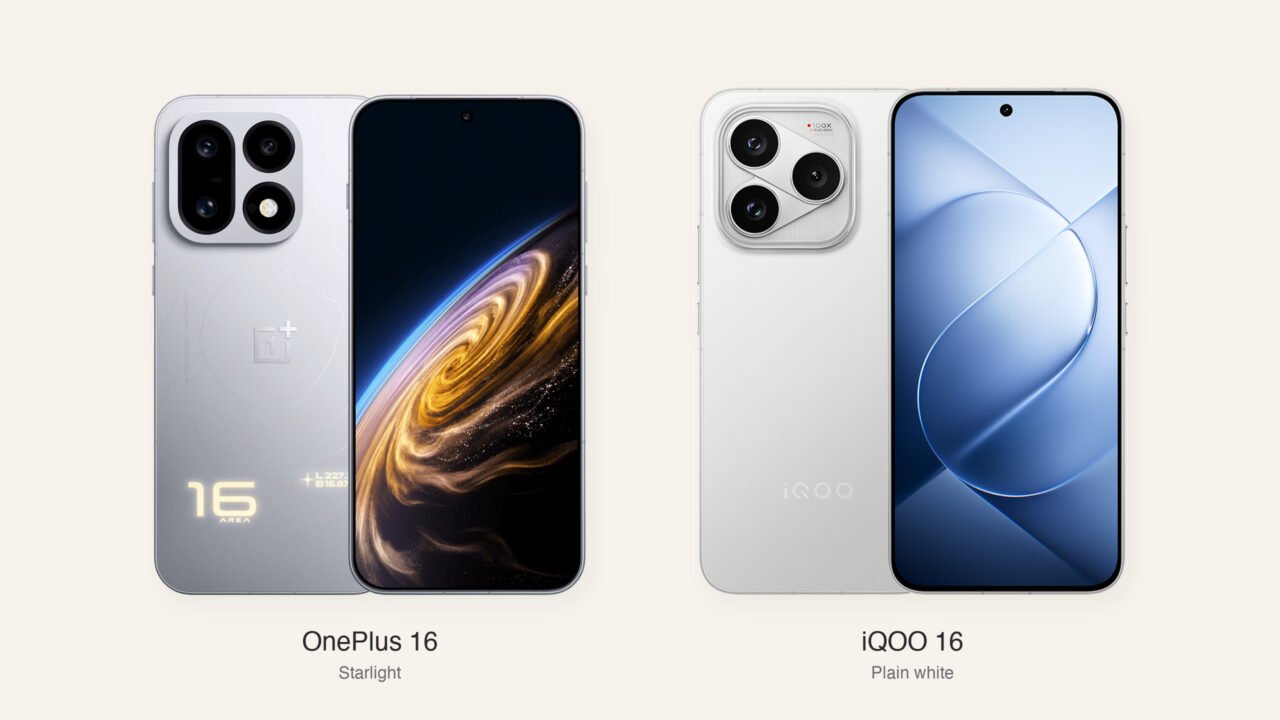
OnePlus went for speed. The refresh rate is how many times a second the screen redraws the picture. The OnePlus runs at up to 165Hz across the phone and 185Hz in supported games, led by shooting games at launch. At 185Hz a new frame can appear every 5.4 milliseconds, against 6.1 at 165Hz, so fast movement looks a little smoother if the game can produce that many frames. The iQOO tops out at 165Hz, which it says works in over 100 everyday apps and over 50 games. For the everyday apps, you first have to turn on a high-speed 165Hz mode in developer settings.
iQOO also claims 2,800 nits across the whole screen against OnePlus’s 2,000. Abrighter screen is easier to read outdoors. So if you mostly read and watch video, the iQOO’s screen is the better one on paper. If you play shooters that support 185Hz, the OnePlus is.
200 megapixels against a bigger sensor
The main cameras make the same kind of trade. The OnePlus has a 200MP sensor measuring 1/1.4 inches. The iQOO has a 50MP sensor that is slightly bigger, at 1/1.3 inches. Split a slightly bigger sensor into a quarter as many pixels, and each pixel is much larger, so it catches more light. That’s why big-pixel cameras tend to do better at night.
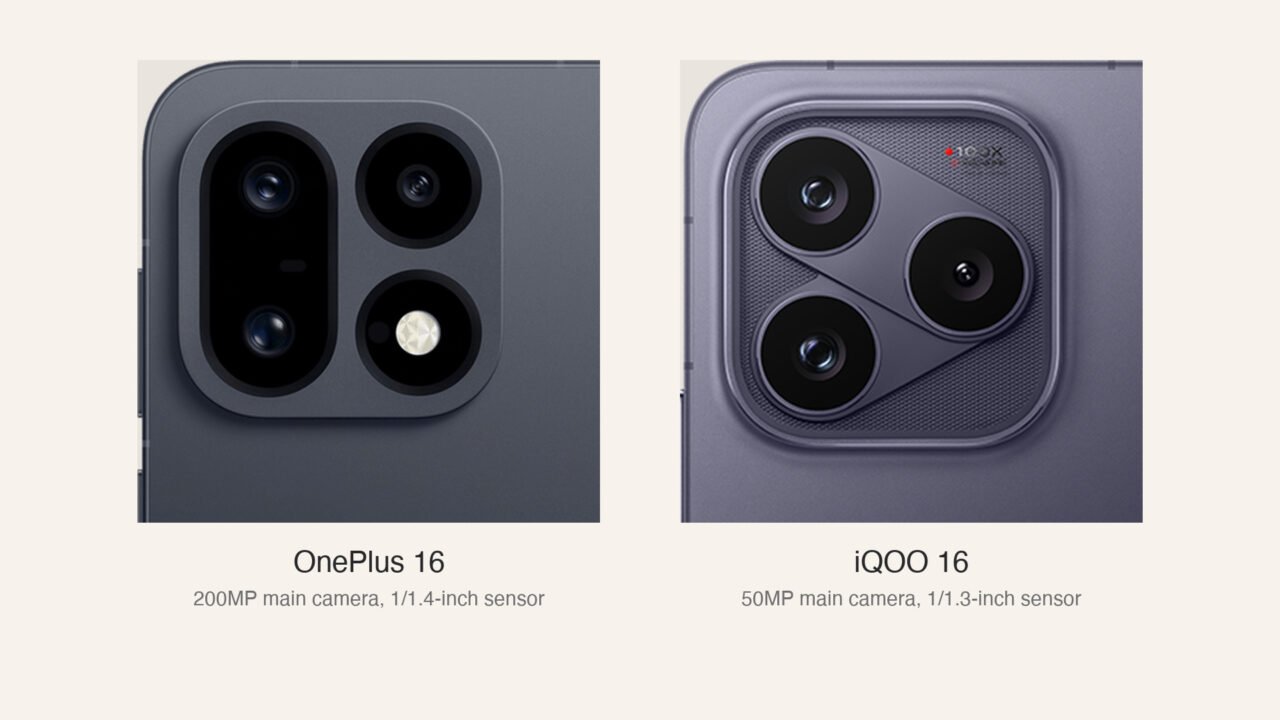
The OnePlus doesn’t shoot 200MP photos all the time. You pick a high-resolution mode to get them, and in normal shooting it saves lower-resolution photos. OnePlus pitches that mode for landscapes, as one shot you can crop into three framings later. The 3x zoom cameras match, and for selfies the OnePlus has 50MP against the iQOO’s 32MP.
The body
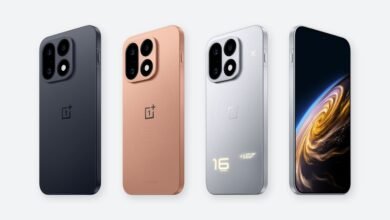
The OnePlus is the smaller and lighter phone, and it has more water and dust ratings. Both are rated IP68, which covers being submerged, and IP69, which covers hot, high-pressure water jets. The OnePlus adds IP66, for powerful jets, and IP69K, a high-pressure test from a vehicle standard. Beside the Snapdragon, each has its own gaming chips: OnePlus has three, for networking, display and touch, and iQOO has its Q4 gaming chip.
Buying one in Kenya
Neither phone is officially sold in Kenya. Third party retailers already lists the OnePlus 16 12GB and 256GB at about KES 109,000, the 16GB and 512GB at about KES 140,000 and the 16GB and 1TB at about KES 160,000, all marked out of stock and “arriving soon”.
That matters because these are China-market phones for now. As we said when the OnePlus 16 launched on 12th October, China models may come without Google’s apps and services, and OnePlus stopped launching new products in Europe and North America in July. vivo’s list of apps pre-installed on the iQOO 16 has no Google apps either. iQOO’s India team said on 9th October that the iQOO 16 is coming to India “very soon”, without a date. Neither company has promised a number of Android updates. Both advertise six years of smooth performance, which their footnotes tie to their own lab testing, not to software updates.



Join the discussion