

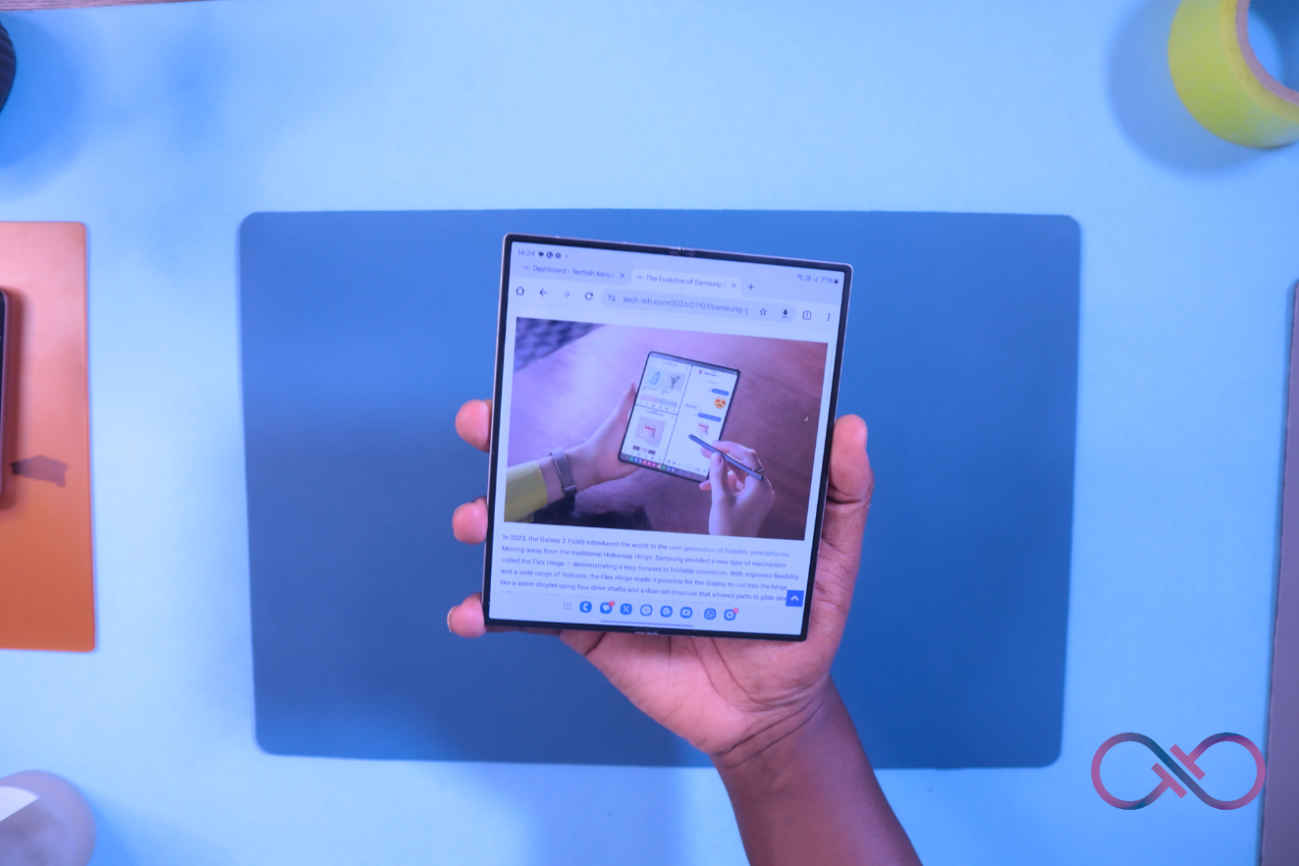
If you’ve used a foldable phone, you’ve probably opened an app on the big inner screen and found it squeezed into a phone-shaped strip with black bars on both sides. Or you’ve unfolded the phone halfway through typing a message, and the app reloaded and lost what you’d written. Google wants developers to fix that, and it’s using the Play Store to make them.
On 18th November 2026, Google Play announced that from April 2027, apps on the store will have to meet a minimum standard for foldables. Apps that don’t “will no longer be able to publish or update on Google Play, and may have reduced visibility on the store.” Google hasn’t said which day in April.
That’s a real penalty, because a developer who can’t publish updates can’t ship bug fixes or security patches. Apps already on the store stay downloadable, Google says. They just can’t get a new version until they’re fixed.
What the minimum standard asks for
Google sorts apps into three tiers in its adaptive app quality guidelines. The lowest, Tier 3, is the one that becomes compulsory. Google calls it Adaptive ready.

An Adaptive ready app has to fill the whole screen, or the whole window if you’re running two apps side by side. So no more letterboxing, the black bars Android draws around an app that wasn’t built for the screen it’s on. The app also has to keep your place when you rotate, fold, unfold or resize it. Your scroll position stays put, the text you typed stays in the box, and a playing video carries on. And it has to work properly in split-screen.
Tier 2, Adaptive optimized, is about layouts that rearrange themselves on a bigger screen, say your inbox on the left and the open email on the right. Tier 1, Adaptive differentiated, covers apps that use tabletop mode (the phone half-folded like a tiny laptop), book-style layouts and several windows of the same app at once.
Neither is compulsory yet. Apps that reach them can apply now for a badge on their Play listing and extra promotion. Google says the compulsory bar will later take in both tiers and widen to tablets, Googlebook laptops and Android XR headsets, with no dates given.
Screenshots, games and Android 17
From April 2027, developers also have to upload three foldable screenshots, plus the usual two phone ones, whenever they publish an app or update its listing. Google wants them in two inner-screen shapes: a square 1:1, as on the Samsung Galaxy Z Fold8 Ultra and the Pixel 11 Pro Fold, and a wider 4:3, as on the Galaxy Z Fold8 Samsung launched in July. The screenshots will start appearing on Play Store listings in the next few weeks, Google says. Once an app has them, you can see how it looks on a foldable before installing it.
Games need the screenshots from April too, but under their own rules they have until August 2027 to meet a games version of Tier 3.
August 2027 is also when new apps and updates must target Android 17 (API level 37), and that change deals with the black bars directly. For years, developers could tell Android to keep an app in portrait only, or to stop it being resized. On a big inner screen, that’s what produces the letterbox. Android 16 started ignoring those settings on large screens but let developers opt out for a while. Android 17 removes the opt-out, as we explained in February, though games are exempt. So once Google Play requires apps to target Android 17, most of them lose the switch that let them ignore big screens.
What changes for foldable owners
Google counts more than 580 million large-screen devices in use across Android, and foldables are an expensive slice of that. In Nairobi, the 256GB Galaxy Z Fold8 was selling for KES 243,900 in September. People paying that much have been getting apps that treat the inner screen as an oversized phone, and phone makers have little control over apps they don’t own. That’s why we think the Play Store is where the pressure works: outside China, it’s the main way Android apps reach phones.
The rule only covers Google Play, so apps from Samsung’s Galaxy Store, Huawei’s AppGallery or a direct download aren’t affected. Kenyan developers on Google Play are covered too. Google says the April bar applies to “standard applications”, but it hasn’t said which apps fall outside that or how it will check compliance.
So in 2027, expect the apps on your foldable to fill the inner screen and keep your place when you open the phone. Two-column layouts and tabletop modes will still be up to each developer until Google makes Tier 2 compulsory.



Join the discussion