
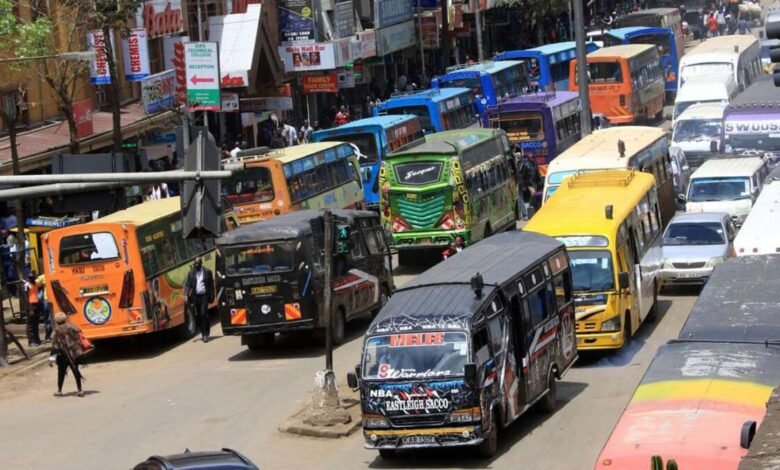
Insights At a Glance:
- Matatus in Nairobi and beyond have fully embraced M-PESA as the primary mode of fare payment.
- Unlike failed attempts like BebaPay and My1963, this shift is organic, with passengers and conductors equally onboard.
- No more coins, no more fuss. Just a phone, a number, and a buzz confirming your ride is paid.
You know that moment when you hop into a matatu and instinctively reach for some coins… only to pause and think, “Wait, do people still carry cash?”
That was me recently, smack in the middle of Nairobi.
Let me rewind. I lived in Nairobi from 2008 to 2016. Then life took me to Eldoret, Kisumu, and finally split my time between Kisumu city and Mbale town. I’ve been back to Nairobi a few times, but this time, something felt… different.
Matatus have finally gone cashless. And it’s not just a trend. It’s reality.

This Time, It’s Actually Working And It’s Spreading Fast
Every matatu I boarded had a number displayed, either a Safaricom phone number, till, Paybill, or pochi la biashara number. And it wasn’t just stuck there for show. People were actually paying through it. No arguments, no awkward stares, no fumbling for coins. And the best part? Even the conductors were cool with it.
Now don’t get me wrong. You can still pay with cash. It’s not outlawed. But more and more people are opting for mobile payments, and you can feel the shift happening in real time.
On more than one occasion, I handed over a KES 1,000 note for a KES 100 fare from Athi River to Nairobi. The conductor blinked at the note, checked his pocket, sighed, and simply said: “Boss, huna M-PESA?” Translation: “Please save me from this float drama.”
It wasn’t rude. It wasn’t demanding. It was just practical. That moment right there tells you everything. Mobile payments have become widely accepted in matatus. Not because they were forced, but because they solve real problems.
Flashback to the BebaPay Days
Now, if you were in Nairobi around 2013–2015, you probably remember BebaPay, the green card from Google and Equity Bank. I was there. I used it. A lot. Especially along Thika Road, back when I lived in Githurai 45 (yes, we survived the madness).
I remember conductors tapping that card on a reader followed by an SMS confirmation and walking off smugly while others fumbled with change. It felt futuristic. Cashless before it was cool. Sadly, like many great ideas in Kenya, it died a slow and silent death. Resistance from operators, lack of regulations, and poor hardware penetration meant it just didn’t stick. Over 700,000 of us were left wallet-wounded when BebaPay was killed off in 2015.
BebaPay wasn’t the only attempt at going cashless in the matatu industry. Kenya has tried to go cashless in public transport more times than we can count. Government-backed My1963 supported by Fibre Space and Safaricom, KCB’s Abiria Card, Co‑operative Bank’s prepaid M‑Nauli, NikoDigi and Tracom-backed O-CITY, you name it. Each had promise. Each stumbled over the same hurdles—lack of buy-in from operators, poor enforcement, or simply bad timing.
But M-PESA? M-PESA already had the trust, the reach, and the simplicity. It didn’t need to reinvent the wheel. It just slapped a till number on the dashboard on matatu windows and let us do what we already do best—send money.
This isn’t just progress. It’s evolution. A decentralized, organic, user-driven transformation. And it’s glorious. Today’s matatu system has got that cashless swagger we once dreamed of.
The MVP of This New Era? M-PESA
Let’s be honest. This transformation isn’t powered by fintech unicorns or government regulations. It’s powered by M-PESA. Everywhere I turned, it was Safaricom numbers, Safaricom tills, Safaricom pochi. I tried to spot an Airtel Money option, just for fun. Nada. Nothing. It’s like Airtel Money doesn’t exist in the matatu mobile payments universe.
Even boda boda guys are riding the wave. I paid several riders via M-PESA, and one looked at me like, “Of course, how else would you pay?” Another one chuckled and told me, “Hii ni standard sasa. Hata mama mboga ana till.”
And they are right.
From the streets of Nairobi to the dusty shortcuts in Athi River, the matatu (and boda) economy is now a thriving M-PESA ecosystem. It’s like the entire industry collectively said, “Fine. Let’s do this thing.” And it works. No cards, no hardware, just a phone, a number, and a chime confirming payment. Yes, unlike previous cards that required specialized tech, hardware, or reader apps, M-PESA already lives in every Kenyan’s pocket. Everyone knows how to use it. It’s trusted, familiar, and requires no explanation.
What Changed? Why Now?
Simple: organic adoption. No government mandate. No massive rollout. No hardware investment. Just real-world utility. Conductors figured out they’re safer without carrying bundles of cash. Passengers figured out they don’t need to dig for change. Safaricom made it easy, and the people did the rest.
For once, a solution just… made sense.
But let’s be honest. This transformation isn’t countrywide. Nairobi might be leading the way, but other parts of Kenya are still catching up. Just this week, my wife was travelling from Kaimosi University to Chavakali in Vihiga County. She tried to pay her KES 50 fare via mobile money only for the conductor to scoff at the idea.
“Hii pesa ni kidogo sana kutuma kwa M-PESA,” he snapped. In his view, the amount was too small to be worth the transaction, and he wasn’t budging. She didn’t have cash. Neither did a few other passengers. And so, the conductor did the unthinkable: he dropped them off before their destination. Just like that.
It was a jarring reminder that while urban Kenya is embracing cashless, rural and peri-urban routes still operate in a cash-first reality. Trust, tech literacy, and even petty transaction economics remain major hurdles.
Final Thoughts
We’ve had countless attempts at cashless fare collection in Kenya: BebaPay, My1963, KCB’s Abiria, Co-op’s M-Nauli, even O-City. Most failed due to resistance, tech friction, or lack of trust. But this time, it’s different. This one came from the ground up.
We can debate policy, fintech, and cashless innovation all day. But sometimes, it’s the ordinary, lived moments that speak loudest. This month in Nairobi, sitting in traffic, I realized something profound: The matatu industry, the most chaotic, colorful, and culturally stubborn part of our urban fabric, has quietly embraced digital payments. Not because it was forced to. But because it finally made sense.
If Nairobi’s chaotic matatu scene can embrace cashless with this much grace, then maybe—just maybe—Kenya’s digital transformation is doing just fine.
And that, to me, is the kind of revolution that sticks.






Join the discussion