
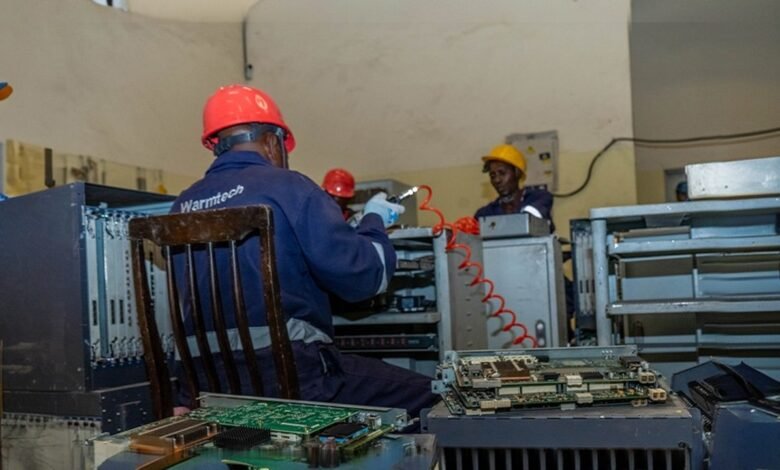
What happens to your old gadgets when they die? For most Kenyans, the answer is simple. They get tossed into a drawer, a cupboard, or worse, into the trash. But for Safaricom, the problem is a lot bigger than a forgotten kabambe in your shoebox. We’re talking about hundreds of tonnes of dead servers, retired batteries, and unused SIM cards. And now, the telco is tackling the mess head-on through a game-changing partnership with Warmtech Africa, one of Kenya’s few certified e-waste handlers.
A Partnership That’s Changing the Game
For years, Safaricom’s solution for outdated equipment was pretty straightforward: auction it off and move on. The problem? Once the gear left their warehouses, no one could really tell where it ended up or whether it was disposed of safely.
That changed in 2024, when Safaricom brought Warmtech Africa on board. The results speak for themselves:
- 300 tonnes of e-waste processed so far.
- 90% recycled, resold, or repurposed.
- Less than 5% sent to landfills.
And because Warmtech Africa documents every step, Safaricom now has certificates showing exactly how much of its old servers and dead batteries was recycled, resold, or scrapped — a sharp break from the auction days. But this isn’t just about servers and batteries. Sometimes waste comes in smaller, more surprising forms. Like SIM cards.

A few years ago, Safaricom’s Fintech Operations team found themselves staring at a mountain of 155,000 unused SIM cards, weighing about a tonne. One or two SIMs don’t look like much, but thousands of them stacked in storage quickly turn into a headache. The solution wasn’t just disposal. Safaricom has since pushed for more virtual systems that reduce the need for physical SIM cards altogether.
Batteries That Last Longer, Towers That Run on Solar
One way Safaricom is cutting down on future e-waste is by upgrading its tech to last longer.
- Old lead-acid batteries → lifespan about 5 years.
- New lithium-ion batteries → lifespan 8–10 years.
- Solar panels now power masts and data centres → lifespan 25–30 years.
Think of it this way: the same lithium battery powering your smartphone is now keeping Safaricom’s network towers alive for almost a decade.
And if you’ve ever worried about SIM swaps or rogue data leaks, you’ll be glad to know this: Safaricom doesn’t just throw old servers in the bin. Before disposal, they wipe everything clean using proprietary software and even electromagnetic fields to ensure nothing survives.
Jobs and a Circular Economy
The Warmtech Africa partnership isn’t just about recycling, it’s also about jobs. The company has grown its technician base from five to nine, and there’s potential for even more growth as demand for e-waste management rises.
Not all equipment gets shredded either. Generators, for example, can be refurbished and resold, giving them a “second life” instead of going to waste.
At the heart of all this is Safaricom’s bold commitment: Zero Waste to Landfill. The company wants nothing it uses (not a server, not a SIM, not a single battery) ending up in a dumpsite. And while the numbers are impressive, the bigger message is even clearer: if Safaricom can find new life for dead SIMs and servers, what about the old phones, TVs, or laptops lying idle in our homes?






Join the discussion