


There is a very specific playbook tech giants are using in 2026 to mask price hikes, and Apple just executed it flawlessly.
Just weeks after Samsung bumped the entry price of the base Galaxy S26 from $799 to $899 by quietly killing off the 128GB tier, Apple has done the exact same thing to its Mac lineup. The beloved $999 MacBook Air is gone. The new base M5 MacBook Air now starts at $1,099, but to soften the blow, Apple has doubled the starting storage to 512GB. The 14-inch MacBook Pro (M5 Pro) follows suit, jumping from $1,999 to $2,199, but now starting at a generous 1TB.
It is a stealth tax on the consumer, but frankly, it is a necessary one. As local Large Language Models (LLMs) and on-device AI generation become standard, 256GB of storage is no longer a viable baseline.
Apple’s March 2026 Mac refresh isn’t just a routine spec bump. Between the M5 chips, a radical new “Fusion Architecture,” and a breathtaking 120Hz Studio Display XDR, this is a structural realignment built entirely around eliminating bottlenecks. Here is what you need to know.

The MacBook Air M5:
The MacBook Air retains its universally loved thin, fanless aluminium chassis. The story here is entirely about what happens inside.

By forcing the base model to 512GB, Apple is admitting that the era of cloud-only computing is shifting back to local processing. The new SSDs deliver up to 2× faster read/write throughput than the M4 generation. If you are downloading massive photo libraries or running local AI models via Apple Intelligence, you need that speed and space.
Crucially, the Air has finally grown up. The M5 model can now drive up to two external displays (up to 6K at 60Hz) with the lid open. Coupled with the new N1 wireless chip bringing Wi-Fi 7 and Bluetooth 6, the Air has transitioned from a portable companion to a highly capable desktop replacement.
The M5 Pro & Max: Fusion Architecture and the Bandwidth War
While the Air handles everyday AI tasks, the 14-inch and 16-inch MacBook Pros are targeted squarely at developers, 3D artists, and AI researchers who find themselves choking on data bottlenecks.
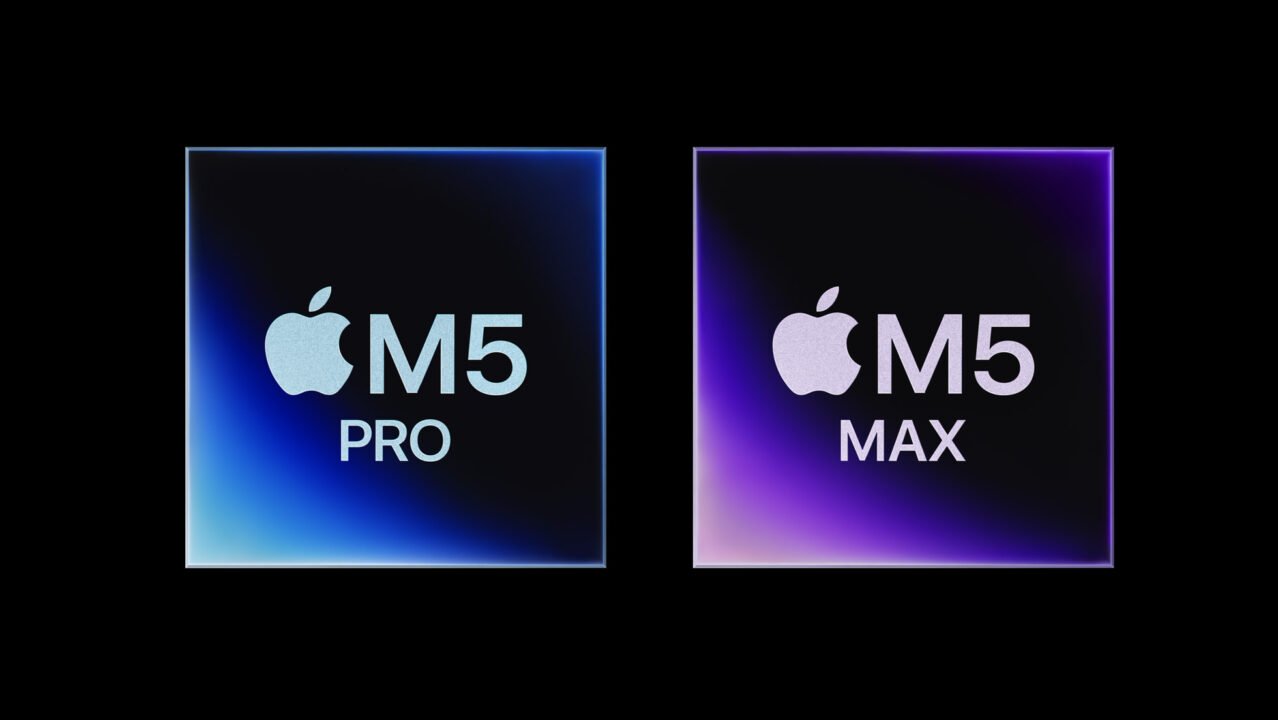
Enter the “Fusion Architecture”. Apple has essentially stitched two 3nm dies into a single SoC. They share one unified memory controller, one Media Engine, and a massive GPU where every single core now includes a dedicated “Neural Accelerator.”

The real-world numbers are staggering:
- AI Image Generation: Up to 3.8× faster on the M5 Max compared to the M4 Max.
- LLM Prompt Processing: Up to 4× faster than the M4 Max.
But the most critical spec is the memory bandwidth. The M5 Max pushes unified memory bandwidth up to an absurd 614 GB/s. Why does a laptop need that much of a data pipe? Because you need it to drive Apple’s real Trojan horse of this launch.
The 120Hz Studio Display XDR
That 614 GB/s bandwidth exists so a professional can run complex 3D renders while using Thunderbolt 5 to daisy-chain multiple external displays without a stutter. And Apple has finally given us the display to match.
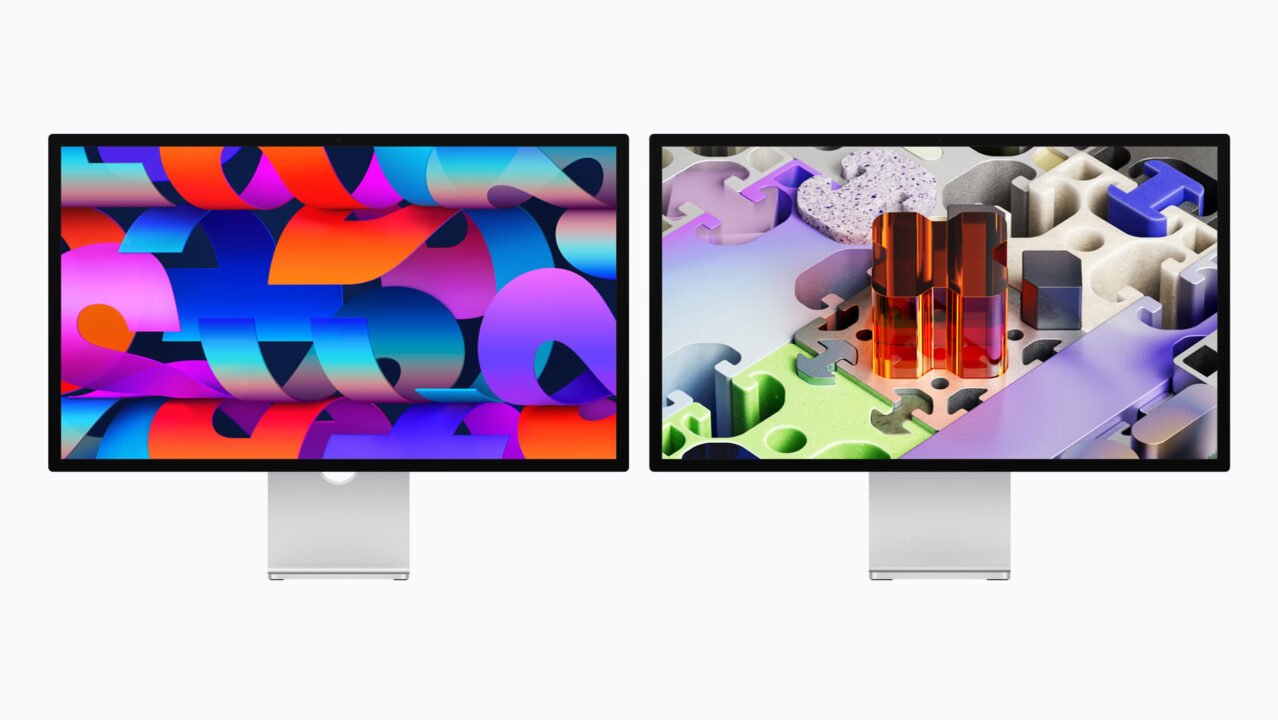
Replacing the ageing Pro Display XDR, the new Studio Display XDR brings the MacBook Pro’s mini-LED technology to a 27-inch desktop monitor. It is a masterpiece of engineering:
- 120Hz ProMotion: Featuring Adaptive Sync from 47Hz to 120Hz, ensuring judder-free video playback and incredibly fluid UI interactions.
- Insane Contrast: 2,304 local dimming zones provide a 1,000,000:1 contrast ratio, with 1,000 nits sustained SDR brightness and a searing 2,000 nits peak HDR brightness.
- Medical Grade: It includes DICOM medical imaging presets, making it viable for diagnostic radiology.
For those who don’t need reference-grade HDR, the standard 2026 Studio Display keeps its excellent 600-nit 5K LCD panel but upgrades to Thunderbolt 5 and a re-tuned six-speaker system that delivers 30% deeper bass.
Buyer’s Guide: Which M5 Mac Should You Buy?
(Note: KES pricing is estimated based on current exchange rates (1 USD = 130 KES) and does not account for local Kenyan importation taxes).
The Sweet Spot: M5 MacBook Air (13-inch, 512GB)
- Estimated Price: From $1,099 (~KES 148,365)
- Who it is for: 90% of users. The forced upgrade to 512GB stings your wallet today, but it future-proofs the machine for the next five years. With dual external display support, this is the best laptop on the market for students, writers, and general creatives.
The Power User’s Workhorse: M5 Pro MacBook Pro (14-inch, 1TB)
- Estimated Price: From $2,199 (~KES 296,865)
- Who it is for: Video editors, software developers, and serious photographers. The jump to a 1TB base storage makes this pricing pill much easier to swallow, and the Thunderbolt 5 inclusion guarantees you are ready for next-gen peripherals.
The Uncompromising Pro: M5 Max MacBook Pro (16-inch, 2TB)
- Estimated Price: From $3,899 (~KES 526,365)
- Who it is for: High-end VFX artists, local AI researchers, and professionals who bill by the hour. If rendering times directly impact your income, the 614 GB/s memory bandwidth will pay for the machine in a matter of months.
The Display Verdict: The standard Studio Display at $1,599 (~KES 215,865) is a great quality-of-life upgrade for an office. But if you have the budget, the Studio Display XDR at $3,299 (~KES 445,365) is the true star of today’s announcements. It is the monitor we have been begging Apple to make for half a decade.
Availability: Pre-orders for all devices open on 4 March, with retail availability starting 11 March.







Join the discussion