
Safaricom handed Airtel Kenya one of the clearest competitive openings the local telecom market has seen in a long time. Then Airtel did what Airtel usually does in Kenya: hesitate, whisper, and arrive when the moment had already started slipping away.
When Safaricom rolled out My OneApp, the promise was simple enough. One app for M-PESA, MySafaricom, account management, payments, bundles, fibre, and more. But within days, the rollout was already being defined by login problems and broken mini-app services, with Safaricom itself acknowledging that fixes were underway.
That should have been Airtel Kenya’s cue.
Not next week. Not after everyone had already made the jokes. Not after users had already dragged My OneApp across Facebook, X, TikTok, WhatsApp groups, and every Kenyan tech comment section imaginable. Immediately.

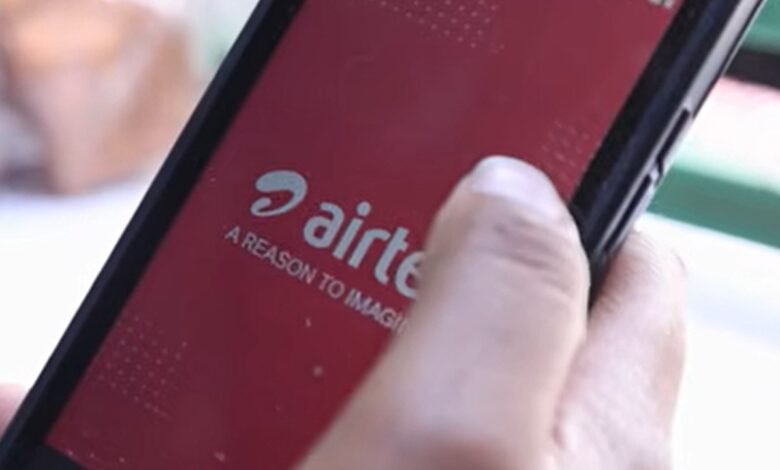
Instead, Airtel Kenya only really showed signs of life this week, when its official X account posted:
“With My Airtel App, you don’t need to switch anything off and on to just check your balance. Just Vibes and Convenience.”
It was a clever line, and there is no missing what it was referring to. Safaricom is forcing users to use SIM 1 slot and turn on mobile data to set up the app, something you don’t see with My Airtel app. The problem is it came late. By then, Safaricom’s My OneApp disaster had already become common knowledge.

#MyAirtelApp
And that is what makes Airtel’s response so frustrating.
This was not some minor Safaricom stumble buried in a Sunday afternoon support thread. This was a highly visible mess involving one of the most important digital products in Kenya. People were struggling with access, onboarding friction, SIM placement demands, data restrictions, and the general absurdity of needing workarounds just to use a service that is supposed to make life easier.
In our previous coverage on Safaricom admitting My OneApp is broken and not working, on the device compatibility mess, and on why My OneApp is the worst possible name for a brand built on Safaricom and M-PESA, the broader problem was already obvious: Safaricom had created the exact kind of confusion and friction that a hungry rival should exploit.
But Airtel Kenya is still not acting like a hungry rival.
That is the real issue here. Challenger brands are supposed to be loud, opportunistic, and slightly annoying. That is the whole point. When the market leader trips over its own shoelaces, you do not wait for permission from the room. You do not test the waters with one soft jab wrapped in “vibes and convenience.” You go for the jugular and seize the moment while it is still alive.
Especially in a market like this one.
According to the Communications Authority’s latest sector statistics for the quarter ended December 2025, Safaricom still controls 66.8% of mobile subscriptions, 64.3% of mobile broadband, and a massive 89.0% of mobile money. Airtel Kenya is growing, yes, but it remains a distant second at 29.2% in mobile subscriptions, 32.0% in mobile broadband, and 11.0% in mobile money. Those are not small numbers, but they are nowhere near enough to justify this kind of passivity when Safaricom leaves the door open.
In fact, those numbers are exactly why Airtel should have moved faster.
If you are the underdog, you do not get many moments like this. Safaricom rarely hands over a clean, emotionally charged, easy-to-understand narrative that ordinary users can feel in real time. My OneApp did exactly that. It was not abstract pricing theory or an industry policy debate. It is practical inconvenience. People can feel it on their phones. They can compare it against My Airtel app. They’re complaining about it in plain language. That is marketing gold, handed to Airtel for free, and Airtel still treated it like a sensitive HR matter.
Why? Because Airtel Kenya still behaves like a company that does not fully believe it can land a punch and survive the return hit.
For years, Airtel has preferred the victim script in Kenya. The company is always the smaller player, always the one pointing at structural imbalance, always the one arguing that the field is tilted. Some of that is true. Safaricom’s grip on this market is very real, and the latest CA data still shows just how far ahead it remains across the core categories that matter most.
But at some point, that cannot be the whole brand strategy.
You cannot spend years asking the market to see you as the real alternative, then go quiet when the dominant player suffers a self-inflicted brand wound in public. A serious challenger would have spent the first 48 hours flooding timelines with side-by-side convenience messaging, app demos, feature comparisons, influencer videos, user testimonials, and just enough sarcasm to make the point stick. Not reckless trolling. Just sharp, timely, relentless messaging.
Instead, Airtel Kenya arrived at injury time and called it a campaign.
That is why this moment feels wasted. My OneApp will almost certainly stabilize after several updates. Safaricom has the money, engineering depth, distribution muscle, and user lock-in to fix most of what is broken and move the conversation on. When that happens, the window closes. The outrage fades. The migration slows. The jokes stop being funny. And Airtel will be left with one mildly spicy social media post and nothing meaningful to show for one of Safaricom’s most avoidable own goals in recent memory.
That is not strategy. That is fear dressed up as restraint.
For a company that keeps trying to chip away at Safaricom’s dominance, Airtel Kenya had the perfect chance to sound bold, look confident, and convert frustration into momentum.






Join the discussion