


The National Transport and Safety Authority (NTSA) has announced that Kenya will officially retire physical motor vehicle logbooks on June 10, 2026, when the long-awaited eLogbook goes live on the eCitizen platform. The move ends decades of reliance on the paper booklets that have defined vehicle ownership records since well before NTSA itself was formed in 2012.
Speaking on the sidelines of the 3rd Annual Regulatory Authorities and Agencies Conference at South Eastern Kenya University in Kitui, NTSA Director General Eng. Nashon Kondiwa framed the change as both a service upgrade and an anti-corruption play. According to Capital FM’s reporting on the announcement, Kondiwa said the authority is bringing services closer to citizens while simultaneously squeezing out the brokers who have built businesses on slow, opaque manual processes.
What actually changes on June 10
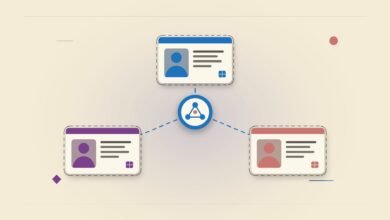
Once the system goes live, your vehicle’s registration certificate will no longer exist as a printed booklet that you carry in the glovebox or store in a drawer. Instead, the eLogbook will:
- Be generated instantly when a vehicle is registered or ownership changes hands
- Live inside your eCitizen account, downloadable from anywhere with an internet connection
- Carry a QR code plus encrypted security features so banks, insurers, buyers, and police can verify ownership in real time
- Cost nothing to replace if “lost,” because you can simply re-download it
- Integrate directly with insurance, inspection, and PSV compliance systems, allowing traffic officers to confirm a vehicle’s status on the spot
Affected services include new vehicle registrations, used vehicle imports, ownership transfers, asset financing registrations, duplicate logbook applications, and deregistration.

Why this matters beyond convenience
The fraud problem the eLogbook is built to solve is real and well-documented. For years, fake or duplicated logbooks have enabled stolen vehicles to be resold, allowed the same car to be used as collateral at multiple SACCOs, and exposed banks and insurers to losses they often only discovered after the fact. With a centralised digital registry and QR-coded certificates, that arbitrage closes. A bank verifying a loan, a buyer in a Sunday-morning car deal, or an officer at a roadblock can all hit the same source of truth.
There is also a quiet but important shift in who pays the cost of bureaucracy. Today, when motorists lose a logbook, they pay for replacement, an affidavit, a police abstract, and waiting time. NTSA itself recently reminded the public that thousands of processed logbooks were sitting uncollected in its offices, a symptom of the friction the paper system creates. Under the new model, that friction (and its hidden tax on time and money) effectively disappears.
For the financing ecosystem, the gains are material. NTSA says banks and SACCOs will be able to verify ownership and lien status directly from its system, which should compress vehicle loan turnaround times and reduce the pile of paperwork dealers currently shuttle between offices.
The history this builds on
This is not NTSA’s first digital rodeo. The Transport Integrated Management System (TIMS) launched in 2016 with World Bank funding under the Eastern Africa Regional Transport, Trade and Development Facilitation Project, and it cut some processing times from months to days. The Smart Driving Licence followed. The eLogbook completes the trilogy, finally moving the most fraud-prone document of the lot, the vehicle registration certificate, fully online.
It also fits a broader pattern: government services are increasingly funnelling through eCitizen, which has become the default front door for everything from passport renewals to business registration. Tech-ish has previously covered how eCitizen integrates payment options like T-Kash to make these services more accessible, and the eLogbook continues that consolidation.
The questions that remain
NTSA’s announcement is heavy on benefits and light on edge cases. A few worth flagging:
- Cybersecurity. eCitizen has been targeted before. As tech-ish reported during the 2023 Anonymous Sudan attacks, the platform was offline for days, taking NTSA services down with it. Concentrating something as sensitive as vehicle ownership records into a single digital pipe makes resilience and incident response a first-order question, not a footnote.
- Connectivity and digital literacy. Not every Kenyan motorist is fluent with eCitizen, and not every county has the connectivity to make instant verification routine. NTSA says training programmes and technical support desks will be set up before the rollout, but the test will be how that lands in places like Mandera or Lodwar, not just Nairobi.
- What happens to existing paper logbooks? NTSA has not yet clarified whether holders will need to actively migrate or whether records will be ported automatically. Expect this to be a major source of confusion in the first few months.
- Data privacy. Centralised vehicle records linked to national IDs raise questions about who can query the database and under what conditions. The Office of the Data Protection Commissioner will likely want a seat at this table.
Bottom line
If NTSA executes this well, June 10 will mark the quiet death of one of Kenya’s most fraud-prone, time-wasting documents. Cars will change hands faster, banks will lend with more confidence, and “lost logbook” will stop being a punchline. If it executes badly, the country will swap one set of frustrations (queues, brokers, missing files) for a different set (downtime, locked accounts, password resets, and a single point of failure). Either way, the era of the green booklet is ending.






Join the discussion