

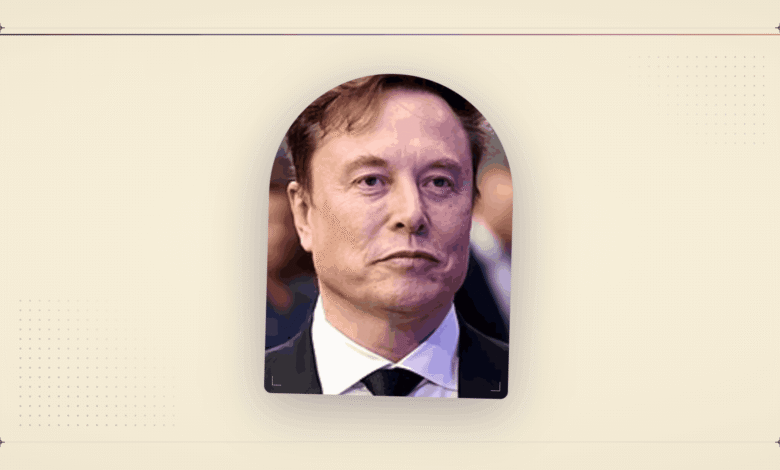
A California jury has unanimously thrown out Elon Musk’s lawsuit against OpenAI and its chief executive Sam Altman, ending a three-week trial that briefly threatened to upend the company behind ChatGPT.
The nine-person jury deliberated for less than two hours on Monday before deciding that Musk had filed his case past the legal deadline. Under California law, the time limits were strict: three years to bring a claim that Altman and OpenAI president Greg Brockman breached a charitable trust duty, and two years to claim they had unjustly enriched themselves. Musk filed in February 2024. The jury found he should have moved sooner.
Judge Yvonne Gonzalez Rogers, who presided over the trial in Oakland federal court, said the jury was technically advisory but that she agreed with its conclusion and accepted it as her own ruling. That ends the case at trial level. Musk’s lawyer Steven Molo said the legal team is preserving the right to appeal but has not decided whether to pursue one.
What Musk wanted, and why it failed
Musk co-founded OpenAI in 2015 alongside Altman and Brockman as a non-profit AI research lab. He left the board in 2018 after his co-founders refused to give him control. He testified he had donated about $38 million in seed funding under the understanding that OpenAI would build AI “for the benefit of humanity,” not enrich anyone.
His suit, filed in February 2024, accused Altman and Brockman of “stealing a charity” by quietly steering OpenAI toward a for-profit structure and a deep commercial partnership with Microsoft. He asked the court to remove both men from leadership, unwind OpenAI’s restructuring, and force the company and Microsoft to pay between $79 billion and $134 billion into OpenAI’s non-profit arm, according to a Bloomberg-reported court filing from January.
OpenAI’s lawyers pushed back hard. Lead counsel William Savitt argued in closing that Musk’s case “bears no relationship with reality.” He told the jury Musk himself had pushed for a for-profit structure at various points, on the condition he be given control, and had even proposed folding OpenAI into Tesla. Altman testified that Musk had at one stage suggested control of the company might one day “pass to my children.”
The jury did not have to weigh those broader claims. They only had to decide one question: did Musk wait too long? They decided he did.
Why this matters beyond the courtroom
The verdict lands at a critical moment for the AI industry. OpenAI is now valued at around $852 billion and is widely reported to be preparing an initial public offering that could value it as high as $1 trillion. A loss for OpenAI would have forced changes to its corporate structure, removed its leadership, and likely delayed that offering by years.
OpenAI completed its long-debated restructuring in October 2025, converting its for-profit arm into a public benefit corporation called OpenAI Group, controlled by a non-profit foundation that holds roughly 26 percent of the company. Microsoft holds 27 percent. The jury’s decision now removes one of the last significant legal threats hanging over that arrangement.
For Musk, the loss closes a chapter but not the rivalry. His own AI company, xAI, launched in 2023, was folded into X earlier this year and is expected to go public as part of SpaceX, with reports placing the target valuation as high as $1.75 trillion. OpenAI’s counsel framed the lawsuit as exactly that competitive context. “This was nothing but an effort by Mr Musk to slow down a competitor,” spokesman Sam Singer said outside court.
Microsoft, named as a co-defendant for “aiding and abetting” the alleged scheme, was also cleared. Its claims were dismissed on the same statute of limitations grounds.
What to watch next
The appeal question is the immediate one. The judge signalled it would be a difficult one to win, noting “a substantial amount of evidence” supported the jury’s finding. Beyond that, the verdict effectively settles the legal status of OpenAI’s corporate structure. The bigger questions about whether AI labs founded as charities should be allowed to convert into trillion-dollar businesses now move from the courtroom back to regulators and lawmakers, where they were always going to be decided. For OpenAI, the path to an IPO is clearer. For readers tracking the wider AI race, the practical takeaway is simple: the structure that powers ChatGPT survives, the company can keep raising money, and the legal cloud over Sam Altman has lifted.




Join the discussion