

For years, internet access in many Kenyan schools has depended on a familiar mix of mobile data bundles, fibre subscriptions where available, and plenty of patience when connections inevitably slowed down or disappeared. But a new study examining Starlink‘s rollout in 29 schools across 28 counties suggests that picture changed dramatically in just one month.
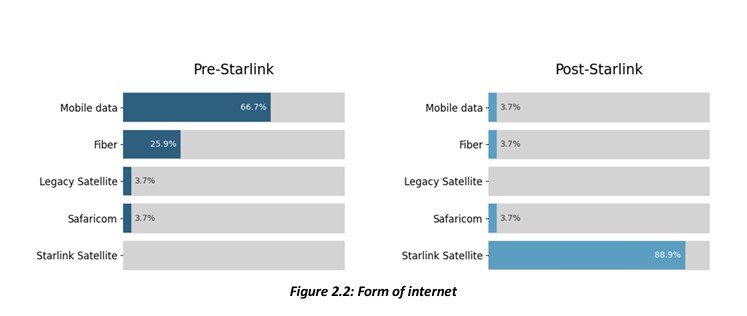
Before Starlink was installed in February 2026, 67% of participating schools relied on mobile data for internet access, while another 26% depended on fibre connections. By March, Starlink had become the dominant form of connectivity in 88% of schools. Mobile data usage had plunged to just 4%, while fibre also dropped to 4%.
That’s arguably the most significant finding in the entire report. Because we’re constantly debating whether satellite internet can genuinely compete with traditional connectivity options. In these schools, the answer appears to be yes. Starlink didn’t merely supplement existing internet connections. It rapidly replaced them.
The findings come from a partnership between Grow X Education and the Centre for Mathematics, Science and Technology Education in Africa (CEMASTEA), which deployed Starlink connectivity in participating schools before conducting a follow-up assessment roughly a month later.

The great connectivity switch
The numbers suggest schools weren’t simply chasing a new technology. Instead, it’s reliable internet that they were after. Before Starlink, nearly a third of schools described their internet connectivity as unreliable. After installation, that figure dropped to just 7%. Meanwhile, schools rating their internet as reliable or very reliable climbed to 61%.
Internet speed also improved significantly. Prior to Starlink, more than half of schools said available speeds were mostly insufficient for digital learning activities such as educational videos and simulations. Following deployment, 68% reported speeds that were mostly or always sufficient. In practical terms, that means fewer interrupted lessons, fewer failed downloads, and less time waiting for educational content to load.
It also means teachers can begin planning lessons around digital resources without worrying whether the internet will cooperate on the day.
This wasn’t just a Nairobi experiment
One of the more impressive aspects of the project is its geographic reach. The 29 participating schools were spread across 28 counties, including Turkana, Marsabit, Mandera, Wajir, Garissa, West Pokot, Bungoma, Kakamega, Kilifi, Lamu, Narok, Kajiado, Nairobi and many others. The digital footprint includes:
- Tharaka-Nithi, Taita-Taveta, Homa Bay, Marsabit, and Kitui.
- Embu, Murang’a, Isiolo, Mandera, Siaya, and Wajir.
- Samburu, Lamu, Narok, Tana River, Machakos, and Kisii.
- Vihiga, Nairobi (hosting two schools), Kiambu, and Bungoma.
- Makueni, Kajiado, West Pokot, Turkana, Garissa, Kakamega, and Kilifi.
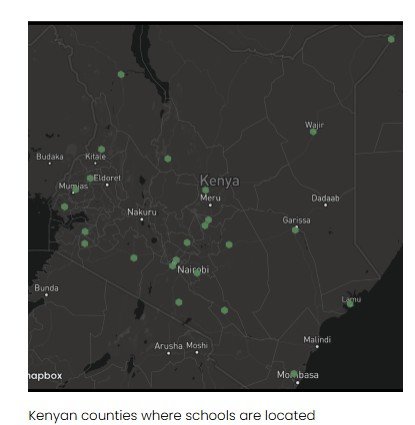
The sample included urban, semi-urban and rural schools, allowing researchers to observe how Starlink performs across vastly different environments. That diversity matters because connectivity challenges look very different in Nairobi compared to Turkana or Mandera. Yet the study found improvements across the board.
Collectively, the schools serve more than 32,000 students and over 1,000 teachers.
Kenyan schools are still reliant on desktops
One section of the report offers a fascinating glimpse into the hardware realities of Kenyan schools. Despite all the industry talk around tablets, AI PCs and premium student laptops, desktop computers remain the backbone of digital learning. Participating schools reported an average of 27 desktop computers each. Laptops averaged just nine per school, while smart screens and projectors were relatively uncommon. Smart boards were virtually non-existent.
I found that particularly interesting because it highlights the gap between education technology marketing and classroom reality. The average Kenyan school is not filled with sleek student laptops. It’s still powered largely by desktop PCs, many of which likely sit in dedicated computer laboratories. So while companies continue pushing premium student computing devices, the report suggests most schools are still focused on getting enough basic hardware into learners’ hands.

That MacBook Neo Student thing isn't meant for these sides of the planet.

The device problem is impossible to ignore
If Starlink solved one problem, it also exposed another. The study found that 89% of schools have more than five learners sharing a single device. Only 4% reported having one device for every four to five learners.
That statistic jumps off the page. Reliable internet is now reaching schools that previously struggled with connectivity, but learners still need devices to fully benefit from it. In many ways, the report shows Kenya’s digital education challenge evolving. Previously, schools struggled to get online. Now they’re online, but many learners are still waiting for a turn at the keyboard.
The good news is that schools appear to recognize this. Nearly half reported that they are already in the process of procuring additional devices following the Starlink rollout.
You can read the full report here.








Join the discussion