
Standard Bank, the group behind Kenya’s Stanbic Bank, has confirmed it will take a leading role in the planned stock market listing of the Dangote Petroleum Refinery. For Kenyan readers, the detail that matters sits one layer beneath the headline. The same banking group that runs Stanbic in Nairobi is positioning itself to finance Aliko Dangote’s expansion across the continent, and Dangote has already named Kenya as the place he wants to build his next mega-refinery.
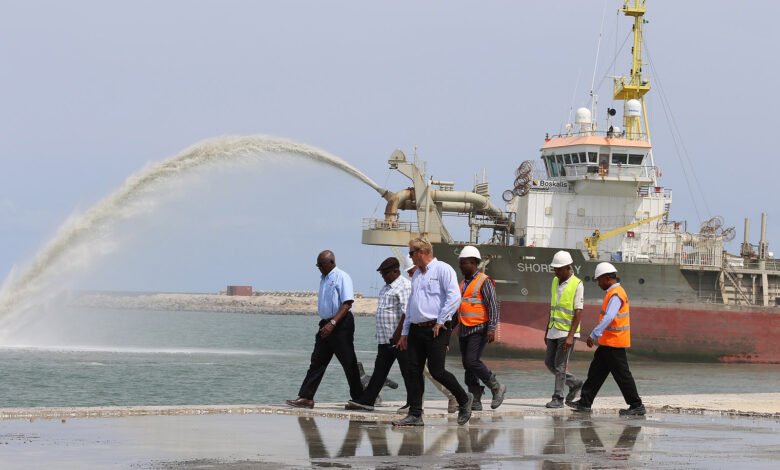
Standard Bank Group is Africa’s largest lender by assets, holding about R3.6 trillion. In Kenya it operates as Stanbic Bank. Its chief executive, Sim Tshabalala, toured the Dangote refinery and fertiliser complex outside Lagos this month and pledged to help take the refinery public.
The statement issued after the visit was warm and short on numbers. The fuller picture, reported by South Africa’s Business Day, is more concrete. The listing is valued at around $50bn and is slated for September 2026. Standard Bank’s Nigerian business, Stanbic IBTC, is the lead adviser, which means it shapes how the share sale is structured, priced and sold to investors. Tshabalala framed the bank’s role as mobilising other people’s money rather than lending its own, connecting African assets to sovereign wealth funds, pension funds and global asset managers. You can read the detail on Business Day.
The listing is meant to fund Dangote’s plan to invest $40bn over five years, expanding the refinery and lifting fertiliser output. The Lagos plant has a nameplate capacity of 650,000 barrels per day. Its chief executive, David Bird, said it recently sustained test runs at 700,000 barrels per day, above the level it was designed for. That makes it the largest refinery on the continent, and it has already turned Nigeria from a fuel importer into a net exporter of petrol.
This is where Kenya comes in. In a May interview with the Financial Times, Dangote said he is leaning towards Mombasa for a near-copy of the Lagos plant, a 650,000 barrels-per-day refinery he estimates at $15bn to $17bn. At current exchange rates that is roughly KES 2.2 trillion, far larger than Kenya’s entire annual development budget. He prefers Mombasa over Tanzania’s Tanga port because the harbour is deeper and the Kenyan market is bigger. President William Ruto has said construction should begin this year, and that Kenya’s new National Infrastructure Fund would take an equity stake to reduce the project’s risk.
Put the two stories side by side and the logic is clear. Standard Bank is not simply advising on a Nigerian share sale. It is buying a front-row seat to Dangote’s continental expansion, and the Mombasa refinery is part of that expansion. A bank that already serves Kenyan customers through Stanbic could end up advising on, and helping finance, a project that reshapes how the country fuels itself.
There are real caveats. Dangote has floated three possible sites, Mombasa, Lamu and Tanga, and feasibility studies have not settled the location. He has set a firm condition: anti-dumping protection to stop cheap imported fuel undercutting a local plant. Standard Bank, for its part, keeps facing criticism for financing fossil fuels even as it grows its renewable lending. None of this is settled.
The refinery conversation is not new for Kenya either. We already looked at Kenya Airways and Rubis planning a sustainable aviation fuel refinery in Nairobi, another sign that local refining is back on the table after years of importing every litre.
For now, nothing has been signed on the Kenyan side. What this announcement tells you is that the money and the advisory muscle behind Dangote’s expansion are lining up, and the bank doing the lining up is the same one that runs Stanbic in Kenya. If the Mombasa project moves from talk to construction, expect the names in this Nigerian IPO to reappear on the Kenyan deal. That is the thread to watch.








Join the discussion