

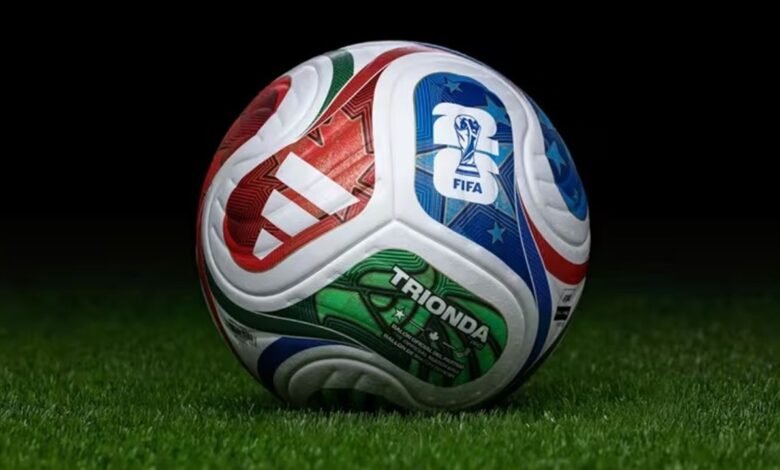
The FIFA World Cup 2026 kicked off on 11 June and runs until 19 July, hosted across the United States, Canada and Mexico. It is the biggest edition ever, with 48 teams playing 104 matches. For most of the next month, the back half of the day in Kenya will be football. The marquee kick-offs land in the late evening and overnight in East Africa Time.
That much attention always attracts a second crowd. As fans look for ways to watch, bet and follow the action, scammers are setting up fake websites and sending fake emails to take their money and personal data. The cybersecurity firm Kaspersky says it has counted more than 336 separate web domains built to look like official World Cup pages. The schemes show up in several languages, which means they are not aimed at any single country. Anyone searching online for a stream, a ticket or a bet is a potential target.
Here is what the traps look like, and why they matter more in Kenya than the global average might suggest.
The fake “free stream”
The first trap goes after people who do not want to pay for a subscription. A site promises free, live World Cup matches. You click “Watch now,” and instead of a game you get a sign-up form. After you register, the site asks you to pay a small fee, often in cryptocurrency, for “lifetime access” to the whole tournament.

Two things go wrong at once. You lose whatever you paid, and a crypto payment is almost impossible to reverse or trace once it leaves your wallet. You also hand over the personal details you typed into the form. Those details, an email address and a password especially, can be reused against you later in more convincing scams.
The danger is bigger if you reuse one password across several accounts. If a fake streaming site captures the password you also use for email, banking or M-Pesa, you have effectively given away the key to all of them.
The betting trap
Betting and match-prediction sites surge during any World Cup, and the fakes ride that wave. Kaspersky found one site, running in Spanish, that asked new users for a long list of personal information just to “create an account,” including full name, email and phone number. The site itself never delivers anything. The data collection is the point.
This is where the Kenyan picture gets specific. Betting is woven into how a lot of people here follow football, and the fraud data reflects that. According to TransUnion’s latest fraud report, online gaming, which includes sports betting and poker, recorded the highest rate of suspected digital fraud of any sector in Kenya in 2025, at 15.6% of attempted transactions. That was a 97% jump in suspected fraud volume from the year before, the largest rise of any industry the firm tracked. TransUnion notes that betting platforms are often used as a testing ground for new scams before they spread elsewhere.
The losses are not small. Kenyans who reported losing money to digital fraud lost a median of KES 108,132, the highest figure among the African countries TransUnion surveyed. You can read the full breakdown in TransUnion’s report.
The prediction-fee email
The third trap arrives in your inbox. Fans get emails advertising “football analytics” or guaranteed match-winner predictions. One example asked recipients to pay a USD 200 fee, roughly KES 26,000 at current rates, to unlock the service. There is no service. The money is gone, and the email may also carry a link to a phishing page built to harvest your login details.
The giveaway is urgency. These messages push you to act fast, claim a limited slot or a closing offer. That pressure is deliberate. It is meant to stop you from pausing to check whether any of it is real. A real broadcaster or betting firm does not work this way.
How to follow the World Cup safely in Kenya
There is no need to gamble with sketchy sites, because the legal routes are wide open this year. We already covered how every DStv package in Kenya now carries all 104 matches, from the entry-level Access tier upward, through SuperSport. GOtv carries the matches on its Supa, Supa Plus and Max packages. For free-to-air, KBC is showing a selected set of matches at no cost. Those are the official options. Anything promising the full tournament for a one-off crypto payment is not one of them.
A few habits cover most of the risk:
- Check the web address before you type anything. Scam sites copy the look of official pages but the URL is usually off, with extra words, odd spellings, or the wrong domain ending.
- Never reuse passwords. If one site is fake, a unique password limits the damage to that one account.
- Turn on two-factor authentication on your email, banking and betting apps. This is the second code or prompt that blocks a login even when someone has your password.
- Treat urgency as a warning, not a reason to hurry. Predictions, “lifetime access” deals and closing offers are the wrapper, not the prize.
If you want a deeper checklist on spotting fake sites and phishing messages, the FBI’s guide to spoofing and phishing lays out the common red flags clearly.
The simple version is this. The matches are already available legally in Kenya, on TV and on official apps, at prices that start low. The “free stream,” the guaranteed prediction and the lifetime-access deal are not shortcuts. They are the part of the World Cup that costs you the most.






Join the discussion