
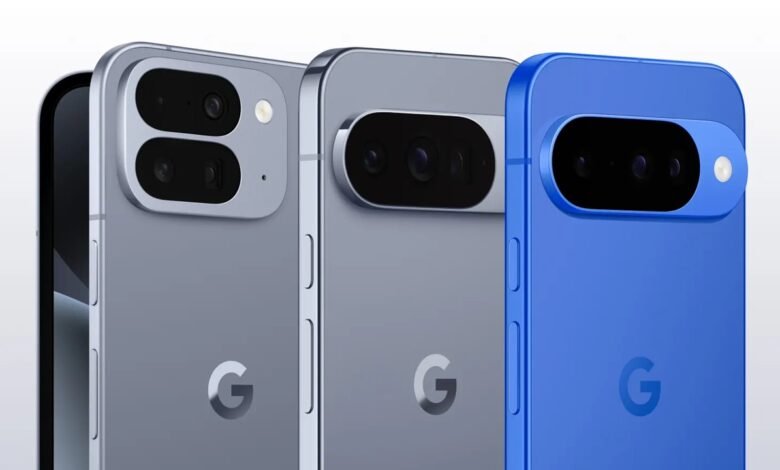
Google doesn’t sell Pixel phones in Africa. Officially, as far as Mountain View’s hardware division is concerned, the Kenyan market doesn’t exist. Yet, take a walk through Nairobi’s tech corridors or casually scroll through local social media storefronts, and you will find an impressive lineup anging from the aging Pixel 6 to the shiny new Pixel 10 family, complete with Pixel Watches and niche accessories.
See, we have to hand it to these independent retailers. It takes immense courage to stock devices that cater exclusively to a tiny, hardcore niche of smartphone enthusiasts. Because taxes are paid at the point of entry, these vendors are tying up real capital in stock that only a handful of buyers will ever ask for. As we noted recently, the punitive taxes on mobile hardware have severely bottlenecked local tech accessibility, a hurdle the Treasury CS has argued the Finance Bill 2026 aims to finally resolve by promising a pathway to cheaper smartphones. For now, though, the hustle to bring Pixels into Kenya is commendable.
But admiration only goes so far when we look at the actual price tags attached to older stock.
While heavyweights like Jumia remain the absolute last place I’d recommend looking for a Pixel due to their historically exorbitant pricing, smaller independent retailers have been stepping up to fill the void. Recently, I’ve seen listings from Phone Place Kenya, Phones and Tablets, and social media-based shops like ECB Technologies.


🟢 Pixel 7 128GB — Ksh 44,500
🟢 Pixel 7 Pro 128GB — Ksh 63,000
🟢 Pixel 8 128GB — Ksh 58,500
🟢 Pixel 8A 128GB — Ksh 51,500
🟢 Pixel 8A 256GB — Ksh 61,500
🟢 Pixel 8 Pro 128GB — Ksh 66,000
🟢 Pixel 9 128GB — Ksh 84,000
🟢 Pixel 9 256GB — Ksh

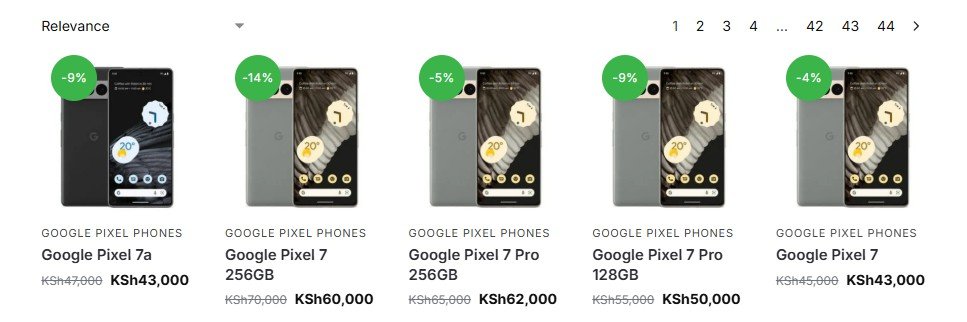
Let’s look at the numbers. Phone Place Kenya deserves some credit for leading the inevitable price drops, listing the 128GB Pixel 7 at KES 39,500 and the Pixel 7 Pro at KES 46,500. Phones and Tablets pushes that slightly higher, asking KES 43,000 for the 7 (KES 60,000 for 256GB) and KES 50,000 for the 7 Pro (KES 62,000 for 256GB). Then you have ECB Technologies, listing the standard Pixel 7 at KES 44,500 and demanding a staggering KES 63,000 for the Pixel 7 Pro.
To put it bluntly: why on earth would anyone spend over KES 50,000, let alone KES 63,000, on a 2022 Google Pixel 7 in the year of our Lord 2026?
Let’s not view these older models through rose-tinted glasses. The Pixel 6 and 7 generations were effectively Google’s lab rats for the Tensor chip transition. Many who adopted early Tensor-powered models know all too well the frustrating cellular network drops these phones suffered locally before newer generations ironed out the modem kinks.
Beyond connectivity, hardware longevity is a massive gamble. The battery issues on the 7 series are well documented. In fact, Google quietly rolled out a battery repair program specifically for the Pixel 7a. But here is the harsh reality of importing unsupported hardware: when you experience a factory defect in Kenya, you are entirely on your own. You cannot ship it to a local Google service center.
Worse still, the Pixel 7 and 7 Pro are notorious for severe battery swelling issues. These swelling incidents aren’t isolated anomalies; they are still happening right now. Paying premium 2026 midrange prices for a four-year-old phone with known battery expansion risks isn’t an investment.
If you are a die-hard Android purist who simply must have a Pixel 7 or 7 Pro, you are vastly better off importing a certified refurbished unit yourself. A quick sweep of Amazon, eBay, or Swappa shows these devices regularly clearing for well under $250 in Western markets. Even after factoring in shipping and import duties, you’ll still come in cheaper than buying locally. Alternatively, if you have KES 50,000 burning a hole in your pocket today, you can easily pick up a reliable Samsung Galaxy S22 Ultra with a bit of careful shopping, phones that actually have localized warranty support and repair centers.
Don’t get me wrong. I have zero issues with retailers pricing the Pixel 10 series high. That is the natural order of things; early adopter taxes apply, and those prices will naturally drop once the Pixel 11 is unveiled in a few months. But trying to recoup peak margins on aging 2022 inventory simply means those units are going to gather dust on shelves while the tech world moves on.
Bringing the Pixel ecosystem to Kenya is a bold, necessary move for hardware diversity, and the retailers doing it deserve our respect. But to the buyers eyeing that sealed Pixel 7 Pro sitting in a display case: admire it, respect the hustle it took to get it there, and then walk away. Your wallet, and more importantly your peace of mind, will thank you later.






Join the discussion