

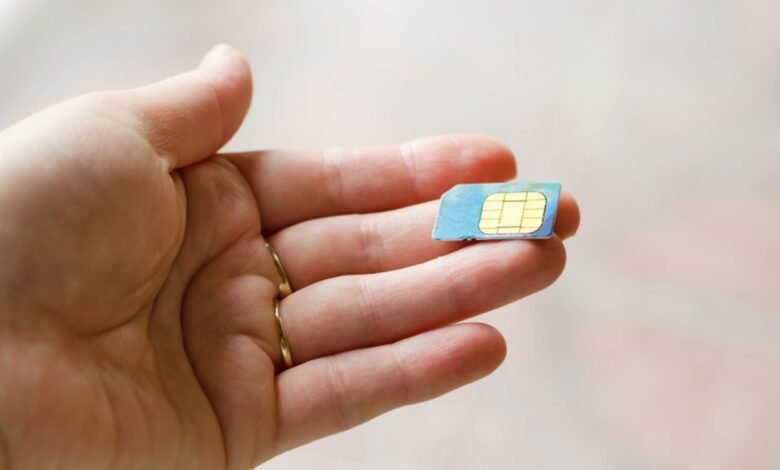
Police in Bozhou, a city of about 5 million in north-western Anhui province, China, seized more than 400,000 SIM cards in one raid on 21st July. The cards weighed 45.44 kilogrammes. Five people are in criminal detention on suspicion of fraud, and the investigation is still open. It is the largest SIM card haul Bozhou police have made since they started working telecom fraud cases.
A SIM card is the small chip that tells a mobile network which subscriber you are. Move it to a different phone and your number moves with it.
What the number on your screen actually tells you
The Bozhou group ran what Chinese police call 手机口, roughly “phone mouth”. The scam call starts overseas. Dialled directly, it would show a foreign number and most people would let it ring out. So the voice is relayed through a handset inside China with a Chinese SIM in it, and the victim’s phone shows an ordinary local number.
Nothing about that number is faked. It’s a real line, registered to a real person, and the call really was placed from inside the country. Caller ID tells you where a call entered the network. It has never told you who is talking.

Where 400,000 cards come from
The man police say organised the ring had spent about ten years in the second-hand phone trade. He noticed that people sell or scrap handsets without pulling the SIM out, and that some of those forgotten cards still work. So the group bought old phones in volume, from their own stalls and collection points in several provinces, and tested the cards in bulk. On the police’s own sampling, about two cards in every 10,000 still worked. The hoard was that big because the hit rate was that bad.
Each working card came with something the group couldn’t have bought legitimately: a clean registration in somebody else’s name. China requires every SIM to be registered to an identity document before activation, and these cards had passed that check years earlier. To the operator, they looked like ordinary customers. Nobody had to forge anything.
Kenya has the same gap
Kenya’s SIM registration rules, were rewritten and gazetted on 30th May 2025. Agents must see original ID and verify it against government records, and breaking the rules carries a fine of up to KES 1 million or six months in prison.
Regulation 10 is the one to read, though. Handing your line to someone else is a formal transfer: you apply to your operator, and the new owner produces their own documents. None of that happens when you sell a phone at a stall in town. If the chip goes with the handset, the line stays yours on paper.
Kenya does kill abandoned lines faster. Under Safaricom’s conditions of use, an account expires 120 days after the validity of your last recharge runs out, and Safaricom can then recycle the number. That shortens the window. It does nothing about lines still being topped up.
The demand is here too. INTERPOL counted more than 123,000 fraudulent SIM cards issued in Kenya in a year, and we covered the KES 491.6 million Kenyans lost to SIM swap fraud in 2025.
What to do
Take the SIM out before you sell, trade in or throw away a phone. People wipe the photos and forget the chip, which keeps your name on a live line. If you won’t use the number again, ask your operator to close it.
Then treat a call from an 07 number with the same suspicion you’d give a foreign one. A local number gets a scam past the one check most people run without thinking, which is why fraud groups go to this much trouble. Safaricom says it only calls from 0722000000, and its staff will never ask for your M-PESA PIN, SIM passcode or password. Forward suspect numbers to 333 so they can be blocked. If a caller is rushing you, hang up and ring back on a number you looked up yourself.








Join the discussion