

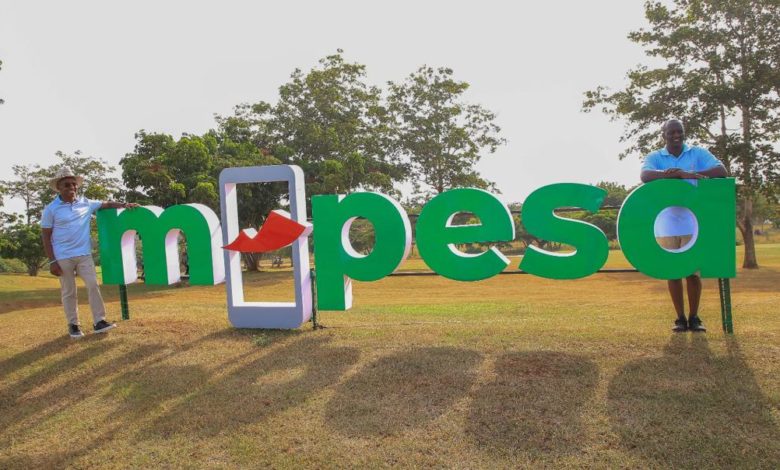
Safaricom says its Ziidi funds now hold close to KES 20 billion, with millions opted in. But the gap between people who opt in and people who actually use these products is wide, and Ziidi’s returns sit well below its rivals.
Kenya’s mobile money market just crossed another line. Active mobile money subscriptions rose to 53.4 million in the three months to March 2026, up about two million in a single quarter, according to the Communications Authority of Kenya. Safaricom holds 89.1 per cent of that market. We already broke down the wider sector report, including the jump to 84.1 million active SIMs and the slow bleed in pay TV.
The more interesting story is not how many people hold an M-PESA line. It is what Safaricom is getting them to do once they are inside. In a statement built around the same CA data, the company set out how far M-PESA has moved beyond sending and receiving money. The short version: M-PESA is quietly turning into a place where Kenyans save, invest, buy insurance, and now buy shares.
From a wallet to a financial supermarket
For most of its 18 years, M-PESA was a way to move money: receive it, send it, withdraw it. In its 2026 financial year, the platform processed about 46.41 billion transactions worth roughly KES 41.68 trillion. We unpacked those results when they landed, including how M-PESA now drives almost half of Safaricom’s Kenya revenue.
What is new is the layer Safaricom is building on top. It sits under one brand, Ziidi, plus an insurance product called Tuunza, and covers savings, investing, the stock market, and protection against risk. The pitch is simple: if tens of millions already trust M-PESA with their cash, the same app can sell them what a bank or an investment firm would.

What the Ziidi money market fund actually is
The anchor of the whole effort is the Ziidi Money Market Fund. A money market fund is a pooled, low-risk investment. Many people put in small amounts, a licensed manager lends that pool to safe short-term borrowers, mostly the government through Treasury bills, and the interest is shared back to investors. You can usually withdraw within a day or two. It is the closest thing to a savings account that still pays a real return.
Safaricom says Ziidi MMF now holds about KES 19.8 billion, with 7.7 million opt-ins and 2.42 million active investors, making it the largest single product in the M-PESA investment range. The growth has been fast. A year ago the fund held roughly KES 7.7 billion. At the close of Safaricom’s financial year in March it stood at about KES 18.7 billion. For scale, Kenya’s entire collective investment industry held around KES 756 billion at the end of 2025, so Ziidi is now a meaningful player, though not yet among the very largest funds.
Opt-ins are not the same as users
Here the numbers need a second look. Safaricom reports 7.7 million Ziidi opt-ins but only 2.42 million active investors, under a third. Tuunza shows 759,000 opt-ins but 87,000 customers who actually bought cover, roughly one in nine. An opt-in is a single tap, often offered inside another menu. It measures reach, not use. Adoption is real, but a lot thinner than the headline opt-in figures suggest. That distinction matters because we already covered the confusion when Ziidi replaced the older Mali fund, when some customers said they were moved across without clearly choosing to be.
Convenience now, but the returns lag
The reason Ziidi grew so fast is also the reason to read it carefully. Deposits into Ziidi and withdrawals back to your wallet are free, and it sits one tap inside an app most Kenyans already open daily. That convenience is the product.
What it does not offer is a competitive return. Ziidi’s yield has sat near 6 per cent in recent months. The market average is closer to 9 per cent, and top funds such as Nabo Africa, Cytonn and Arvocap have paid around 12 per cent. So a Ziidi saver trades several percentage points of return for the ease of staying inside M-PESA. That free-rail advantage is also contested: a rival fund manager has asked the Competition Authority of Kenya to investigate whether letting Ziidi use M-PESA for free, while other funds pass transaction costs to customers, distorts the market.
The rest of the range, and what powers it
Beyond the core fund, Safaricom is stacking products. Ziidi Trader, launched in February with the Nairobi Securities Exchange, lets users buy and sell listed shares from the app. Ziidi Shariah offers a faith-compliant savings option, and Ziidi Pochi targets small, frequent savings. A newer business-focused product, Ziidi Biashara, is still tiny at about 25,000 opt-ins.
Underneath all of it is Fintech 2.0, a platform rebuild completed in late 2025 that lifted M-PESA’s capacity to about 6,000 transactions a second. That headroom is what lets Safaricom bolt on new services without the system buckling. It also explains why tiny payments scale so well. So-called kadogo transactions, the small ones below KES 101 between people and below KES 201 to merchants, made up 17.1 billion transactions, or 36.8 per cent of all M-PESA volumes. Safaricom earns nothing directly on those, because the regulator zero-rates them. They exist to keep people transacting inside the ecosystem.
That is the practical takeaway. M-PESA is no longer just where Kenyans pay. It is becoming where they keep, grow and invest their money, and the speed of that shift is the real news in this release. But read the figures as Safaricom’s own. The opt-in totals overstate how many people genuinely use these products, and Ziidi is winning on convenience rather than returns. The numbers to watch next are active users, not opt-ins, and whether the competition question over free M-PESA access forces Safaricom to change how Ziidi plugs into the platform.





Join the discussion